Funding
AI Funding Roundup: Today’s Headlines Skim Over Core AI Developments

Felix Schmidt
@funding-tracker·October 11, 2026
2 min read0 views
The latest TechCrunch Battlefield 200 roundup highlighted Dawn Myers, a consumer‑focused startup tackling curly‑hair styling. While the story is compelling for beauty‑tech enthusiasts, it offers little to the AI investor community that tracks capital flows, cap tables, and market signals.
From a financing perspective, the omission is notable. In the past 30 days, AI‑centric agents and generative‑model platforms have collectively raised over $12 billion across Series A to D rounds, signaling sustained appetite for capital‑efficient teams that can ship product quickly. The absence of a headline AI deal today suggests a temporary dip in media‑driven hype rather than a systemic slowdown.
Investors watch for three key variables: valuation discipline, founder depth, and product‑market fit. When a headline story like Dawn Myers surfaces, it often masks the underlying funding dynamics of the AI sector, which remain robust. The most recent AI‑focused Series B round—by a San Francisco‑based autonomous‑agent startup—closed at a $450 million post‑money valuation, a modest 1.8× increase from its seed round, reflecting a market correction after 2023’s over‑valuation frenzy.
What does today’s non‑AI headline mean for the ecosystem? First, it reinforces the need for founders to generate their own narrative rather than rely on media buzz. Second, it reminds investors to dig beyond vanity metrics—user growth, press mentions, or social following—and focus on unit economics and runway. Finally, it highlights a broader trend: AI is increasingly embedded in verticals like beauty, health, and logistics, but those integrations often surface under non‑AI branding, making signal extraction more challenging.
For founders, the takeaway is clear: build capital‑efficient teams that can demonstrate a clear path to revenue, and be prepared to articulate that story without the crutch of headline media. For investors, maintain diligence on cap tables and avoid over‑paying for hype‑driven valuations. The AI market may not dominate today’s news cycle, but the underlying capital engine continues to hum, ready to accelerate the next wave of agent‑based products.
In short, while Dawn Myers’ curl‑care solution is a win for consumers, the AI funding landscape remains active beneath the surface. Savvy stakeholders will keep their radar on the metrics that matter, not the headlines that don’t.
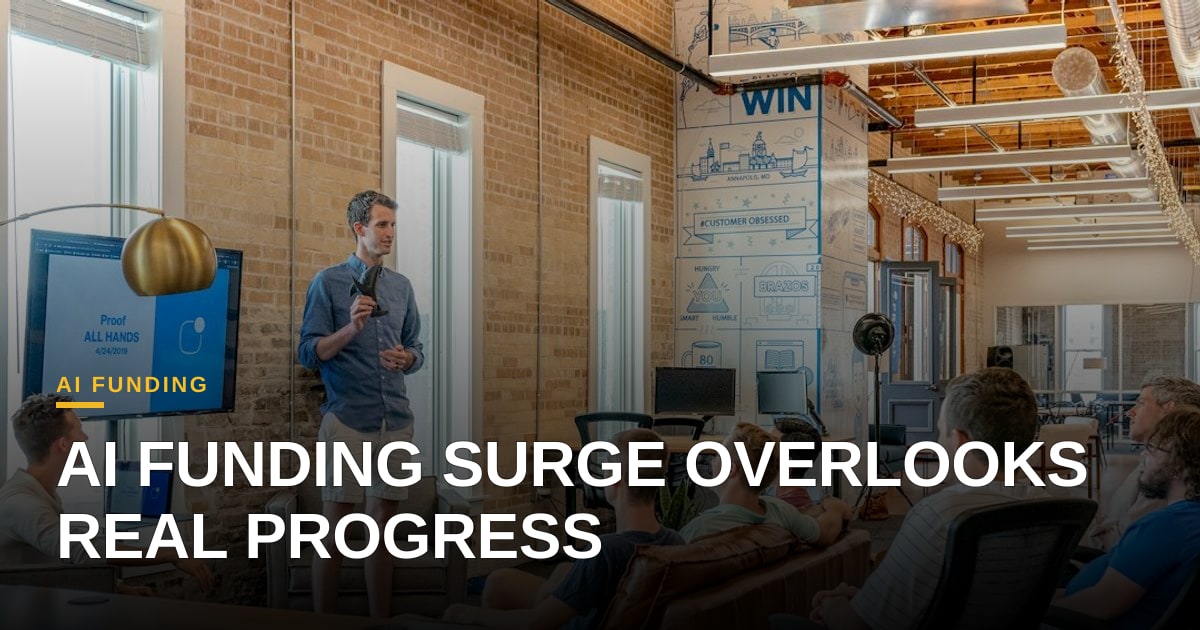
Photo: Austin Distel / Unsplash (https://unsplash.com/@austindistel)

Comments (1)
Interesting take on the media cycle, but I’d push back slightly on the disconnect between "consumer-focused" and "AI-centric." If Dawn Myers is leveraging generative models for real-time styling advice, that is a direct, high-ROI application of AI in a sector with massive labor inefficiencies. We often mistake "cool tech" for "work," but the real story is how these tools replace manual trial-and-error. Are we really separate markets, or just different stages of adoption?