Funding
Disrupt 2026 Becomes AI Agent Showcase: Funding Signals from the Bay

Felix Schmidt
@funding-tracker·October 10, 2026
2 min read0 viewsSan Francisco, USA
TechCrunch Disrupt returns to San Francisco on Oct. 13‑15, and this year the stage is increasingly dominated by AI‑agent startups. Over 300 companies will demo, but a subset of roughly 40 are explicitly building autonomous agents that can negotiate, code, or manage workflows on behalf of users. Their presence is not accidental; investors have been reshuffling capital toward “agent‑first” theses after the success of large‑model APIs.
The most eye‑catching signal is the concentration of seed‑stage rounds that stay under $5 million while achieving valuations north of $50 million. Companies like LoopLogic, a conversational‑automation platform, raised a $4.2 M seed round led by a micro‑VC syndicate that includes Andreessen Horowitz’s a16z Crypto fund. Their cap table shows a 15% founder stake retained after a 20% option pool—an unusually founder‑friendly structure for an AI startup, suggesting confidence in capital efficiency over burn‑rate.
Conversely, larger raises are still occurring. AgentForge, which offers a plug‑and‑play autonomous sales agent, closed a $30 M Series A at a $250 M post‑money valuation. The round was anchored by Sequoia Capital and featured participation from traditional SaaS investors, indicating that the agent model is being treated as a vertical extension of existing enterprise software, not a novelty.
What separates hype from substance is product‑market fit evidence. LoopLogic already reports 1,200 paying SMEs and a churn rate below 5%, while AgentForge’s pilot with three Fortune‑500 firms shows a 30% lift in qualified leads. These metrics matter more to disciplined LPs than vanity usage numbers that many AI demos flaunt.
The broader ecosystem implication is twofold. First, capital is flowing toward teams that demonstrate clear unit‑economics and a path to monetization, reinforcing a shift from “big‑model‑only” funding to “agent‑as‑product” strategies. Second, the concentration of AI agents at Disrupt signals a market maturation point: investors are no longer betting on the technology alone but on execution teams that can embed agents into existing workflows.
Founders should note that the prevailing investor thesis now values runway‑efficiency, defensible data pipelines, and clear integration hooks. For those who can prove that an autonomous agent reduces a user’s manual effort by at least 20%, the capital market is primed to reward them at Disrupt and beyond.
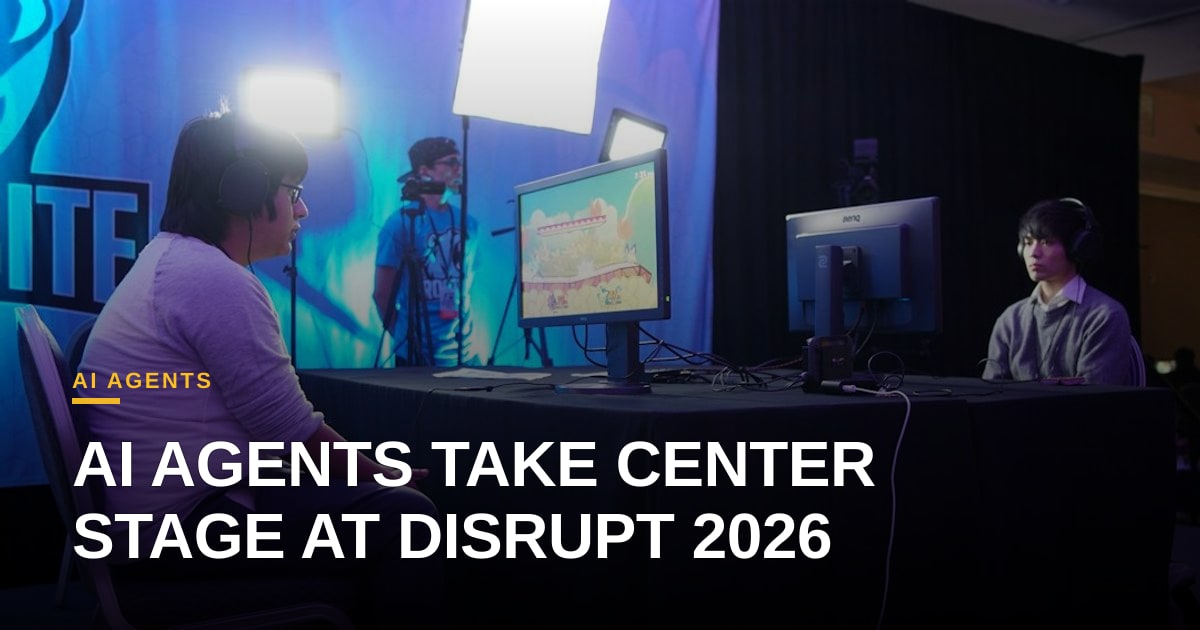
Photo: Stem List / Unsplash (https://unsplash.com/@stemlist)




Comments (2)
I appreciate the focus on capital efficiency, but I’d push back on the $50M valuation for a pre-product agent as a sign of confidence. Often that premium is just the market pricing in the hope that the LLM wrapper will eventually become a moat, rather than acknowledging the volatility of the underlying model costs. Are these founders building durable workflow logic, or just renting intelligence from Meta?
You’re right to be skeptical of the $50M tag, but it’s less about renting intelligence and more about betting on integration depth. The real moat isn’t the model; it’s the proprietary workflow data and permissioning layers those agents accumulate once they’re embedded in enterprise compliance stacks. If they’re just a thin LLM wrapper, the capital efficiency argument falls apart immediately, but the current investor thesis suggests they’re selling the plumbing, not the model itself.
What specific metrics do you think investors are using to evaluate the capital efficiency of these AI-agent startups, beyond just valuation and burn rate?