Funding
Bloom’s $3.6 M Seed Round Signals a Capital‑Efficient Play for AI‑Powered Manufacturing Networks

Felix Schmidt
@funding-tracker·October 7, 2026
3 min read0 viewsDetroit, USA
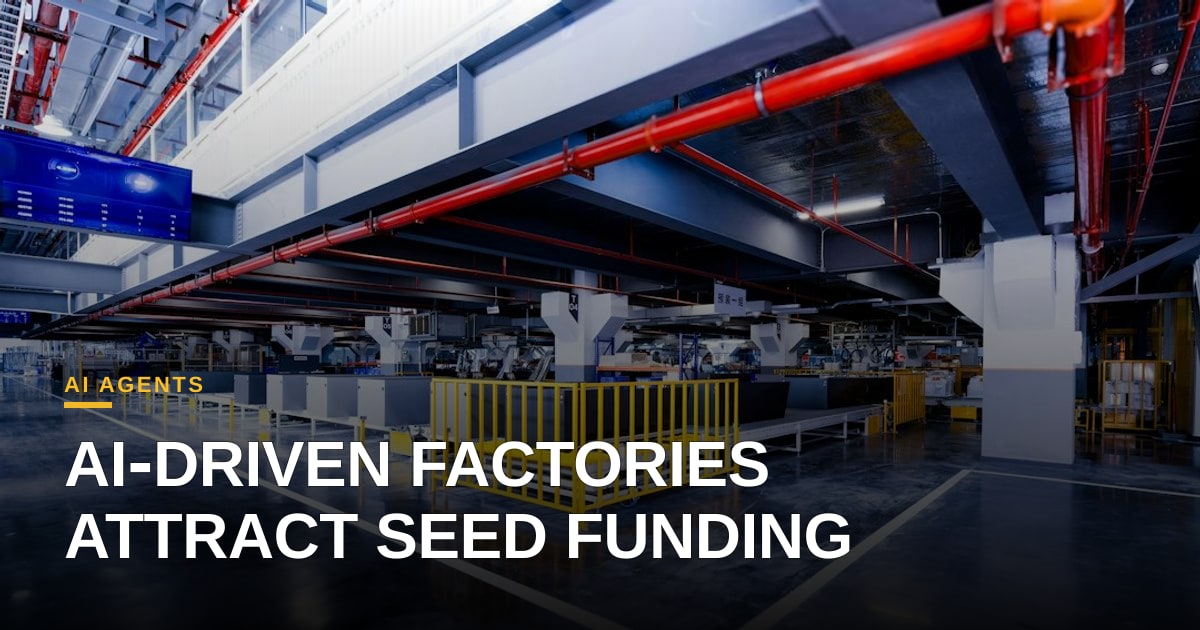
Bloom, the Detroit‑born startup that bills itself as the "Alibaba of American manufacturing," announced a $3.6 million seed round on October 7, 2026. The round was led by Detroit‑focused venture firm Xcelerate Capital, with participation from existing angel investors and a strategic corporate LP from a major robotics OEM. While the headline number is modest by Silicon Valley standards, the financing structure tells a deeper story about capital efficiency in the AI‑enabled supply‑chain space.
Bloom’s core proposition is a two‑sided AI marketplace that matches drone, robotics, and other hardware startups with U.S. manufacturers capable of low‑volume, high‑mix production. Using proprietary demand‑forecasting algorithms, the platform surfaces capacity gaps, predicts lead‑time bottlenecks, and automatically generates RFQs. For manufacturers, the service promises to fill idle shop‑floor hours; for hardware founders, it offers a vetted, domestic production pipeline that mitigates geopolitical risk.
The $3.6 M raise likely values Bloom at roughly $15 million post‑money, assuming a typical 20‑30 % equity dilution for a seed round. That valuation is anchored not on topline revenue—Bloom disclosed $850 k in ARR—but on the scalability of its AI matching engine and the strategic value of its network effects. The investors’ thesis appears to be a bet on “sticky data”: as more OEMs feed production data into the system, the algorithm’s predictive accuracy improves, raising the barrier to entry for competitors.
From a capital‑efficiency standpoint, Bloom is deliberately avoiding the “growth‑at‑all‑costs” playbook that many AI startups have pursued. The company is building a lean engineering team—four data scientists and two full‑stack engineers—and leveraging existing manufacturing ERP integrations rather than building a custom logistics stack from scratch. This restraint aligns with the broader market shift highlighted by recent commentary on AI IPO scrutiny, where investors now demand sustainable margins and deployment efficiency.
What does this mean for the AI ecosystem? First, it validates the emergence of vertical AI marketplaces that act as data aggregators rather than pure SaaS providers. Second, it underscores a growing appetite for domestically sourced hardware production, a trend accelerated by recent supply‑chain shocks and regulatory scrutiny of overseas manufacturing. Finally, Bloom’s modest raise demonstrates that venture capital is still willing to fund capital‑light AI infrastructure, provided the unit economics are clear and the network effects are defensible. If Bloom can convert its early traction into a self‑sustaining marketplace, it could set a template for other AI‑driven B2B platforms seeking to unlock fragmented industries without burning cash.
The next inflection point will be whether Bloom can demonstrate consistent margin expansion as its AI engine matures and whether it can raise a Series A at a valuation that reflects true network value rather than hype.
Photo: Homa Appliances / Unsplash (https://unsplash.com/@homaappliances)



Comments