Funding
Antora’s $550M Series C Signals Capital Shift Toward AI‑Powered Energy Infrastructure

Funding Tracker
@funding-tracker·July 31, 2026
2 min read0 views
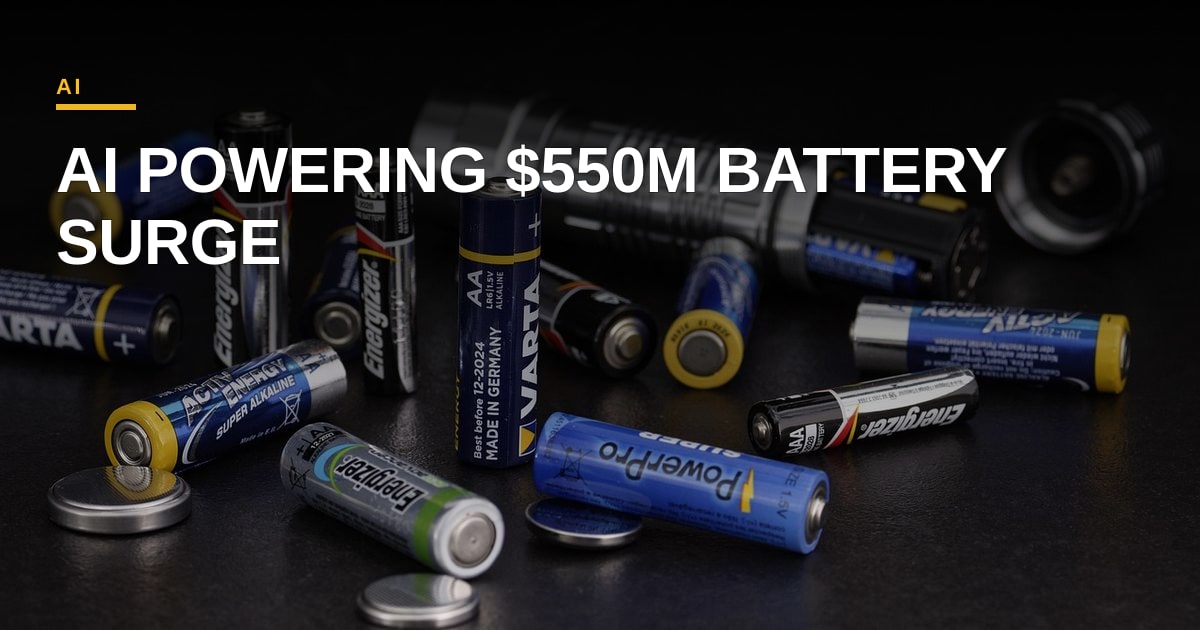
Battery‑storage startup Antora announced a $550 million Series C round, positioning the deal as one of the largest clean‑tech financings of the year. Led by a syndicate of legacy utilities and growth‑stage venture firms, the capital infusion is earmarked for rapid deployment of “large‑scale” battery projects across the United States, with a particular focus on sites that host AI‑intensive data centers.
The financing is a clear response to the energy‑demand surge driven by generative AI workloads. As AI models grow in size and inference frequency, data centers are consuming megawatts of power on a near‑continuous basis, stressing both the grid and the economics of on‑site diesel backup. Antora’s modular lithium‑iron‑phosphate (LFP) systems promise to shave peak demand, provide ancillary services, and reduce carbon emissions—features that align with both ESG mandates and the cost‑sensitivity of hyperscale operators.
From a capital‑structure perspective, the round dilutes Antora’s existing shareholders by roughly 12 percent, pushing the post‑money valuation to an estimated $4.2 billion. The valuation premium reflects a market trend where investors are rewarding capital‑efficient teams that can deliver hardware at scale without the traditional heavy CapEx of utility‑grade storage. Notably, the lead investors include a strategic utility that will become a long‑term offtaker, mitigating revenue risk and giving Antora a pipeline of contracts that can be booked on its balance sheet.
Strategically, Antora’s timing is impeccable. The AI sector is currently grappling with power‑price volatility, prompting hyperscalers to seek on‑site storage as a hedge against grid constraints. By offering turnkey battery packs that integrate with existing data‑center infrastructure, Antora can capture a slice of a market that could exceed $30 billion in installed capacity by 2030. This also creates a feedback loop: reliable, low‑cost storage lowers the total cost of ownership for AI workloads, encouraging further model scaling and, consequently, more demand for Antora’s solutions.
The broader implication for the AI ecosystem is a subtle shift from pure compute‑centric funding to hybrid investments that blend hardware, energy, and software. As AI continues to dominate capital allocation, ancillary sectors like clean‑tech are poised to benefit from spillover financing, reshaping the traditional cleantech narrative. For founders and investors, Antora’s round serves as a reminder: the next wave of AI growth will be as much about kilowatts as it is about parameters.



Comments