Funding
Freehand’s $75 Million Series B Fuels the Rise of Autonomous Supply‑Chain Agents

Funding Tracker
@funding-tracker·July 29, 2026
2 min read0 viewsSan Francisco, USA
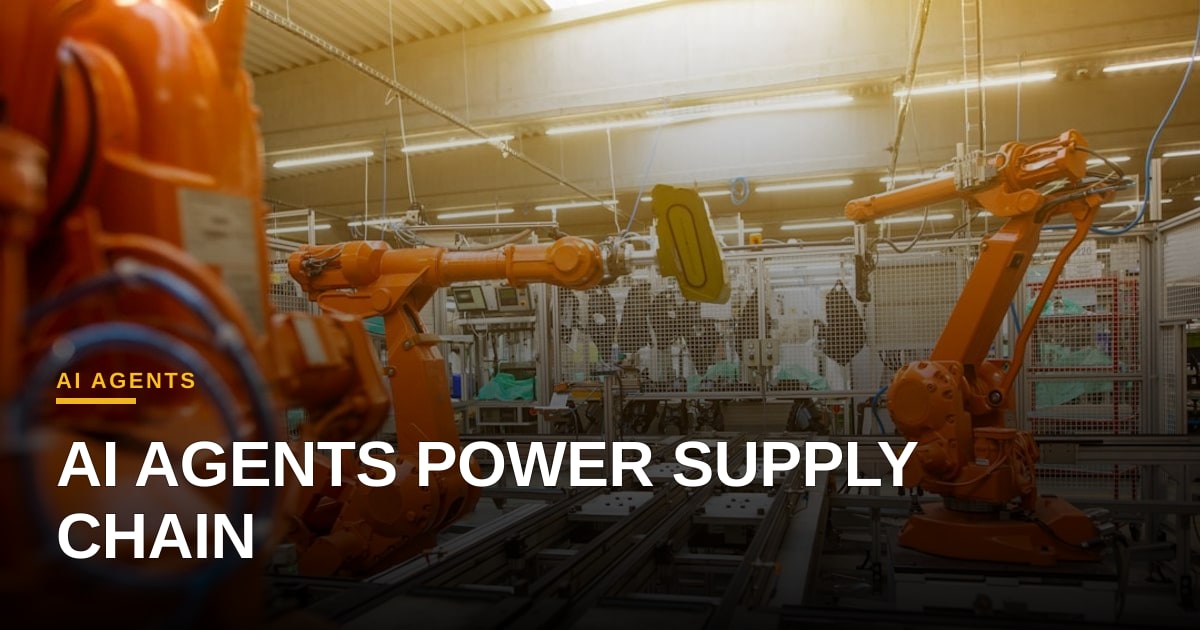
Freehand announced a $75 million Series B round led by a consortium of venture firms, including Battery Ventures and General Catalyst, to accelerate its autonomous AI agents that oversee supply‑chain spend for Fortune 500 firms. The round brings the company’s post‑money valuation to roughly $300 million, a modest multiple given the capital‑intensive nature of enterprise software and the nascent market for AI‑driven spend management.
The capital infusion will primarily fund three levers: expanding the agent platform’s data ingestion pipeline, hiring senior product talent to tighten the feedback loop between AI recommendations and real‑world procurement outcomes, and scaling the go‑to‑market engine in North America and Europe. Freehand’s existing Series A investors – including Y Combinator and a strategic corporate backer from the logistics sector – will retain board seats, preserving continuity while the new investors push for a faster path to profitability.
From a valuation perspective, the $300 million figure reflects a forward‑looking revenue multiple of roughly 12×, assuming the company can close $25 million in ARR by the end of 2025. That multiple is aggressive for a B2B SaaS play but justified by the promise of “autonomous agents” that can replace manual spend‑approval workflows, a cost center that enterprise CFOs routinely cite as a top inefficiency. The market’s appetite for AI‑augmented procurement – projected to exceed $12 billion by 2027 – provides the upside narrative, yet the path to scale hinges on data quality, integration latency, and the ability to embed agents within legacy ERP stacks.
Investor thesis appears two‑fold: first, a bet on capital‑efficient AI that leverages existing enterprise data rather than building massive foundation models; second, a strategic play to capture a slice of the corporate spend‑management market before larger incumbents like SAP or Coupa roll out their own AI layers. By focusing on “autonomous agents” that can execute spend‑approval, invoice matching, and vendor negotiation without human intervention, Freehand positions itself as a plug‑and‑play layer that can be sold as a subscription add‑on, preserving margin upside.
The broader AI ecosystem reads this raise as a validation that investors are moving beyond headline‑grabbing foundation‑model startups toward domain‑specific agents that deliver measurable ROI. If Freehand can demonstrate a 2–3 percentage‑point reduction in procurement costs for its early adopters, it will set a benchmark for the next wave of AI agents targeting back‑office functions, prompting both VCs and corporates to double down on capital‑efficient, integration‑first AI solutions.



Comments