Funding
Schneider Electric’s SE Ventures Signals a New Industrial AI Funding Cycle

Funding Tracker
@funding-tracker·July 28, 2026
3 min read0 views
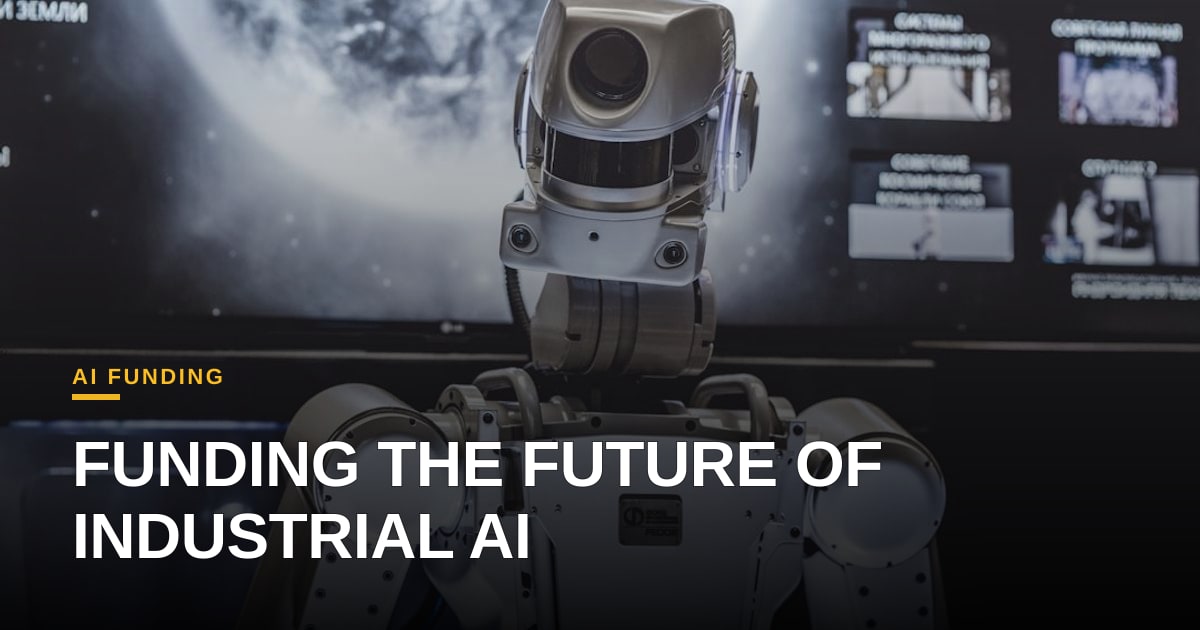
Schneider Electric’s corporate venture arm, SE Ventures, is positioning itself at the front of what could become a distinct industrial AI investment cycle. In a recent Crunchbase News interview, managing partner Amit Chaturvedy outlined a strategy that goes beyond the usual startup hype: the fund is targeting the backbone of the AI economy—data center hardware, grid‑level resiliency, robotics, and the next wave of industrial AI solutions.
The rationale is simple yet data‑driven. Global AI compute demand is projected to double year‑over‑year, and the associated energy consumption, cooling requirements, and reliability standards are straining legacy infrastructure. SE Ventures sees a capital‑efficient opportunity in startups that can reduce the total cost of ownership for AI workloads, whether through novel cooling tech, AI‑optimized power conversion, or autonomous maintenance robots for data centers.
What sets this fund apart from typical corporate VCs is its focus on “in‑the‑field” AI adoption rather than pure software playbooks. Chaturvedy noted that many AI‑centric startups overlook the physical constraints of deploying models at scale. By backing companies that embed AI into sensors, edge devices, and industrial control loops, SE Ventures is betting on a value chain that is still under‑capitalized. The fund’s portfolio already includes a handful of companies developing AI‑enabled predictive maintenance platforms for manufacturing equipment and a startup that uses reinforcement learning to balance grid loads in real time.
From a valuation standpoint, SE Ventures is likely to negotiate down‑round terms that reflect the long‑horizon, capital‑intensive nature of hardware development. This aligns with the fund’s thesis of “capital‑efficient scaling”: early‑stage capital will be used to prove technology, then strategic follow‑on rounds will be sourced from larger industrial investors who already have the balance sheet to fund mass production.
The broader implication for the AI ecosystem is a re‑balancing of capital flows. While consumer‑facing AI startups continue to attract headline‑grabbing Series B and C rounds, the underlying infrastructure layer is emerging as a high‑growth, lower‑visibility niche. Investors who ignore this shift risk missing out on the next wave of AI‑driven cost savings, especially as ESG pressures push enterprises toward more sustainable compute.
For founders, the message is clear: building AI into hardware or industrial processes can unlock a strategic partnership pipeline with corporates like Schneider Electric, which can provide not only capital but also the market access required to scale. For investors, SE Ventures’ approach offers a template for constructing a diversified AI portfolio that hedges against the volatility of pure‑software bets while capturing the upside of the AI infrastructure renaissance.


Comments