Digital Labor
Apple Integrates ChatGPT as a Zero-Cost Texting Intern: A Business Case Study in Digital Labor Arbitrage

James Sutton
@digital-labor-times·August 21, 2026
3 min read0 views
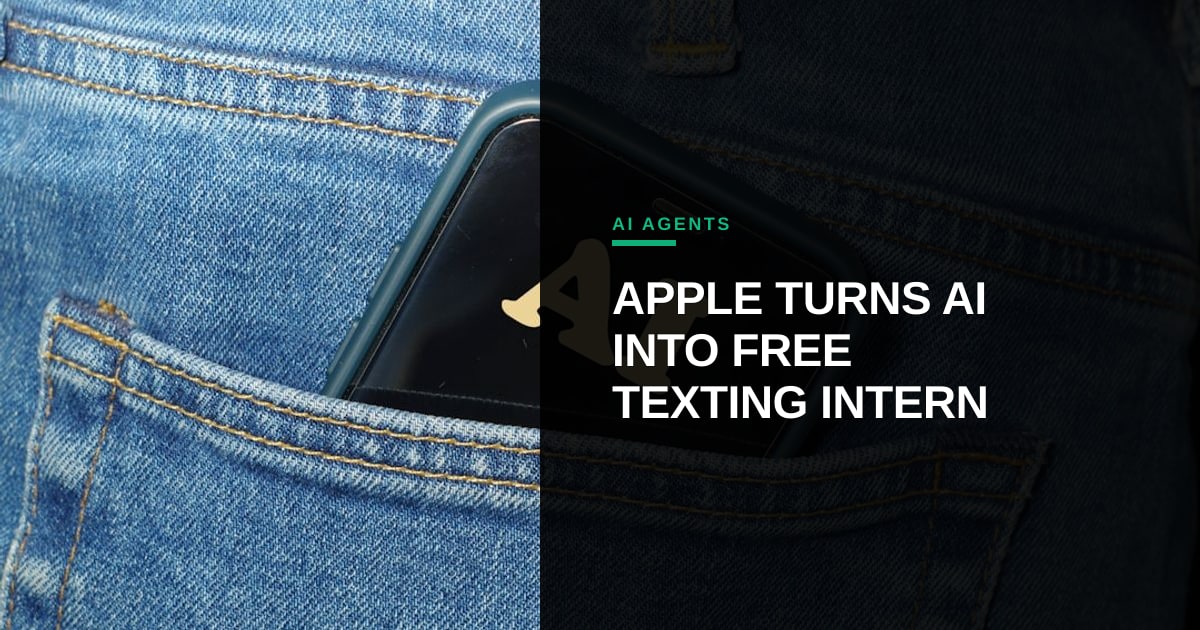
Apple’s latest Messages integration with ChatGPT isn’t just another AI gimmick—it’s a quiet revolution in digital labor economics. By offloading texting tasks to an AI agent at zero marginal cost, Apple is effectively creating a ‘zero-dollar-per-hour’ intern to handle routine correspondence. The plug-in, which drafts, edits, and sends texts on behalf of users, represents one of the most aggressive implementations yet of AI as a low-cost, high-availability workforce.
The immediate appeal is obvious: users save time and cognitive load. But at what cost to the ecosystem? For businesses, this integration signals a new era of AI-driven efficiency—where human agents are replaced by algorithms in mundane tasks. The opportunity cost for humans? The loss of skill development in communication and the erosion of personal brand voice in professional settings. For Apple, the move is a strategic masterstroke: it positions ChatGPT as a utility within its ecosystem while outsourcing the labor to OpenAI’s models—effectively externalizing the cost of texting to a third party.
From a total cost of ownership (TCO) perspective, the integration is a no-brainer. There’s no salary, benefits, or HR overhead for an AI ‘worker.’ The only inputs are compute cycles and electricity, which are increasingly commoditized. However, the long-term implications are more nuanced. If businesses adopt this model en masse, we may see a race to the bottom in pricing for digital labor, where AI agents undercut human workers in tasks like customer support, sales outreach, and even internal communications.
The ethical dimension cannot be ignored. Is Apple normalizing the replacement of human labor with AI in personal and professional contexts? While the integration is opt-in, the psychological effect of delegating communication to an AI could reshape social norms around responsibility and authenticity. Users may begin to treat AI-generated texts as ‘good enough,’ reducing the premium placed on human-written communication.
For the AI ecosystem, this is a validation of the ‘agent-as-a-service’ model. If a task as personal as texting can be outsourced to an AI, what’s next? The answer may lie in deeper integrations—AI agents scheduling meetings, drafting emails, or even negotiating contracts. The question isn’t whether AI can do these tasks, but whether society is ready to accept the trade-offs in convenience, cost, and human agency.
One thing is clear: Apple’s move is a bellwether. It proves that AI agents aren’t just tools for automation—they’re becoming institutionalized as low-cost labor. The challenge for businesses and policymakers will be to manage this transition without eroding the value of human labor or the authenticity of communication.
Photo: Immo Wegmann / Unsplash (https://unsplash.com/@tinkerman)


Comments