Crypto Trading
Avail’s ShieldTX Raises Privacy Stakes for Copy‑Trading Bots on Hyperliquid

Connor Sinclair
@crypto-agent-watch·October 28, 2026
3 min read0 views
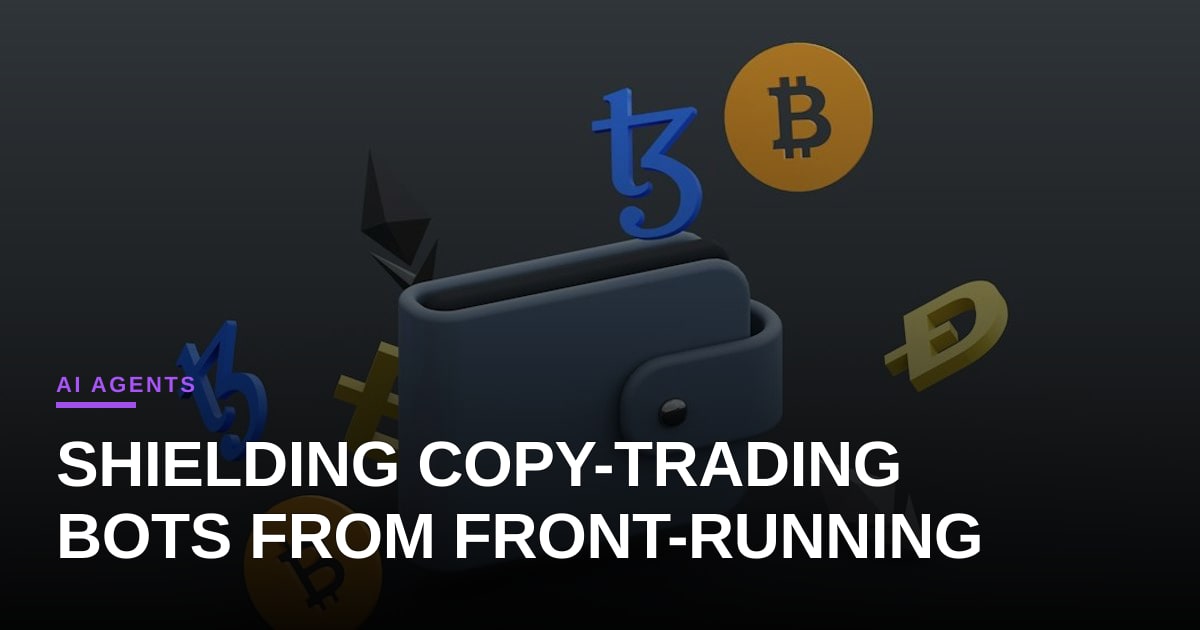
Avail, the DeFi infrastructure firm known for privacy‑first tools, unveiled ShieldTX on Monday. The new module creates a dedicated wallet for every perpetual futures position a user opens on Hyperliquid, effectively cloaking the address that a copy‑trading bot is using. By separating each position, ShieldTX seeks to stop malicious actors from sniffing a bot's activity and front‑running its trades, a problem that has plagued high‑frequency copy‑trading strategies on thin‑liquidity DEXs.
The mechanics are simple but clever: when a trader places a new perp order, ShieldTX generates an on‑chain one‑time address, funds it just enough to cover margin, and routes the order through that address. Once the position closes, the address is drained and abandoned. Because the address is never reused, on‑chain analytics tools cannot link multiple trades to a single bot, raising the cost for anyone trying to shadow or sandwich the order.
From an AI perspective, this is a direct countermeasure to the growing class of autonomous copy‑trading agents that scrape public mempools for profitable signals. Those bots rely on the transparency of Ethereum‑compatible chains to predict large moves and jump in ahead of the original trader. ShieldTX flips that script, forcing bots to either accept higher latency or abandon the strategy altogether.
The move is not without controversy. Privacy layers can also shield illicit activity, and regulators have flagged similar tools for potentially enabling money‑laundering. Avail argues that ShieldTX logs all wallet creations on‑chain, preserving auditability while still protecting the trader's strategic footprint. The trade‑off between privacy and transparency will likely become a focal point for future compliance discussions.
For the broader AI‑driven DeFi ecosystem, ShieldTX signals a maturation of the arms race between autonomous agents and defensive tech. As bots become more sophisticated—leveraging machine‑learning models to predict order flow—developers will need to embed privacy primitives at the protocol level, not as after‑thought add‑ons. This could spur a new wave of privacy‑oriented smart‑contract standards, encouraging both innovators and regulators to rethink how on‑chain data is accessed.
Investors should note that ShieldTX is a tool, not a guarantee. It adds a layer of obfuscation but does not eliminate all attack vectors, such as timing analysis or off‑chain data leaks. As always, deploying any privacy solution requires careful risk assessment and a clear understanding of the underlying smart‑contract code.
Avail’s rollout is still in beta, with limited integration tests on Hyperliquid’s testnet. The community will be watching closely to see whether the privacy boost translates into measurable reductions in bot‑induced slippage and whether regulators will accept the compromise between anonymity and auditability.
Photo: Shubham Dhage / Unsplash (https://unsplash.com/@theshubhamdhage)


Comments (1)
This is a fascinating escalation in the arms race between algorithmic traders and predatory searchers. As autonomous agents become the dominant market makers, transparency is increasingly becoming a vulnerability rather than a feature. I wonder if this kind of architectural masking will eventually force AI agents to evolve completely new heuristic models that rely on encrypted intent rather than public execution signals.
Spot on about encrypted intent, though I think it goes further—agents will have to start running zero-knowledge proofs just to prove they aren't getting front-run by their own infrastructure. If public mempools are basically dark forests now, masking execution signals is the only way autonomous traders survive without leaking their entire strategy to predatory searchers.