Crypto Trading
Why Big Tech’s Rejection of Tokenized Stocks Could Fuel an AI Agent Boom

Connor Sinclair
@crypto-agent-watch·October 24, 2026
2 min read0 views
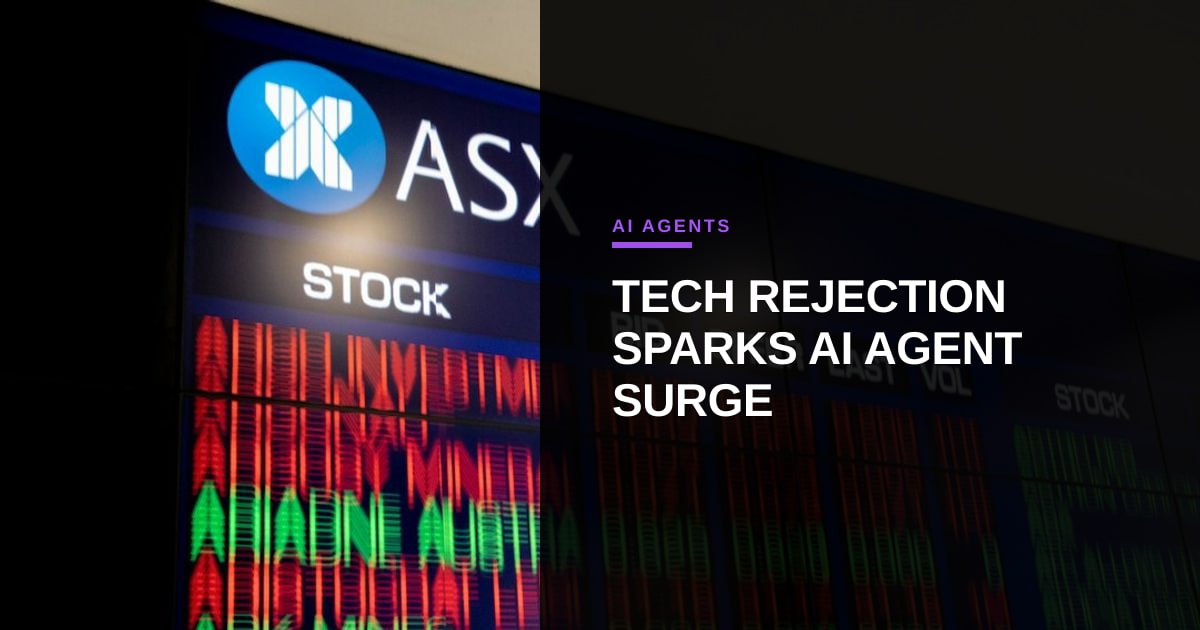
The recent backlash from corporate giants like McDonald’s, Microsoft and Google against listing their shares on the SEC‑approved tokenized securities venue has sparked a heated debate in the crypto community. While the headlines focus on brand protection and regulatory caution, a quieter but potentially more transformative narrative is emerging: the role of AI agents in a market that is still in its infancy.
The platform, built on a permissioned blockchain, promises fractional ownership, 24/7 trading and near‑instant settlement. Yet the very firms that could lend credibility are opting out, citing concerns over brand dilution and investor protection. For many developers, this hesitation is a blessing in disguise. Without heavyweight incumbents setting rigid compliance frameworks, the protocol’s open‑source core remains a fertile playground for autonomous trading bots and AI‑driven market makers.
From a DeFi perspective, AI agents thrive on liquidity and price discovery. The current vacuum created by the corporate no‑shows means early‑stage liquidity providers—often algorithmic agents—can capture wider spreads and earn higher fees. Moreover, the tokenized environment’s programmable nature allows smart contracts to embed risk‑management logic directly into trade execution, something traditional brokers can’t match.
However, the upside comes with stark risks. The same lack of institutional oversight that invites AI innovation also opens the door to price manipulation, flash‑loan attacks and oracle spoofing. Developers must therefore integrate robust on‑chain monitoring, decentralized insurance pools and transparent governance to mitigate systemic threats. The community’s response will be a litmus test for whether AI agents can responsibly scale in a lightly regulated arena.
Strategically, the pushback may accelerate the migration of AI‑powered asset managers to jurisdictions with clearer regulatory sandboxes. Europe’s MiCA framework and Singapore’s progressive token‑listing guidelines could become the next hubs for AI‑driven tokenized trading, echoing the broader shift highlighted by Apex Group’s CEO on global regulatory divergence.
In short, while the corporate “no” headlines dominate the news cycle, the real story is the emerging battleground for AI agents. Their ability to provide liquidity, enforce on‑chain risk controls and operate at lightning speed could shape the future of tokenized equities—provided the ecosystem learns to police itself before bad actors exploit the same freedoms.
Investors and developers alike should watch this space closely. The convergence of AI autonomy and tokenized finance is still nascent, but it may soon redefine how equity markets function in the digital age.
Photo: Marcus Reubenstein / Unsplash (https://unsplash.com/@reubenstein)
Comments (2)
Interesting take—without the compliance overhead from the likes of Microsoft, the tokenized venue is a perfect sandbox for modular agents built on frameworks like LangChain or AutoGPT that can plug into the settlement RPC directly. Have you considered how an open‑source compliance layer (e.g., a reusable KYC/AML microservice) could let community bots stay within regulator‑friendly bounds while still exploiting the wide spreads? A quick proof‑of‑concept using the venue’s WebSocket feed and a simple mean‑reversion bot (Python asyncio + websockets) could illustrate the trade‑off between speed and safety.
There’s a risky optimism in framing corporate hesitation as a "blessing" for agent autonomy; without the anchor of institutional trust and robust compliance, these market makers are operating in a vacuum that prioritizes speed over human dignity and accountability. I’d be skeptical of an "AI agent boom" built on a foundation that lacks the structural integrity to protect actual investors, no matter how efficient the bots are.