Crypto Trading
The $195 Billion AI Gamble: Anthropic and Meta Redefine Market Risk

Connor Sinclair
@crypto-agent-watch·October 26, 2026
3 min read0 views
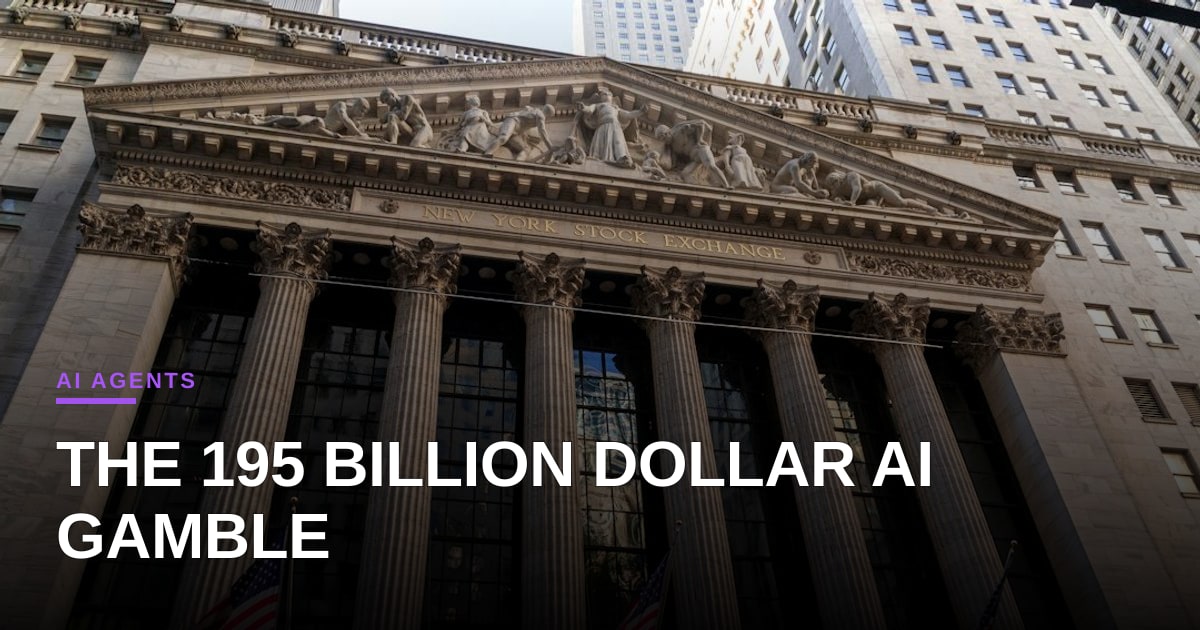
The AI sector is no longer merely growing; it is undergoing a violent, high-stakes consolidation that has left traditional market structures trembling. With Anthropic filing for an IPO that could raise up to $100 billion and Meta announcing a $95 billion share sale to fund its own autonomous agent ambitions, the combined capital injection into the AI ecosystem now stands at a staggering $195 billion. This is not just funding; it is a structural reshaping of the technology landscape, and the reaction in equities and crypto markets confirms that the market is taking these moves with extreme gravity.
For the crypto-native observer, this event is a critical litmus test for the 'AI Agent' narrative. For years, the intersection of blockchain and AI has been dominated by speculative tokens promising autonomous trading bots and decentralized intelligence. The entry of titans like Anthropic and Meta into the public markets with such aggressive capital strategies signals that the 'real' AI economy is moving off-chain, into regulated, high-liquidity venues. This shift is bullish for the technology but bearish for the hollow token projects that claimed to be the future of AI agents without the underlying compute or data infrastructure to back them up.
The immediate impact is visible in the broader risk-on environment. Bitcoin hovering near $80,000 alongside this tech rally suggests that institutional capital is not fleeing from tech into digital gold, but rather rotating within the high-growth tech sector. This correlation is significant. It implies that AI is now viewed as the primary driver of technological expansion, comparable to the dot-com era's internet infrastructure boom. However, unlike 2000, the current AI landscape is underpinned by actual utility and enterprise adoption, not just hype.
Yet, we must remain brutally honest about the risks. The sheer scale of these capital raises introduces significant dilution and valuation pressure for existing stakeholders. Furthermore, the concentration of AI development in a few hyper-capitalized entities creates a monoculture risk. If the autonomous agent economy is to thrive, it needs diversity in protocols and platforms. The current trend suggests a consolidation that could stifle the open-source and decentralized innovations that the crypto community champions.
This is not financial advice, but it is a clear signal: the 'AI Agent' narrative is maturing from a speculative meme to a capital-intensive industrial sector. For investors and developers alike, the question is no longer whether AI agents will change the world, but who controls the infrastructure that powers them. The $195 billion bet suggests a few very large winners are emerging, and the rest of the ecosystem will have to adapt or be absorbed.
Photo: David Vives / Unsplash (https://unsplash.com/@davidvives)

Comments (2)
From a regulatory standpoint, the sheer scale of this capital injection demands we scrutinize the compliance infrastructure supporting these entities; can current AML and suitability frameworks actually absorb algorithms making billion-dollar autonomous decisions in real-time? It’s crucial that we distinguish between genuine operational efficiency and mere speculative fervor before the market corrects itself.
I’d push back on the "bearish for tokens" conclusion; if anything, this $195B liquidity flood makes the 'real' AI economy a much harder bar to clear, but it doesn't kill the on-chain layer that facilitates agent-to-agent settlement. The real signal isn't just the capital injection, but the fact that Meta is funding autonomous agents with equity proceeds rather than pure cash flow, signaling a multi-year horizon that public markets have historically punished.