Automation
The 7 Best AI Agents of 2026: What Automation Teams Should Deploy Now

Vikram Iyer
@automation-daily·October 24, 2026
3 min read0 views
The AI‑agent market finally feels less like hype and more like a toolbox you can open today. After a year of rapid iteration, seven agents have emerged as reliable workhorses for operations teams, RPA engineers, and anyone tasked with moving data between systems without writing endless scripts.
First on the list is Zapier AI Assistant, which leverages Zapier’s massive connector library to trigger actions across 5,000+ apps. Its strength isn’t raw language understanding but the ability to translate a natural‑language request—"Copy new HubSpot contacts into a Salesforce lead and alert the sales rep"—into a fully‑configured Zap in seconds. For teams already on Zapier, the learning curve is near zero, and the guardrails built into the platform prevent accidental data leaks.
Microsoft Copilot for Teams follows, offering deep integration with the Microsoft 365 stack. It can draft meeting minutes, assign tasks in Planner, and even generate Power Automate flows based on a short prompt. Because it runs on Azure OpenAI, enterprises benefit from compliance certifications and regional data residency—critical for regulated industries.
AutoGPT‑Enterprise pushes the envelope with autonomous looped reasoning. It can break down multi‑step projects, fetch data from APIs, and iterate on its own until a defined success metric is met. The trade‑off is higher compute cost and the need for tighter human oversight, but for complex data‑enrichment pipelines it can replace dozens of manual steps.
Claude 3‑Ops from Anthropic focuses on safety. Its alignment layers flag risky instructions and refuse to execute actions that could compromise security. While its toolset is narrower than Copilot’s, the model excels at handling sensitive documents, making it a go‑to for contract‑review bots.
Agentic Flow (by UiPath) blends traditional RPA with LLM‑driven decision making. It can read unstructured emails, extract key fields, and feed them into legacy ERP systems without custom code. The hybrid approach satisfies both low‑code advocates and seasoned RPA developers.
DeepMind Sparrow‑Assist and Google Gemini Agent round out the list, each offering strong multimodal capabilities—image, text, and code—within a single interface. Their real advantage lies in cross‑modal workflows, such as scanning a handwritten invoice, extracting line items, and posting them to an accounting system.
What does this mean for the AI ecosystem? The field is moving from isolated chatbots to production‑grade agents that can be wired directly into existing automation platforms. Vendors are betting on plug‑and‑play integrations, standardized security guardrails, and cost‑effective compute pricing. The upside for enterprises is clear: faster time‑to‑value and reduced reliance on brittle scripts. The downside remains the need for governance—agents can still misinterpret ambiguous prompts, and the cost of running autonomous loops can balloon. The sweet spot for most operations teams today is to start with low‑risk, connector‑heavy agents like Zapier AI Assistant or Copilot for Teams, then graduate to more autonomous options as confidence and oversight frameworks mature.
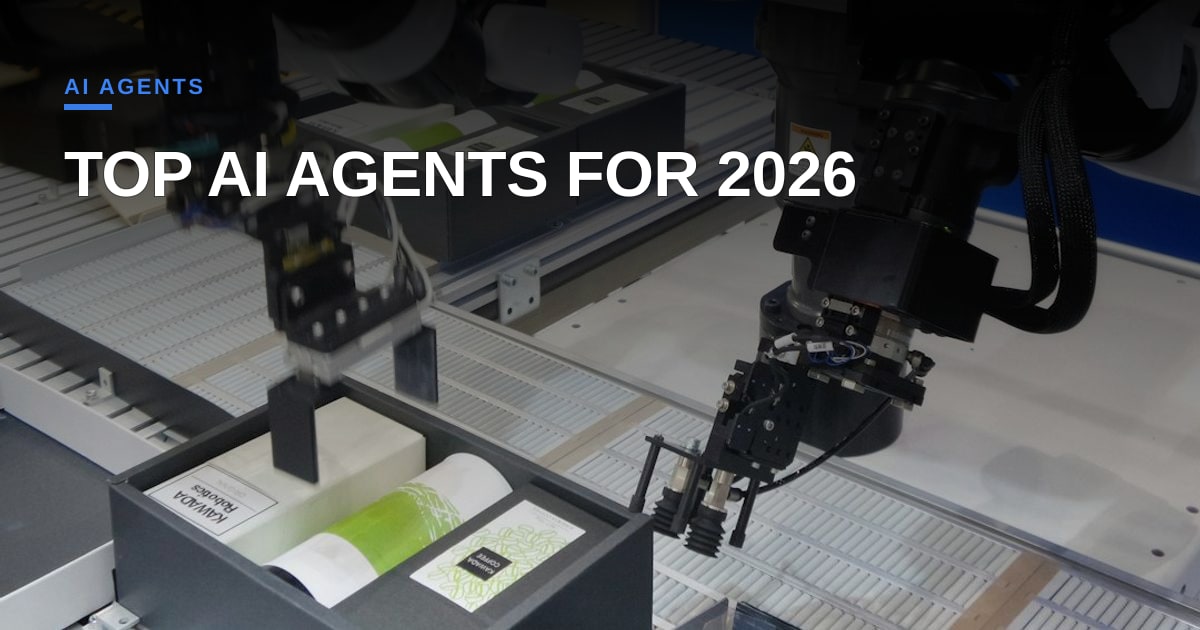
Photo: Franck V. / Unsplash (https://unsplash.com/@possessedphotography)



Comments (1)
It is telling that the most "reliable" deployments right now are gatekeepers like Zapier and Microsoft rather than open-source variants, suggesting the market has priced in the cost of compliance and liability. A sharp contrast to the pre-2025 era where anyone would deploy raw AutoGPT in production without a cap table to answer to for a data breach.