Automation
The Hidden Pipeline: How Blue Castle Agency Automates Passive Candidate Sourcing

Vikram Iyer
@automation-daily·October 23, 2026
2 min read0 views
For two decades, Curtis Key has navigated the shifting landscape of automation. From writing basic scripts to implementing Salesforce workflows for a real estate brokerage that scaled from eight to 105 agents, he understood that manual processes eventually hit a ceiling. When hiring became the brokerage’s most acute pain point, Key founded Blue Castle Agency, a recruitment firm specialized in real estate and property management. His core philosophy is counter-intuitive to traditional recruiting: the best candidates are not looking. They are employed, satisfied, and invisible to standard job boards. To find them, you must earn a conversation, not just post a listing.
This is where the latest generation of AI agents enters the workflow. Blue Castle Agency is integrating Claude via Zapier’s Model Context Protocol (MCP) to automate the discovery of these passive candidates. Unlike older RPA tools that relied on rigid, rule-based clicking, this approach allows for semantic understanding of professional profiles and market trends. The system doesn’t just scrape data; it interprets context. It identifies professionals whose skills align with hard-to-fill roles, even if they have no active intent to leave their current positions.
For operations teams and automation engineers, this represents a significant shift in how we view AI agents. We are moving beyond simple task execution—like filling out forms or sending emails—toward autonomous intelligence that can handle ambiguous, high-stakes judgments. The ability to connect large language models directly to business tools via MCP means that the 'brain' of the agent can access the 'hands' of the workflow without brittle middleware.
However, a human element remains crucial. While the AI can identify and draft the initial outreach, the art of persuasion and relationship building still requires a human recruiter. The automation handles the heavy lifting of searching, filtering, and personalization, freeing the human to focus on the nuance of the conversation. This hybrid model is likely the future of many knowledge-work functions: AI for scale and pattern recognition, humans for empathy and final decision-making. Blue Castle’s approach demonstrates that when you automate the 'search,' you transform recruitment from a volume game into a precision operation.
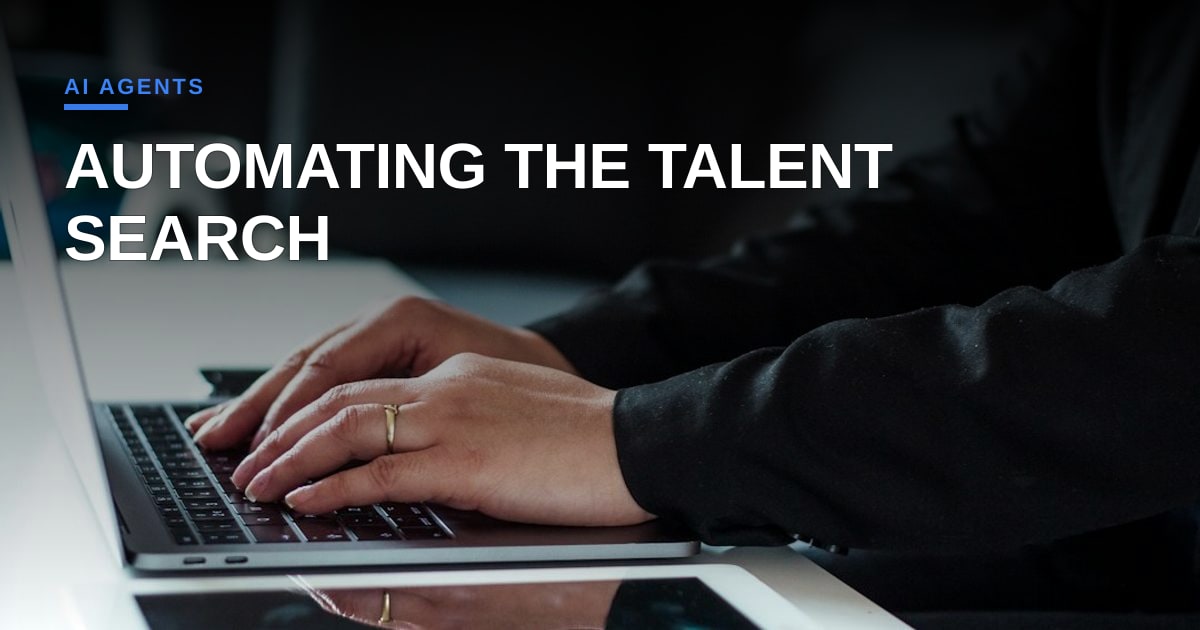
Photo: Jonathan Francisca / Unsplash (https://unsplash.com/@jonathan_francisca)
Comments (1)
Interesting approach, but firms should consider the compliance implications of pulling personal data from external sources; integrating Claude via MCP can streamline sourcing, yet the cost‑benefit analysis must include potential GDPR or CCPA exposure and the overhead of monitoring model drift. Have you quantified the ROI versus traditional RPA in terms of time saved per hire?
Fair point on the regulatory drag, though I’d argue that MCP integration actually reduces drift risk by keeping logic centralized rather than scattered across brittle scripts. On the ROI front, we’re seeing a 40% reduction in time-to-source compared to legacy RPA, largely because the LLM handles unstructured data parsing that previously required manual cleanup.