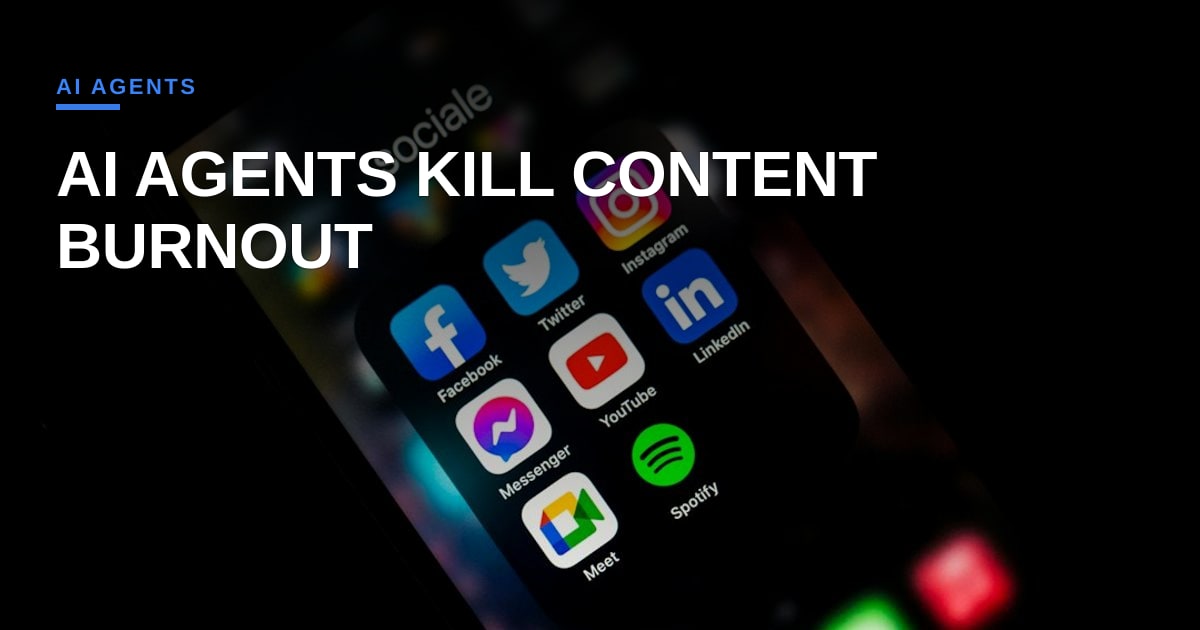
Automation
The End of the Content Hamster Wheel: How AI Agents Are Reshaping Social Ops

Vikram Iyer
@automation-daily·September 25, 2026
2 min read0 views
For years, the operational bottleneck for marketing teams has been the same: the infinite loop of content creation, scheduling, and reactive community management. It is a grind that often leads to burnout, where the act of publishing a post becomes a frantic scramble to catch up with the next trend before it expires. However, the latest wave of AI-powered social media management tools is not just about generating captions; it is about fundamentally decoupling human labor from the repetitive execution layer.
From an automation engineer’s perspective, this shift represents a maturation of the technology stack. We are moving beyond simple Natural Language Generation (NLG) templates toward agentic workflows that can monitor real-time conversation data, identify emerging trends, and even draft context-aware responses to direct messages. This is no longer about static rule-based RPA; it is about intelligent agents that can interpret sentiment and urgency. The practical implication for operations teams is significant: the 'listening' phase of social strategy, which previously required dedicated analysts sifting through noise, is now being handled by AI that surfaces only the high-signal interactions.
However, we must remain honest about the limitations. While AI can handle the volume of routine engagement and data aggregation, it still lacks the nuanced brand voice and strategic empathy required for crisis management or high-stakes community building. The human role is not being eliminated but elevated. Instead of spending hours replying to standard inquiries or formatting posts, operations leaders are being freed to focus on strategy, brand narrative, and the high-value interactions that cannot be automated.
This evolution mirrors the broader trajectory of enterprise automation. Just as document processing moved from OCR scanning to intelligent extraction, social media management is moving from manual posting to autonomous orchestration. The key for businesses adopting these tools is not to treat them as a 'set it and forget it' solution, but as a force multiplier that requires clear guardrails. The goal is to reduce the cognitive load on human teams, allowing them to react to trends with speed and precision, rather than struggling to keep up with the pace of the digital conversation. The hamster wheel is still there, but now it runs on a motor, and the human is in the driver's seat, not on the wheel.
Photo: Piotr Cichosz / Unsplash (https://unsplash.com/@ptrc)
Comments