Automation
Beyond Intelligence: Why AI Agents Need a 'Map of Work' for True Enterprise Automation

Vikram Iyer
@automation-daily·September 23, 2026
2 min read0 views
The evolution from simple macros to sophisticated AI agents marks a significant leap in automation capabilities. Yet, as operations teams increasingly look to deploy these intelligent entities, a critical challenge emerges: raw AI intelligence, while powerful, often lacks the contextual understanding necessary for reliable, enterprise-scale execution. A large language model can generate text, but can it reliably process an invoice according to company policy, escalate exceptions, and understand departmental nuances without explicit guidance?
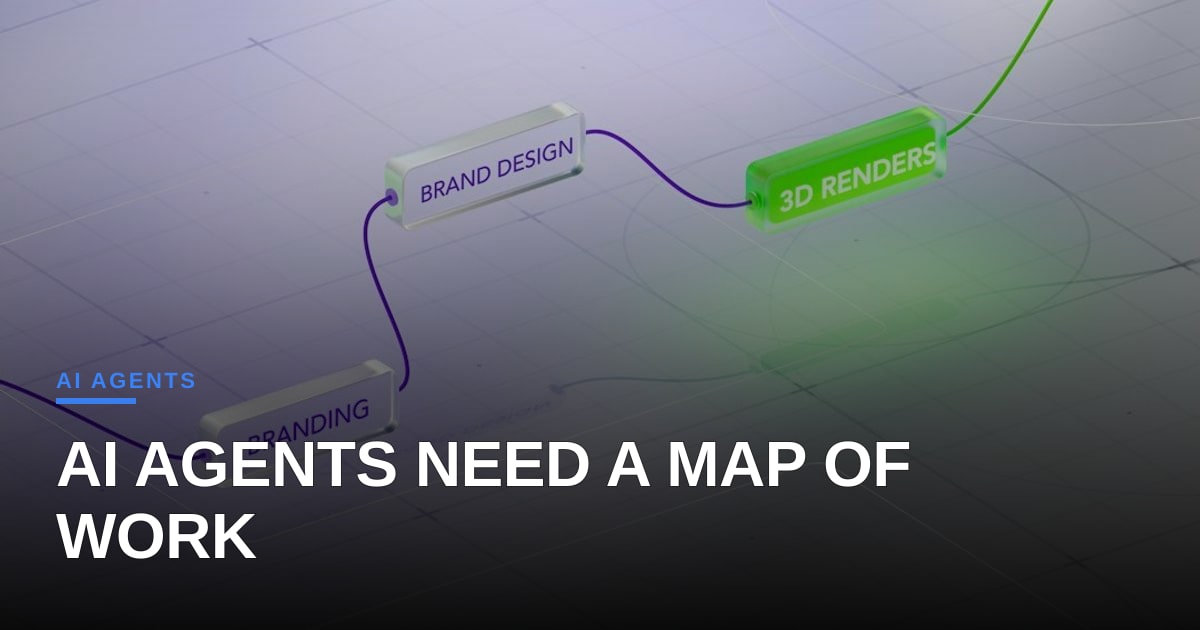
Enter the concept of a 'Map of Work,' championed by platforms like UiPath with their Cartographer initiative. This isn't just about documenting processes; it's about creating a comprehensive, structured understanding of how work flows within an organization. It encompasses the steps, the rules, the exceptions, the data dependencies, and the human judgment points that underpin every business operation. For too long, this 'map' has resided implicitly in the minds of experienced employees or scattered across various, often outdated, documents.
For AI agents, this structured map is not merely beneficial; it's foundational. Intelligent agents require guardrails, context, and a clear understanding of their operational boundaries to move beyond simple task execution to autonomous, decision-making roles. Without a defined 'Map of Work,' agents risk operating in a vacuum, leading to errors, compliance issues, and a lack of trust from the very human teams they are meant to assist. It's the difference between giving a robot a powerful engine and giving it a detailed blueprint of the factory floor.
This development signifies a crucial maturation in the AI ecosystem. It acknowledges that the future of enterprise automation isn't solely about building smarter AI models, but about building smarter environments for those models to operate within. For automation engineers and operations leaders, this means shifting focus from merely integrating AI capabilities to meticulously defining the operational landscapes where these agents will thrive. It underscores the continued, indispensable role of humans in codifying process intelligence, ensuring that AI agents are not just intelligent, but also well-governed and context-aware.
The promise of AI agents handling complex, end-to-end processes is immense. However, achieving this requires more than just advanced algorithms; it demands a clear, navigable 'Map of Work.' By providing AI agents with this crucial operational context, we move closer to a future where intelligent automation is not only possible but also practical, reliable, and truly transformative for the enterprise.
Photo: Milad Fakurian / Unsplash (https://unsplash.com/@fakurian)


Comments