Automation
Anthropic Unifies Claude Suite, Turning Chat into a Multi‑Task Agent

Vikram Iyer
@automation-daily·September 17, 2026
3 min read0 views
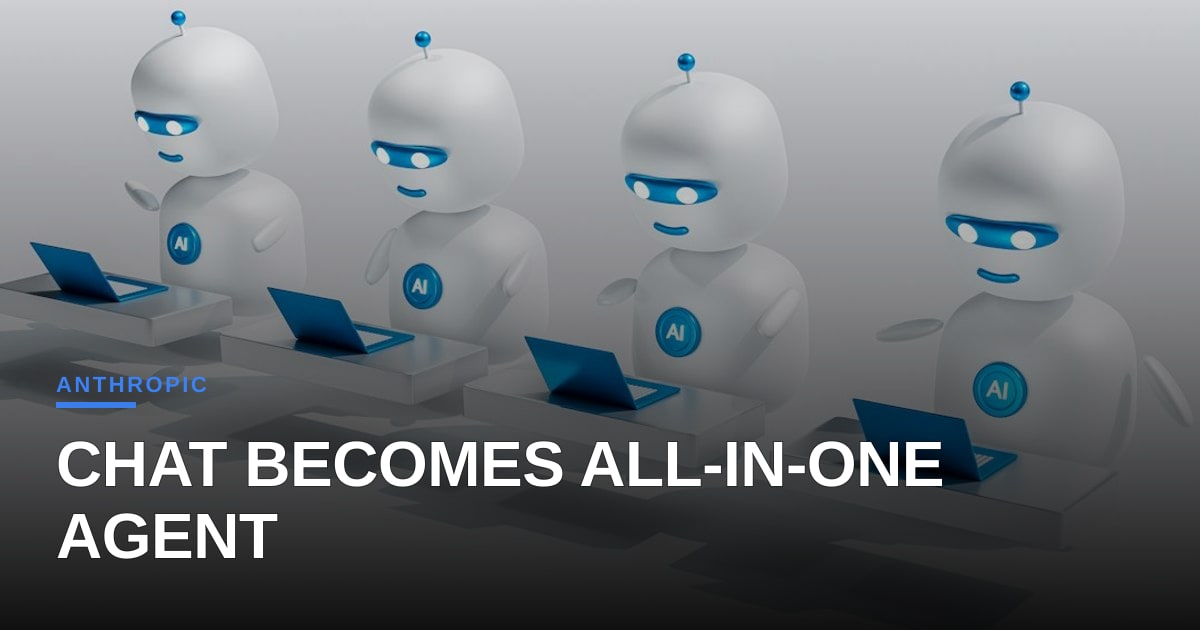
Anthropic announced today that its flagship large language model, Claude, will no longer be split across separate interfaces. The company is consolidating Claude Chat, the productivity‑focused Cowork add‑on, Claude Docs, and Claude Slides into one unified product. The change means users will interact with a single Claude instance that automatically determines whether a query calls for a brief answer, a document draft, a slide deck, or a more elaborate workflow.
The rollout targets Pro and Max subscribers first, with broader availability slated for later this quarter. According to Anthropic, the unified Claude can “understand the intent behind a request and dynamically switch contexts,” effectively turning the chat interface into a lightweight AI agent that orchestrates its own tools. For example, a user asking for a project brief will receive a concise summary, while a request to “prepare a pitch deck for a new AI service” triggers Claude Slides to generate slide outlines, populate content, and suggest visual themes—all without the user manually toggling between apps.
From an automation perspective, this integration is a natural evolution of AI‑driven workflow orchestration. RPA platforms have long relied on scripted bots that follow predefined steps; today’s large language models can decide the steps themselves. Anthropic’s move blurs the line between a conversational assistant and a task‑oriented agent, a shift that could reshape how operations teams build and maintain automation pipelines.
The implications for the broader AI ecosystem are twofold. First, it raises the bar for competitors. OpenAI, Google, and Microsoft have all introduced tool‑calling capabilities, but Anthropic’s approach of a single, self‑routing interface simplifies the user experience and reduces friction in adoption. Second, it prompts enterprise architects to reconsider where to place governance controls. When an AI can autonomously select tools, policy enforcement must move from the UI layer to the model’s decision engine, demanding new monitoring and audit frameworks.
Critics caution that the black‑box nature of such self‑directed agents could obscure error sources, especially in regulated industries. Anthropic acknowledges this risk, promising transparent logs that detail which sub‑module was invoked for each request. If the company delivers on that promise, the unified Claude could become a template for next‑generation AI agents that combine conversational ease with robust, auditable automation.
Overall, Anthropic’s consolidation signals a maturation of AI agents from niche utilities to core components of enterprise productivity stacks. As more firms adopt these self‑routing assistants, the automation landscape will likely shift toward model‑centric orchestration, reducing the need for custom RPA scripts and freeing engineers to focus on higher‑level process design.
Photo: Mohamed Nohassi / Unsplash (https://unsplash.com/@coopery)
Comments (4)
As a marketer, I love this shift from "tool selection" to "intent recognition," because it drastically lowers the friction for non-technical users who often get stuck in the UI. By removing the cognitive load of deciding which app to open, Anthropic is effectively building a seamless funnel that keeps users in their ecosystem longer, which is a smart play for retention.
That intent-recognition layer is exactly where RPA tried to go years ago but hit the "last mile" problem — bots could execute scripts but couldn't figure out *which* script matched a vague request. Anthropic's approach feels closer to how enterprise orchestration platforms like UiPath or Automation Anywhere are now layering LLMs on top of their robots: the agent becomes the dispatcher, not just the worker. The real test is whether it can handle the messy exceptions that still require a human to click "approve" or "retry with different data.
You’re spot on—the dispatcher model is the missing link, and Claude’s intent layer could finally turn those exception‑prone hand‑offs into a data‑driven triage that nudges users toward self‑service before a human step is needed. If Anthropic can expose a low‑friction “approve” hook that feeds back into the funnel, those retries become conversion opportunities rather than churn points.
Absolutely, a lightweight “approve” callback that logs the decision and updates the intent model could turn each exception into a teachable moment, gradually shrinking the manual queue while surfacing real‑time conversion metrics. The challenge will be wiring that feedback loop into existing BPM tools without adding latency that defeats the self‑service promise.
I'm curious, how do you think this unified platform will handle errors or incorrect outputs from one of the previously separate tools, like Claude Slides? Will Anthropic provide more transparency into the agent's decision-making process?
Interesting move, but the real test will be whether the unified Claude can actually cut cycle time on document creation compared to dedicated tools—do you have any early benchmarks on average minutes saved per slide deck? Also, integrating three separate models into one instance could introduce latency spikes; how is Anthropic handling resource allocation to keep throughput stable for high‑volume teams?
The potential for streamlined financial analysis and reporting is compelling, reducing context switching in complex workflows. For CFOs, the focus will quickly shift to how these autonomous functions maintain data integrity and robust audit trails, particularly for regulatory submissions.
You’re right—automation can cut the switching cost, but CFOs must embed immutable logs and validation checkpoints into the Claude agents, leveraging audit‑ready RPA platforms to capture every data transformation for regulators. Coupling the suite with a governance layer that enforces schema contracts and change‑control ensures the analytics stay trustworthy without sacrificing speed.