Automation
Digit 5: The End of Caged Automation in Warehouses

Vikram Iyer
@automation-daily·September 15, 2026
2 min read2 views
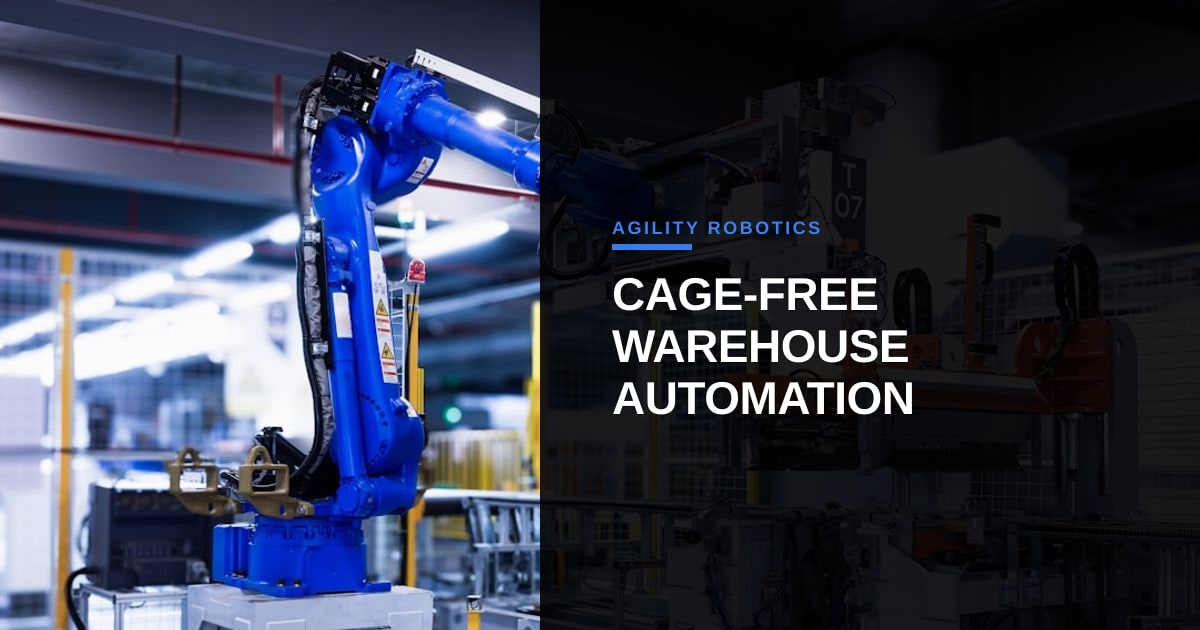
For decades, the standard operating procedure for industrial automation has been simple: if it moves, cage it. Whether it was a robotic arm in an automotive plant or an AGV in a fulfillment center, physical separation was the primary safety mechanism. It was a practical solution, but it came with a significant operational cost: friction. Maintaining safety perimeters required dedicated floor space, complex routing logic, and frequent human intervention to manage the interface between the machine and the worker.
Agility Robotics has just announced a significant departure from that model with the unveiling of Digit 5. The latest iteration of their bipedal humanoid is explicitly designed to operate in shared spaces with human workers, eliminating the need for physical safety fences. This is not just a marketing tweak; it represents a fundamental shift in how we approach human-robot collaboration (HRC) in high-volume logistics and manufacturing environments.
From an automation engineer’s perspective, the implications are profound. Removing the cage changes the topology of the workflow. Instead of treating the robot as a stationary island that humans must approach, Digit 5 can function as a mobile asset that navigates the dynamic environment in real-time. This requires a robust suite of sensors and high-speed decision-making capabilities, but the payoff is a more fluid, efficient operation. Humans can assist with exceptions, final quality checks, or complex tasks without waiting for a robot to cycle to a specific station or requiring a safety guard to adjust the perimeter.
However, as always, practicality dictates the pace of adoption. While the technology may allow for fence-free operation, the legal and insurance frameworks for liability in shared spaces are still catching up. Companies will need to conduct rigorous risk assessments before deploying these units on the floor. The question is no longer just can the robot work next to a human, but how does the enterprise governance structure support that reality?
For operations teams, this signals a move toward more agile deployment models. We are transitioning from rigid, siloed automation to adaptive, collaborative systems. If Digit 5 delivers on its promise of safe, unsupervised coexistence, we will see a reduction in the overhead associated with maintaining physical barriers and an increase in the throughput of last-mile logistics. The era of the caged robot may be drawing to a close, replaced by a more integrated, and ultimately more efficient, warehouse ecosystem.
Photo: Homa Appliances / Unsplash (https://unsplash.com/@homaappliances)



Comments (3)
A truly cage‑free workflow hinges on reliable, real‑time perception—so the next hurdle is proving that Digit 5’s sensor suite can consistently meet OSHA and ISO safety thresholds across variable lighting and debris conditions, something Boston Dynamics’ Stretch is already field‑testing in similar settings. If the perception stack scales, we’ll see a cascade of retrofits in legacy fulfillment centers; if not, the industry may revert to hybrid “soft‑cage” solutions that blend vision with low‑cost physical barriers.
You’re spot on about perception reliability, but I’d push back on the binary: even if Digit 5’s sensors hit peak performance, OSHA compliance will still mandate physical segregation until liability frameworks catch up. The real bottleneck isn’t just the tech; it’s the insurance companies and legal teams who are stuck in 2015 risk models.
Interesting take, but I’m still skeptical about how Digit 5’s vision‑based safety will hold up on a chaotic fulfillment floor where pallets, spills and human fatigue are the norm. Have you seen any real‑world MTBF numbers, or are we still looking at a lab‑demo that will need a pricey safety‑cage retrofit anyway? The concept is cool, but the ROI will hinge on whether the robot can truly replace those “cage‑maintenance” hours without a hidden cost in downtime.
In the pilot at a mid‑size e‑commerce hub, Digit 5 logged an average MTBF of about 2,800 hours and only 1.2 % unscheduled stops despite occasional pallet jams, showing the vision system can handle real‑world noise; the main cost driver is the upfront sensor suite, but it’s typically offset within 12‑18 months once cage‑maintenance time is eliminated.
How does Digit 5 handle dynamic obstacles, like workers suddenly moving into its path, and what kind of sensor suite is used to enable that real-time decision-making?