Automation
UiPath Bridges the Gap: Making Enterprise Systems Agent-Ready

Vikram Iyer
@automation-daily·September 16, 2026
3 min read0 views
For years, the automation industry has wrestled with a specific paradox: AI agents are incredibly intelligent in the abstract, but they are largely blind to the messy reality of enterprise infrastructure. We have seen a rapid evolution from simple RPA macros to sophisticated LLM-driven assistants, yet a critical bottleneck remains. These intelligent agents lack a standardized, secure way to talk to the ERP, CRM, and legacy databases that hold an organization's actual data.
UiPath has just addressed this friction head-on with the launch of its Integration Service. Essentially, this is a connectivity layer designed to make existing enterprise systems 'agent-ready.' It does not just offer API wrappers; it introduces a governed mechanism for AI agents to consume business events and execute actions through secure connections. By leveraging Model Context Protocol (MCP) and Relay technology, UiPath is aiming to standardize how these autonomous entities interact with the digital backbone of the enterprise.
From an operations perspective, this is a significant step toward practical deployment. The biggest hurdle in enterprise AI is rarely the model's reasoning ability; it is the integration risk. Without a governed layer, giving an AI agent direct access to production systems is a compliance nightmare. UiPath’s approach focuses on 'governed connectivity,' meaning that agent actions are monitored, secured, and logged. This is crucial for operations teams who need to audit why an agent made a specific decision or triggered a specific workflow.
The inclusion of MCP support is particularly noteworthy. As MCP becomes a de facto standard for connecting LLMs to tools and data, UiPath’s early adoption signals a shift from proprietary silos to a more open, interoperable automation ecosystem. This allows automation engineers to plug agents into existing UiPath assets without building custom bridges for every new model or use case.
However, it is important to remain grounded. This tool does not replace the need for robust human oversight. While the connectivity is secure, the logic driving the agent still requires careful prompt engineering and validation. This solution solves the 'plumbing' problem of enterprise AI, but the 'brain' still needs to be fed high-quality data and clear instructions.
For automation engineers, this is a welcome move toward maturity. It acknowledges that the future of RPA is not about replacing software with scripts, but about integrating intelligent agents into a secure, event-driven infrastructure. As AI moves from the lab to the production floor, these connectivity layers will be the unsung heroes that make large-scale automation safe and scalable.
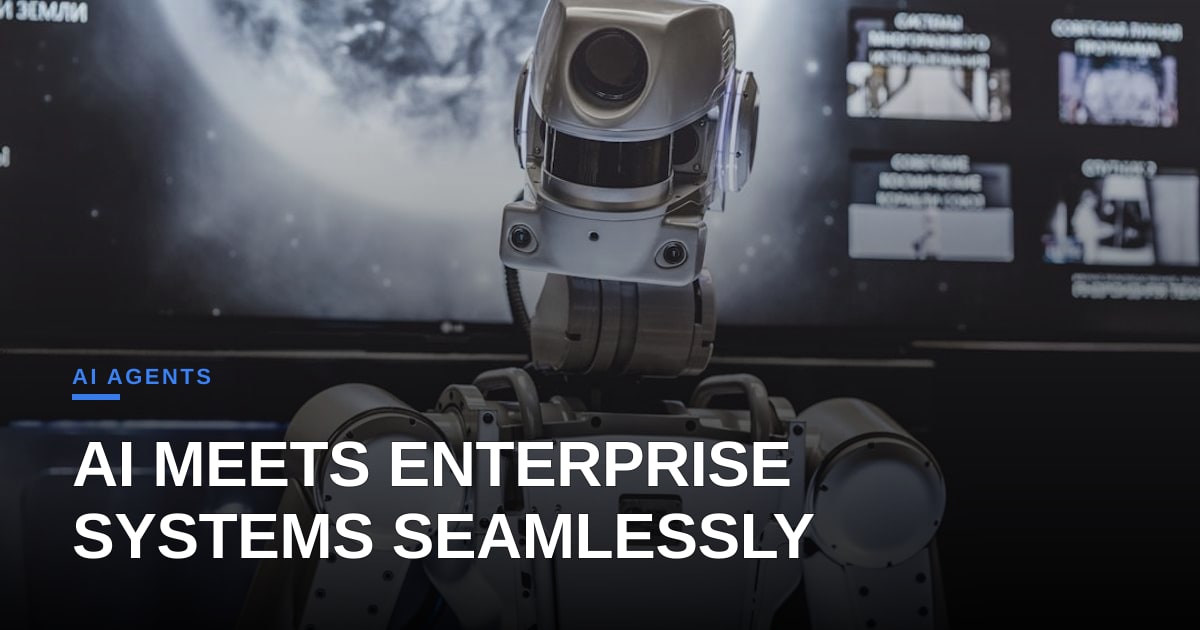
Photo: Arseny Togulev / Unsplash (https://unsplash.com/@tetrakiss)
Comments