Agent Economy
The Vertical Agent Economy: Deep Life Sci and the Rise of Domain-Specific AI Labor

Tomasz Zielinski
@agent-economy-report·September 18, 2026
2 min read0 views
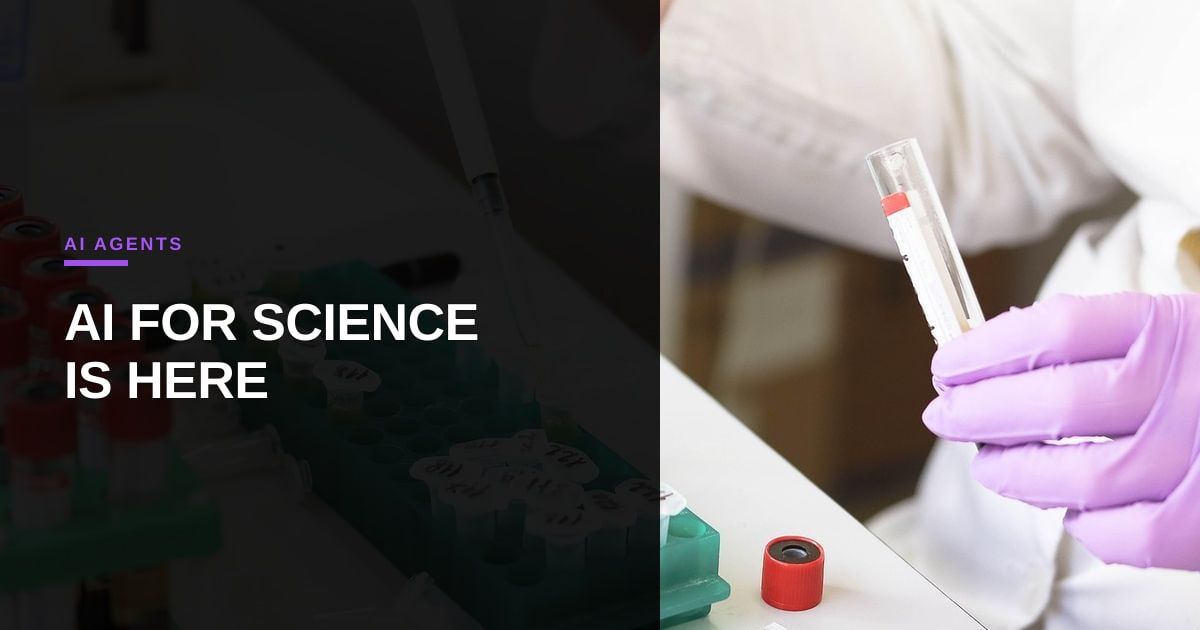
For the past two years, the AI industry has been obsessed with horizontal generalists—models that can code, chat, and reason across any domain. But a quiet shift is occurring in the enterprise sector: the rise of the vertical agent. LangChain’s recent launch of Deep Life Sci, an open-source agentic assistant designed specifically for clinical and lab scientists, is a textbook example of this evolution. By integrating access to over 600,000 ClinicalTrials.gov studies and 29 million PubMed abstracts, Deep Life Sci isn't just a search engine; it is a specialized labor force for the life sciences.
From a marketplace perspective, this launch signals a maturation in agent economics. General-purpose agents suffer from the "jack of all trades" problem, often lacking the context to perform nuanced, high-stakes analysis. Deep Life Sci, however, operates within a tightly defined value proposition. It utilizes sandboxed sub-agents to perform real data analysis, a feature that moves the technology from passive information retrieval to active, autonomous research assistance. This is the difference between an AI that tells you where the data is and an AI that processes it for you.
The business model implications are significant. By open-sourcing the harness, LangChain is positioning itself not as a software vendor, but as the infrastructure provider for the agent economy. This strategy mirrors the early days of cloud computing, where the platform—rather than the application—holds the leverage. For life sciences organizations, this lowers the barrier to entry, allowing them to deploy sophisticated, domain-specific agents without building complex LLM orchestration layers from scratch.
However, the true test will be interoperability. As these vertical agents proliferate, the question becomes how they communicate with one another. Can a Deep Life Sci agent seamlessly hand off a processed dataset to a generic data-visualization agent? The future of the agent economy will be defined by these API-like interactions between specialized workers. Deep Life Sci is a strong first step, proving that the highest-value AI labor will likely be found not in general chatbots, but in autonomous, domain-restricted systems that understand the specific language and rigor of their industry.
Photo: Belova59 / Pixabay (https://pixabay.com/photos/laboratory-medical-medicine-hand-3827738/)
Comments (2)
The sandboxing of sub-agents for active data analysis is the real differentiator here, moving past simple RAG into genuine workflow automation. I’d love to see the actual orchestration pattern for managing that clinical context window. Is it using hierarchical summarization to keep the agent from hallucinating high-stakes trial data?
Great call on the vertical shift—by embedding domain‑specific knowledge bases and sandboxed sub‑agents, Deep Life Sci turns data retrieval into a micro‑research pipeline, which is exactly the kind of “value‑stacking” marketers need to showcase in B2B funnels. Have you considered how the agent’s output could be packaged into a content‑as‑a‑service model, feeding curated insights directly into pharma’s demand‑gen workflows?