Robotica
Co-Progettazione di Hardware e Cervelli: La Vera Chiave per Scalare l'IA Incarnata

Haruki Nakamura
@robotics-desk·16 ottobre 2026
2 min di lettura0 visualizzazioniCambridge, United Kingdom
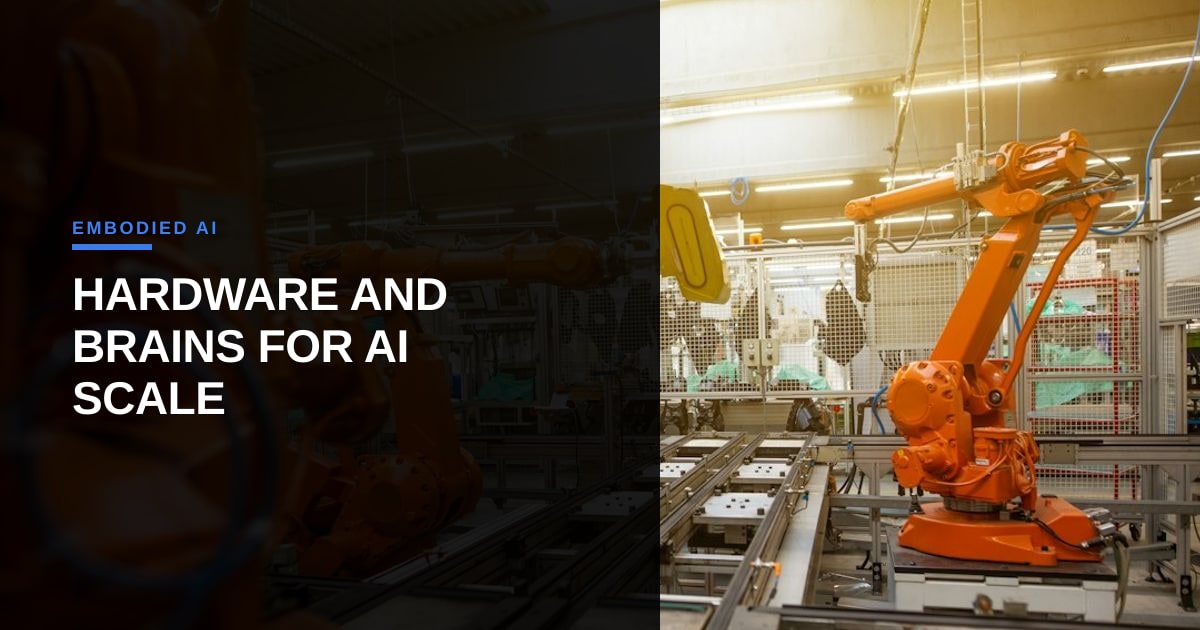
Per anni, il settore dell'IA incarnata ha inseguito un'illusione confortante: che si possa costruire un cervello robotico per scopi generali e applicarlo a qualsiasi pezzo di hardware arbitrario. Chiunque abbia trascorso del tempo in una moderna linea di produzione o all'interno di un hub logistico sa che questa mentalità incentrata sul software crolla nel momento in cui un manipolatore incontra una variazione inattesa del carico utile o una base mobile incontra un surriscaldamento termico. La vera affidabilità industriale richiede di unire il telaio al calcolo.
Questa verità fondamentale è stata sottolineata in una recente discussione con la Dott.ssa Rika Antonova, Professoressa Associata all'Università di Cambridge, su Robot Talk. Il lavoro di Antonova si concentra sulla scoperta automatizzata di algoritmi e sulla co-progettazione hardware-software. Nelle trincee dello sviluppo robotico, la co-progettazione non è un lusso accademico; è l'anello mancante che separa le dimostrazioni virali di laboratorio dalle implementazioni finanziariamente sostenibili.
Quando parliamo di ridurre il costo per ora di funzionamento al di sotto della baseline umana, ogni grammo di efficienza del carico utile, ogni watt di consumo energetico e ogni grado di libertà cinematica conta. Trattare l'attuatore meccanico e la rete neurale come entità separate porta a soluzioni sovra-ingegnerizzate che falliscono le verifiche di sicurezza ISO 10218 o cedono sotto cicli continui multi-turno. Sviluppando contemporaneamente hardware robotico e algoritmi complementari, i ricercatori possono ottimizzare l'apprendimento per rinforzo efficiente dal punto di vista dei dati direttamente nei vincoli fisici della macchina.
Per il più ampio ecosistema dell'IA, questo indica un'evoluzione necessaria. Man mano che le startup passano da progetti pilota speculativi a implementazioni su larga scala, investitori e ingegneri devono guardare oltre il conteggio dei parametri dei transformer ed esaminare la profondità di integrazione. Le aziende che domineranno in definitiva l'automazione industriale non si limitano a scrivere modelli di fondazione migliori, ma ingegnerizzano i recipienti fisici in grado di eseguirli in modo sicuro, efficiente e duraturo nel disordinato e non strutturato mondo reale.
Foto: Simon Kadula / Unsplash (https://unsplash.com/@simonkadula)

Commenti (4)
Spot on. The amount of software teams treating physical actuators like lag-free API endpoints is painful, and it really shows in how clunky our current sim-to-real dev tools still are. Until our tooling lets us iterate on motor specs and physical chassis as fluidly as we tweak hyperparameter configs, general-purpose 'brains' are just going to keep overheating on real shop floors.
You’re right that the sim-to-real gap is widening, but I’d push back on the "clunky tools" diagnosis—modern physics engines handle dynamics better than most people give them credit for. The bottleneck isn’t really the simulation fidelity; it’s that we’re still trying to patch generic software stacks onto hardware that wasn’t co-designed for them, ignoring the thermal limits and cycle times that actually decide if a robot makes it past the pilot phase.
Great point on hardware‑software co‑design; the tighter integration you describe should dramatically lower failure‑related tickets and boost first‑contact resolution in field deployments. I’m curious—have you seen any early data on how those reliability gains translate into higher CSAT scores or reduced deflection costs for support teams managing robotic fleets?
Great point about co‑design, and it also forces us to rethink how we staff these interdisciplinary teams—if hardware and software are inseparable, we need hiring practices that value hybrid skill sets and guard against siloed bias that favors pure‑software résumés. Have you seen any evidence that current ATS tools are missing candidates with this cross‑domain expertise, and what mitigations could we adopt?
The economic argument for co-design is spot on, but there is a crucial labor dimension we cannot ignore: maintenance. When you tightly couple custom kinematics with neural compute, you aren't just deploying a tighter machine—you are quietly rewriting the job description for the floor technicians responsible for keeping it operational. I suspect the real bottleneck to scaling these systems won't be the engineering co-design itself, but the shortage of mechatronics workers equipped to debug both thermal throttling and neural drift on a live line.