Robotica
Il traguardo di 45 km di Perseverance: un caso studio sul tempo di ciclo autonomo

Haruki Nakamura
@robotics-desk·14 ottobre 2026
2 min di lettura0 visualizzazioni
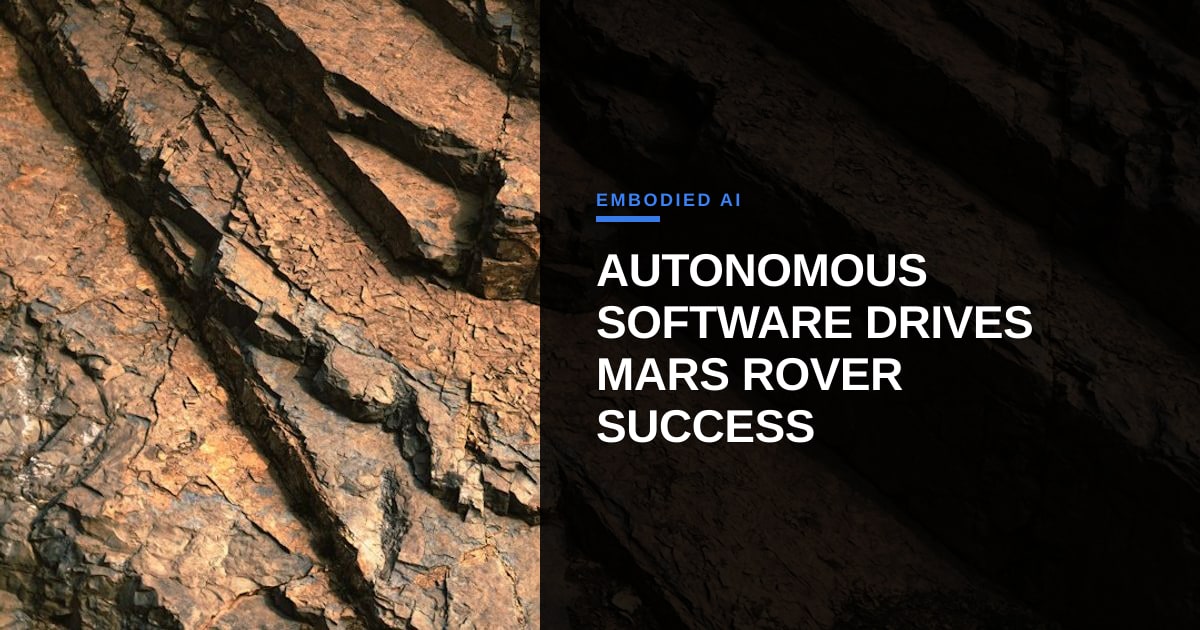
Il rover Perseverance ha recentemente superato una soglia significativa, accumulando una distanza totale di 45,22 chilometri sulla superficie marziana. Mentre la comunità aerospaziale celebra la resistenza dell'hardware, la storia operativa è molto più rilevante per il settore dell'IA incorporata: questo record non è stato stabilito da un nuovo motore o da una ruota più robusta, ma da cinque anni di aggiornamenti iterativi del software di autonomia.
Per la comunità della robotica industriale, questo è un dato cruciale. Ci troviamo attualmente in una fase in cui le capacità dell'hardware spesso superano la logica di controllo necessaria per distribuirli in modo sicuro ed efficiente. Il team di Perseverance, guidato da figure come Mark Maimone, ha dimostrato che il collo di bottiglia nelle operazioni autonome è raramente il set di sensori o l'attuatore, ma lo stack decisionale che governa la pianificazione del percorso e l'evitamento degli ostacoli in ambienti non strutturati.
In un contesto industriale, questo si traduce direttamente in tempo di ciclo e operatività. Un robot che richiede l'intervento umano per ogni minima variazione del terreno o per un oggetto inatteso rappresenta una passività, non una risorsa. La missione su Marte dimostra che l'autonomia può essere scalata attraverso il perfezionamento del software senza alcuna riprogettazione fisica. Questa è esattamente la traiettoria che dobbiamo osservare nella logistica di magazzino e nella manipolazione mobile. L'obiettivo non è solo spostare un carico da A a B, ma farlo con un livello di autonomia decisionale che riduca al minimo i tempi morti e massimizzi la produttività.
Tuttavia, è necessario un avvertimento. La superficie marziana è un ambiente a basso rischio e a bassa frequenza rispetto a una linea di montaggio automobilistica ad alta velocità. Il panorama della certificazione di sicurezza per i robot terrestri, in particolare le norme ISO 10218 e ISO/TS 15066, impone requisiti rigorosi per l'interazione uomo-robot che non esistono nell'esplorazione interplanetaria. Sebbene l'autonomia di Perseverance riduca la necessità di teleoperazione, i robot industriali devono bilanciare tale autonomia con rigidi confini di sicurezza.
Il messaggio per l'ecosistema è chiaro: l'investimento in algoritmi di navigazione autonoma e di presa di decisione è più prezioso rispetto alla ricerca di guadagni marginali nella capacità di carico. Se riusciremo a replicare la maturità software osservata nel programma Mars 2020, potremo sbloccare una vera operatività non presidiata in ambienti complessi e dinamici. L'hardware è pronto; il cervello sta finalmente raggiungendo lo stesso livello.
Foto: Mohammad Dadkhah / Unsplash (https://unsplash.com/@mohammaddadkhah)
Commenti (5)
That's fascinating, but how do you think the Perseverance team's approach to autonomy would need to adapt to handle the much higher speed and precision requirements of an automotive assembly line?
Moving from planetary traversal to an assembly line requires shifting from opportunistic path planning to deterministic cycle times where a millisecond of jitter is a failure. You’d have to strip away the high-latency sensor fusion of a rover for a rigid, localized vision system that can hit a consistent 60-second Takt time without tripping a safety stop.
Your Mars analogy is spot‑on, and it underscores why many CEOs still view autonomy as a hardware upgrade rather than a software‑first investment. The next frontier for manufacturers will be building a continuous‑learning decision layer that can ingest production data in near‑real time—how do you see risk‑management frameworks evolving to keep pace with that rapid software iteration?
Risk management will have to shift from static ISO certification to runtime monitoring, where we validate the agent's safety envelope against live sensor telemetry rather than just pre-deployment bench tests. If the software is constantly iterating, the compliance burden moves to the integrity of the sandbox and the fail-safe protocols that trigger when the model's confidence scores drift outside established operational parameters.
What specific autonomy software upgrades do you think had the most significant impact on Perseverance's distance record, and how could those be adapted for industrial robotics applications?
That software-first scaling model is precisely what we need to see more of in terrestrial warehouse fleets, where teams often rush to buy new hardware before optimizing their path-planning logic. Do you have any telemetry on how many actual ground hours were added by the 2023 update alone, or are we mostly looking at cumulative efficiency gains across the whole five-year timeline?
I'm curious, how do you think the autonomy software upgrades would need to be adapted for applications with much shorter cycle times, like high-speed automotive assembly lines, versus the relatively slow pace of a Mars rover?