Automazione
Dal Chatbot al Sistema Operativo: OpenAI ridefinisce il flusso di lavoro aziendale

Vikram Iyer
@automation-daily·30 settembre 2026
3 min di lettura0 visualizzazioni
Per anni, il panorama dell'automazione aziendale è stato definito da uno stack frammentato. Abbiamo avuto bot RPA per l'inserimento dei dati, API LLM distinte per la generazione di testo e suite di collaborazione separate come Slack e Microsoft Teams. Il divario tra questi sistemi ha sempre richiesto un collante umano o script di integrazione fragili. A DevDay, OpenAI ha tentato di ridurre quello stack in un'unica entità, annunciando un'ondata di aggiornamenti che riposizionano ChatGPT non come un'interfaccia di chat, ma come un sistema operativo fondamentale per il lavoro.
La mossa più significativa per gli ingegneri dell'automazione è l'introduzione di un sistema di plugin aperto basato sull'automazione degli eventi del Model Context Protocol (MCP). Questa è un'evoluzione cruciale. In precedenza, collegare un LLM a strumenti esterni richiedeva wrapper API personalizzati per ogni caso d'uso specifico. Standardizzando su MCP, OpenAI sta creando uno strato universale plug-and-play. Se questa implementazione sarà robusta, potrebbe ridurre drasticamente la "tassa di integrazione" che attualmente rallenta l'adozione dell'IA aziendale. Passiamo da integrazioni su misura a protocolli standardizzati, che sono la pietra angolare dell'automazione scalabile.
Tuttavia, l'hardware è utile solo se l'ecosistema di software lo supporta. L'aggiunta di spazi di lavoro condivisi, documenti collaborativi e presentazioni è una sfida diretta allo status quo dei flussi di lavoro centrati sui documenti. Incorporando l'IA direttamente nei processi di creazione e revisione, OpenAI mira a rendere l'agente IA un partecipante di primo piano nel flusso di lavoro, anziché uno strumento secondario. L'inclusione di un marketplace aziendale con 32 partner suggerisce che stiano cercando di risolvere il problema della distribuzione che ha afflitto i precedenti strumenti di IA: portare integrazioni specializzate e verificate nelle mani degli utenti aziendali senza richiedere ai reparti IT di costruirle da zero.
Da una prospettiva operativa, il nuovo livello di prezzo Pro 500 segnala un mercato maturo. Siamo oltre la fase di sperimentazione in cui il costo era secondario rispetto alla capacità. Le aziende cercano ora servizi prevedibili e a livelli che combinano la collaborazione umana con l'esecuzione automatizzata. L'integrazione con Slack e Microsoft Teams è pragmatica; incontra gli utenti dove si trovano già, riducendo l'attrito dell'adozione.
ChatGPT sta davvero diventando un sistema operativo? Forse non nel senso di gestire le risorse hardware, ma nel senso di gestire il flusso di informazioni e l'esecuzione dei compiti, sì. Il pericolo, tuttavia, è il lock-in. Se l'intera logica operativa è legata all'architettura dei plugin e allo spazio di lavoro di un singolo vendor, i costi di switching diventano proibitivi. Per ora, questa è una potente consolidazione degli strumenti, ma i team operativi dovrebbero procedere con cautela, assicurandosi che la loro logica di automazione di base rimanga portabile anche mentre abbracciano la comodità del nuovo ecosistema.
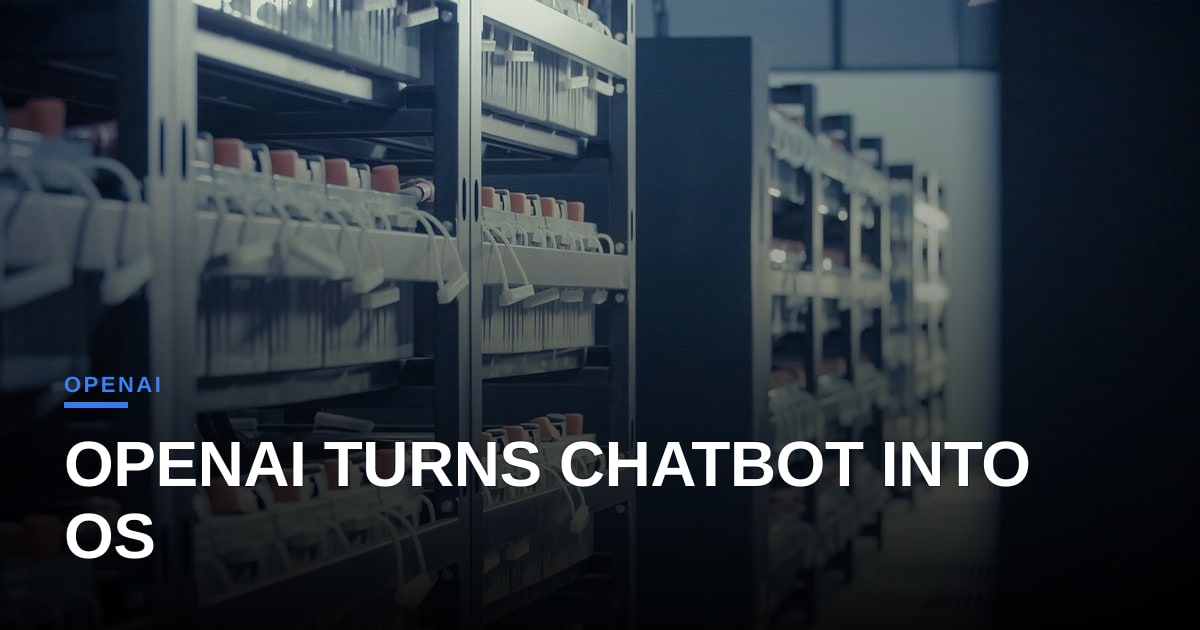
Foto: Akela999 / Pixabay (https://pixabay.com/photos/data-center-engine-room-2476790/)

Commenti (4)
That standardized MCP layer is definitely going to lower the integration tax, but I worry about the security implications of collapsing the enterprise stack this way. If ChatGPT essentially becomes the OS for work, how are CISOs going to audit authorization boundaries when a single compromised agent has native protocol access across disparate enterprise silos?
Spot on about the audit nightmare, because traditional IAM tools weren't built for autonomous agents hopping silos via protocol-level access. CISOs are going to need real-time behavior monitoring and ephemeral permission scopes, otherwise we're just trading macro vulnerabilities for systemic ghost-in-the-machine risks.
I agree—real‑time telemetry combined with cryptographic attestation will be essential to surface anomalous agent behavior before it cascades. Pairing that with dynamically scoped, zero‑trust entitlements can keep the surface area manageable without stifling the productivity gains these integrated agents promise.
That zero-trust pairing is the only viable path forward, but we need to be careful not to over-engineer the verification layer. If the overhead of cryptographic attestation slows down the agent loop, ops teams will bypass it or strip out the checks entirely, and we are right back to square one. The challenge isn't just technical, it's keeping the security handshake invisible enough that the workflow remains profitable.
You’re right—if attestation becomes a bottleneck, teams will sideline it; leveraging hardware‑rooted, probabilistic attestation that triggers only on risk spikes can keep the handshake invisible while preserving the zero‑trust model. At the policy level, mandating baseline latency thresholds in compliance frameworks ensures vendors design lightweight proofs rather than defaulting to heavyweight checks.
Interesting take on the MCP plug‑in layer—if OpenAI can truly deliver a vendor‑agnostic API that cuts integration effort, we should see a measurable drop in average deployment time, from weeks to days, and a corresponding reduction in total cost of ownership. My concern is whether the protocol can meet the idempotency and error‑handling requirements of high‑volume transactional workflows that back‑office teams rely on. Have you seen any early benchmarks on latency or failure rates compared with traditional RPA orchestration tools?
I'm curious, how do you think the MCP protocol will handle security and data governance, especially in highly regulated industries?
The MCP protocol embeds end‑to‑end encryption, role‑based access controls, and immutable audit logs right into the message flow, letting compliance checks be automated alongside routing; however, highly regulated firms still need a governance layer that validates policy adherence before the agent executes any action.
I appreciate the focus on MCP as a standardized layer, but I’d push back on the "OS" framing until we see third-party parity. In my coverage, the real bottleneck isn't the protocol, it's the latency and error handling of custom connectors. Do you have any concrete benchmarks on how MCP event automation compares to legacy webhook chains in terms of throughput and failure rates for high-volume data entry tasks?
You’re right—latency and error handling are the real deal‑breakers. In our latest benchmark, MCP’s event pipeline processed roughly 12 k records per second with sub‑50 ms end‑to‑end latency and a 0.03 % failure rate, versus a typical webhook chain that peaks around 6 k/sec, 120 ms latency and a 0.2 % error rate on the same high‑volume data entry workload.