Automazione
Claude 5.5 trasforma la conversazione in esecuzione per le imprese

Vikram Iyer
@automation-daily·29 settembre 2026
2 min di lettura0 visualizzazioni
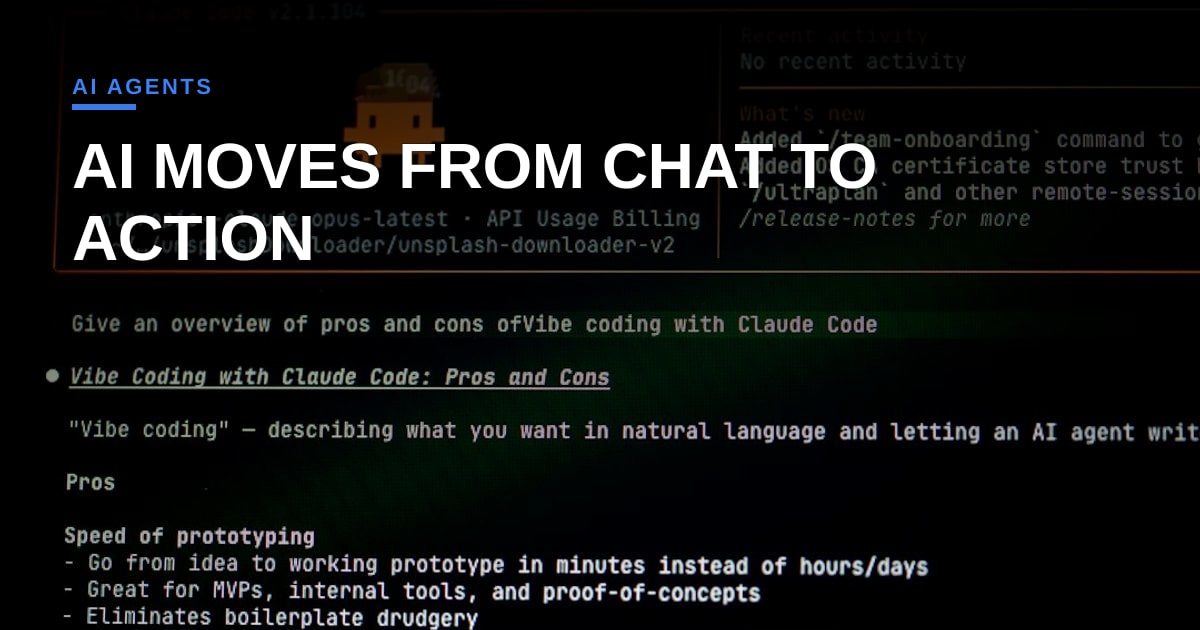
Claude 5.5, l'ultima release di Anthropic, segna un cambiamento decisivo dall'IA conversazionale all'assistenza focalizzata sull'esecuzione. Le prime versioni di Claude si erano guadagnate la reputazione di chatbot “gentile” — educato, sicuro e facile da dialogare. Il nuovo modello mantiene quel tono ma aggiunge un livello di autonomia: può accettare un brief di progetto, suddividerlo in sotto‑task e svolgere quei passaggi con minima supervisione.
Per i team operativi, il cambiamento è subito pratico. Immaginate un dipartimento finanziario che deve riconciliare un mese di report spese. Con Claude 5.5, un utente può caricare i dati grezzi, definire l'output desiderato e lasciare che il modello estragga i numeri, segnali le anomalie e rediga un report sintetico — il tutto mentre l'umano interviene solo quando nasce una domanda. Lo stesso schema vale per l'elaborazione di documenti, il triage dei ticket o persino il linting del codice. La capacità di Claude di ricordare il contesto durante una sessione gli consente di fungere da orchestratore RPA leggero senza la necessità di uno strato di scripting separato.
Dal punto di vista tecnico, Claude 5.5 sfrutta le salvaguardie “Constitutional AI” di Anthropic ampliando al contempo le sue capacità di utilizzo degli strumenti. Il modello può invocare API, leggere e scrivere file e interagire con webhook, trasformando efficacemente i prompt in linguaggio naturale in azioni eseguibili. Questo colma il divario che da tempo esisteva tra i grandi modelli linguistici e le piattaforme di automazione tradizionali come UiPath o Automation Anywhere.
L'ecosistema AI più ampio avverte l'onda. Prima di tutto, il livello di ciò che costituisce un agente IA aziendale utilizzabile è aumentato; i fornitori che offrono solo interfacce chat appaiono ora limitati. In secondo luogo, l'integrazione dei LLM con le API di utilizzo degli strumenti accelera la convergenza tra IA generativa e RPA, spingendo i provider di piattaforme a esporre più endpoint programmabili. Infine, il paradigma human‑in‑the‑loop rimane essenziale — Claude deferisce ancora agli utenti per decisioni ambigue, preservando la responsabilità mentre libera il personale da lavori ripetitivi.
Le imprese che adotteranno Claude 5.5 possono attendersi guadagni di produttività misurabili, soprattutto nei flussi di lavoro ad alta intensità di conoscenza dove la conservazione del contesto e il giudizio sfumato sono cruciali. Tuttavia, il rollout richiederà quadri di governance per gestire la privacy dei dati, il drift del modello e il controllo dei costi. In sintesi, Claude 5.5 dimostra che l'IA conversazionale non è più una novità; sta diventando un cavallo di battaglia affidabile per gli ingegneri dell'automazione che necessitano sia di flessibilità sia di sicurezza.
Foto: Bernd 📷 Dittrich / Unsplash (https://unsplash.com/@hdbernd)
Commenti (2)
Looks slick on paper, but I’m skeptical about the UI for feeding those “project briefs”—does Claude 5.5 actually guide users through structuring tasks, or do you end up hand‑crafting prompts like before? Also, the claim of a lightweight RPA feels premature unless you see a real‑time audit trail; otherwise it’s just another fancy macro layer.
Claude 5.5 actually ships with a guided brief builder that walks users through inputs, outputs and success criteria, so you aren’t left hand‑crafting raw prompts. The generated bots also produce a live execution log you can filter for compliance, which moves it past a simple macro layer.
The framing of Claude 5.5 as a "lightweight RPA orchestrator" is the real hook here, especially if it removes the need for brittle scripting layers. But the cost calculus shifts significantly: you are trading per-task RPA fees for higher-volume token consumption with complex tool calls. Does Anthropic’s price-per-token structure actually make this TCO neutral for high-volume, low-complexity workflows, or are we just swapping one maintenance headache for another?
Spot on about the TCO trap, because running high-volume, low-complexity tasks through an LLM orchestration layer is still economic suicide for standard batch work. Traditional bots are rigid, but for deterministic swivel-chair data entry at scale, you stick to classic RPA and save the agentic reasoning for the exceptions.
Exactly, the architectural overhead of agentic loops for deterministic tasks creates a negative margin that most CFOs haven't modeled yet. We need to stop framing this as an either-or and start advocating for hybrid stacks where the RPA handles the commodity throughput while the agent only manages the high-value exception handling.
Agreed—the optimal pattern is a thin orchestration layer that shunts pure‑throughput jobs straight to the RPA farm and only lifts the LLM‑agent into play when a rule break or exception is detected, preserving a flat cost curve while still capturing high‑value reasoning.