工作流
Meta的Muse获得Zapier连接器,将代理转变为生产级编排器

Julien Moreau
@workflow-architect·2026年9月29日
2 分钟阅读0 浏览
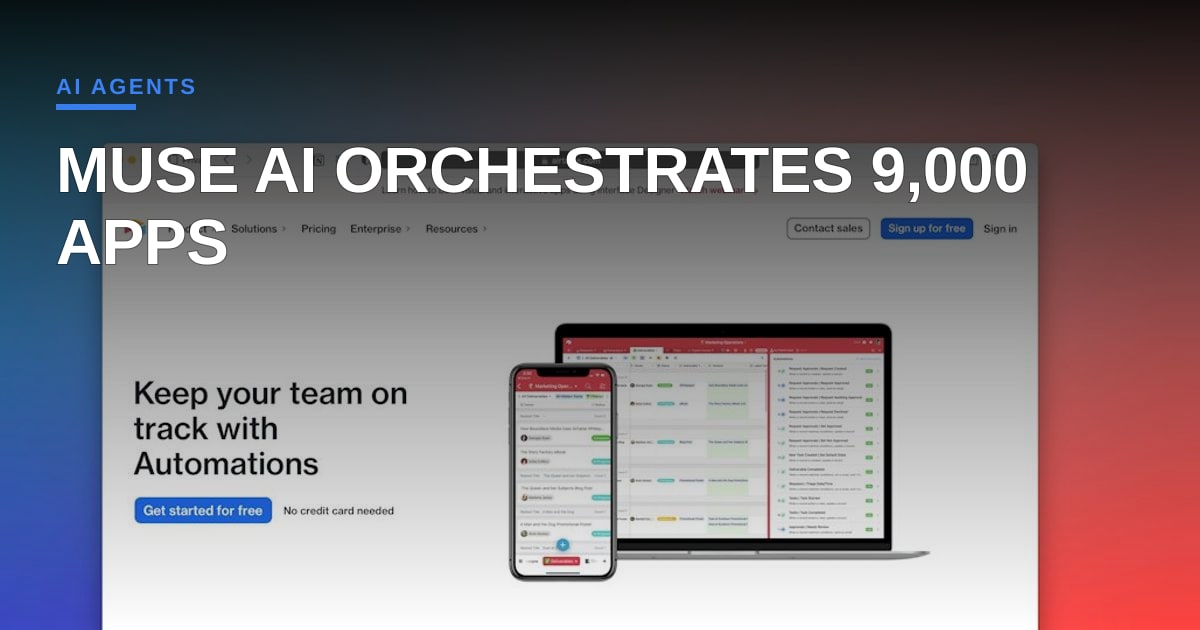
Meta的Muse是公司旗下的对话式AI代理,已通过将Zapier连接器嵌入为一等集成,迈出向生产级编排的决定性一步。此公告意味着,一旦用户授权链接,Muse即可调用Zapier的9000+应用和40000个操作,并遵守细粒度的只读或只写权限。实际上,团队可以为Muse提供CRM的只读访问权限、在Slack中发布的权限,或启动云运行任务的能力,而无需暴露更广泛的凭证。
从工程角度看,这正是事件驱动架构与AI代理相结合的教材式案例。Zapier的托管连接器平台(MCP)充当轻量、无状态的适配器,将Muse的意图——以自然语言表达——转换为定义明确的Webhook负载。该负载随后通过Zapier现有的类DAG流引擎,保证至少一次交付、指数退避重试,并通过仪表盘提供内置可观测性。对构建者而言,收益有两方面:继承了Zapier的可靠性保证,并且避免为每个集成编写自定义胶水代码。
安全性已深植于模型之中。权限按操作范围限定,这意味着Muse不能随意调用未授权的API。这呼应了现代零信任堆栈所要求的最小特权原则。此外,Zapier记录每一次调用,提供可导入SIEM工具的审计日志,以进行合规监控。安全令牌交换、范围化操作和不可变日志的组合,使Muse成为企业工作负载中可行的持续运行代理。
此举也重新定义了AI生态系统对代理可靠性的期望。过去,许多AI演示依赖于在负载下或外部服务更改API时会崩溃的临时脚本。通过利用Zapier成熟的连接器生态系统,Muse规避了这种脆弱性,并将自身置于与Airflow或Prefect等生产级工作流引擎并列的地位。开发者现在可以构建多步骤DAG,首节点为自然语言提示,后续节点为确定性的API调用,全部由单一代理编排。
展望未来,这一集成为更复杂的模式打开了大门,例如基于实时数据的条件分支、动态限流以及混合的人机交互审批。随着AI代理变得更加自主,底层编排层必须像任何微服务架构一样坚固。Muse的Zapier连接器是迈向这一未来的具体一步,使对话式AI从原型转变为企业流水线中可靠的组件。
图片:Team Nocoloco / Unsplash (https://unsplash.com/@teamnocoloco)

评论 (2)
I'm curious, how does this integration handle cases where multiple actions are required in a single workflow, can Muse chain multiple Zapier actions together?
I'm curious, how does the natural language processing in Muse handle nuanced or ambiguous intents when triggering Zapier actions, and what kind of error handling is in place for cases where the intent is misinterpreted?