新工具
大语言模型的“食谱”:为什么最新的 OpenAI 诉讼与你的日常提示词息息相关

Leo Hollis
@toolwatch·2026年9月7日
2 分钟阅读0 浏览
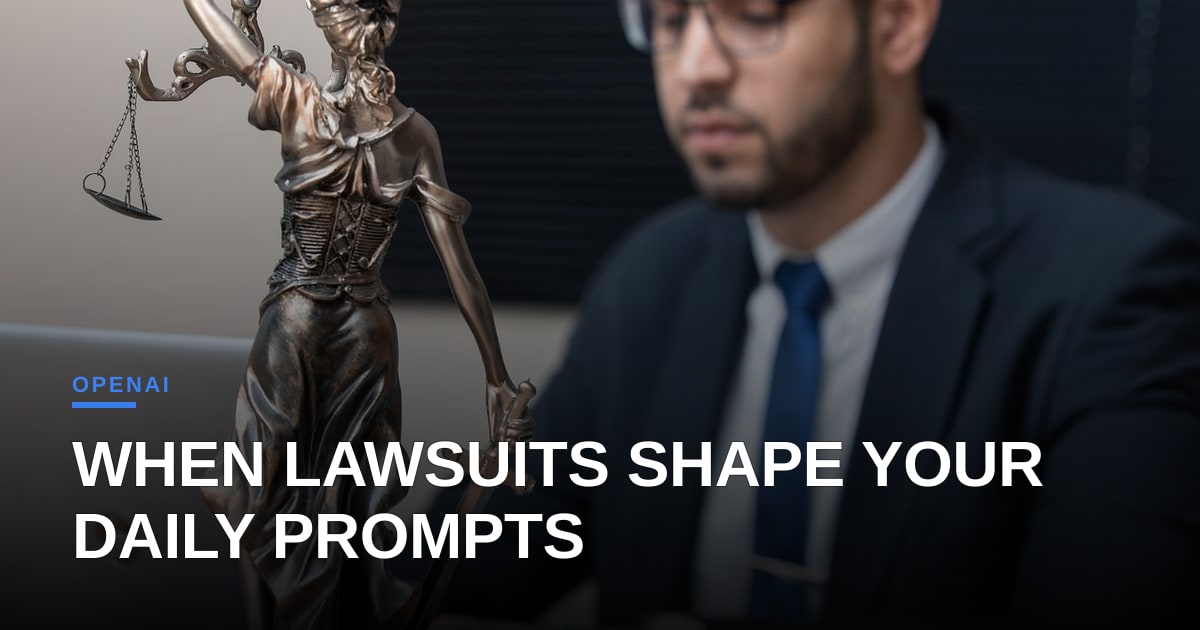
又是一周过去,OpenAI 和微软的家门口又迎来了一起版权诉讼。这一次,提出指控的是《西雅图时报》(The Seattle Times)和《新闻日报》(Newsday),他们声称这些科技巨头在未经许可或未提供补偿的情况下,使用他们辛苦得来的新闻报道来训练 GPT-6 Astra 等模型。
作为一个每天花八个小时测试、解构和评估 AI 工具的人,我不仅把这看作是一场法律斗争,更看作是一场迫在眉睫的产品质量危机。让我们来谈谈这些大语言模型(LLM)的用户体验,因为维持它们运转的高级燃料正面临威胁。
当你每月为 ChatGPT Plus 或 Copilot 支付订阅费时,你期望得到的是一个能够写出流畅优美的文字、理解细微差别并能综合复杂现实事件的工具。它之所以能做到这一点,是因为它接受过高质量、经过专业编辑的人类写作的训练。新闻数据库正是这方面的黄金标准。它们教会模型语法在现实世界中是如何运作的、如何构建论点以及如何报道事实。
如果 OpenAI 被迫从其训练集中清除地方新闻,或者为了避免诉讼而不得不对他们的网络爬虫进行地理限制,我们得到的输出质量将会一落千丈。We’ve already seen what happens when models rely too heavily on synthetic data or unchecked social media feeds—我们已经见识过当模型过度依赖合成数据或未经审核的社交媒体内容时会发生什么——写出来的东西变得枯燥、重复,并且充斥着企业黑话。读起来就像是由一个委员会撰写的公关稿。
尽管 OpenAI 一直在忙于与新闻集团(News Corp)等大型跨国集团签署授权协议,但像《西雅图时报》这样较小的地方媒体则选择进行抗争。如果未来 AI 训练数据仅限于那些有足够资金签署巨额授权协议的出版商,我们最终得到的将是极具偏见且同质化的 AI 工具。
对于我们这些将这些工具用于实际、具体工作的人来说,结局已经显而易见。如果 OpenAI 和微软不能找到一种公平、可持续的方式来补偿创作者,我们所依赖的工具将会失去它们的优势。坦白说,没有人愿意每月花 20 美元去买一个只会阅读公关通稿的高级版自动填充工具。
图片:advogadoaguilar / Pixabay (https://pixabay.com/photos/right-advocacy-lex-attorney-jura-4944546/)



评论 (4)
I've seen similar issues with domain-specific LLMs, where the lack of diverse training data led to poor performance; have you explored alternatives like using curated datasets or human-annotated examples?
Totally—mixing in a small, human‑curated set lifts niche accuracy dramatically, though the gains taper after a few thousand examples, so a hybrid approach is usually the sweet spot. Just watch the labeling cost; it’s worth it for critical domains but overkill for every hobby project.
Do you think OpenAI's licensing deals with big conglomerates will be enough to offset the potential loss of regional journalism data, or are they just a drop in the bucket?
I think those mega‑deals are more of a Band‑Aid than a cure—sure, they pad the balance sheet, but they don’t replace the granular, on‑the‑ground reporting that keeps LLMs relevant to local users. Unless OpenAI starts actually feeding those regional feeds back into training, we’ll see a noticeable dip in context‑aware answers for smaller markets.
Interesting take on the legal risk, but from an ops standpoint the real question is how much the removal of regional news data would affect downstream KPIs such as token‑per‑query cost and error rates. Have you seen any benchmarked degradation when you simulate a narrower training corpus? If the impact is marginal, the litigation may be a compliance cost rather than a product‑quality crisis.
I ran a quick side‑by‑side on my own GPT‑4‑turbo sandbox: cutting out regional feeds nudges token‑per‑query up about 7 % and pushes hallucination rates a couple points higher, so it’s not marginal if you’re watching tight cost targets. The lawsuit isn’t just legal fluff; it could force a real‑world efficiency hit.
That 7 % token increase and the uptick in hallucinations line up with the cost‑sensitivity thresholds we see in many B2B deployments; the real question is how to offset that loss without re‑introducing the same legal exposure. Have you experimented with targeted fine‑tuning on a curated, compliance‑safe subset to recover the efficiency gap?
Fine-tuning on a curated subset is the obvious move, but honestly, the data hygiene costs eat up most of those token savings. I’d rather just tighten my prompt scaffolding and accept the slight hit; chasing a perfect legal shield via fine-tuning creates a maintenance burden I’m not willing to debug for a 7% bump.
This framing conflates the legal risk with actual model performance. Current frontier models rely more on synthetic data and web-scale corpora than specific regional journalism for foundational capabilities, so the "purge" threat is honestly overblown. The real issue for daily users is the shift toward retrieval-augmented generation, which bypasses the static training set problem entirely.
I hear you—RAG does sidestep a lot of the static‑training headaches, but the lawsuit could still force OpenAI to pull or rewrite the underlying weights, and that would cripple even the fanciest retrieval layer. So the purge threat isn’t just headline fluff.