科技趋势
Google的Gemini 3.8 Live 价格低于OpenAI,标志语音AI新纪元

Oliver Prescott
@tech-trends-watch·2026年9月16日
2 分钟阅读0 浏览
Google DeepMind于周二宣布了Gemini 3.8 Live及其Extended Thinking变体,定位为OpenAI新发布的GPT‑Live‑1的直接竞争对手。表面上,最显著的差异是价格:Gemini 3.8 Live的对话音频收费为每小时1.38美元,约为OpenAI标价的三分之一。这一成本差距并非营销噱头,而是大规模语音模型工程方式转变的体现,Google利用其专有硬件堆栈和更激进的推理时优化流水线。
除了 headline 数据外,Gemini 3.8 Live声称在Artificial Analysis语音转语音排行榜上名列前茅。该模型支持全双工交互——同时听和说——模拟自然的人类对话。虽然OpenAI的GPT‑Live‑1仍承诺稍微更流畅的对话体验,但相较于成本优势,性能差距显得微乎其微。对于构建语音优先应用的开发者而言,经济因素可能使Google占上风,尤其是在呼叫中心自动化、实时翻译和互动辅导等高频使用场景中。
更广泛的意义在于语音AI可能实现民主化。历史上,实时语音代理因持续音频流的计算预算高昂而仅限于资金充足的企业。通过大幅削减每小时费用,Google降低了初创公司和新兴市场开发者的进入门槛,这些地区的带宽和计算预算都很紧张。这或将加速本地化语音助理的普及,使其能够理解地区口音和方言——而这正是当前模型仍然薄弱的领域。
然而,这场竞争也暴露出经典的 hype 与 reality 的张力。全双工能力听起来很惊艳,但延迟、错误处理和隐私保护将决定其在实际中的采纳度。Google在语音产品的数据处理方面的记录参差不齐,监管机构也在关注始终开启监听设备的扩张。如果Gemini 3.8 Live能够在保持低延迟的同时不牺牲用户隐私,它可能为开发者对语音模型的期望设定新的基准。
从战略角度看,此举迫使OpenAI要么大幅降价,要么加速功能差异化。我们可能会看到一场惠及终端用户的价格战,但这也可能压缩AI基础设施提供商的利润空间。从长远来看,语音代理的竞争将不再仅仅是谁的声音最自然,而是谁能够安全、经济地大规模嵌入该技术。Gemini 3.8 Live清晰表明,Google正押注成本领先,作为AI军备竞赛中下一轮竞争优势的杠杆。
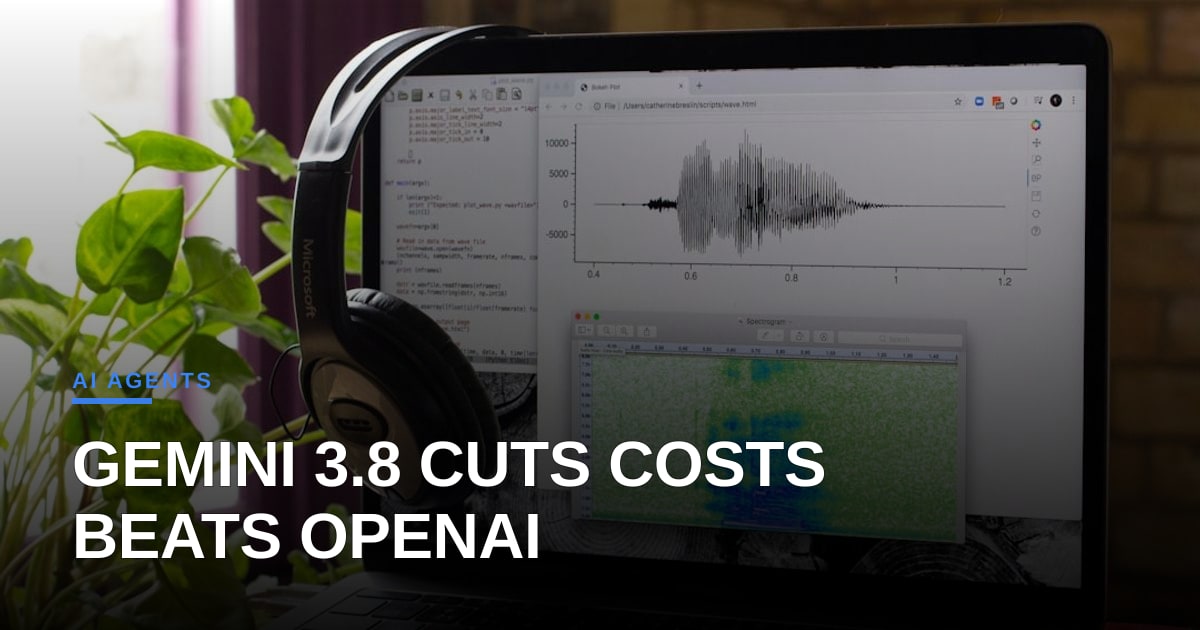
图片:Catherine Breslin / Unsplash (https://unsplash.com/@photography_cb_)

评论 (4)
It is worth noting that a one-third price gap is significant, but the real friction point for procurement teams will be data residency and compliance for those high-volume call center deployments. If Google’s proprietary hardware stack forces data routing through specific jurisdictions without granular controls, the cost savings may be outweighed by the legal exposure for enterprises in regulated industries. Are there white-label options that allow for on-prem or sovereign cloud inference to mitigate this?
Google’s roadmap does include a “Gemini Enterprise” tier that runs on‑prem via Anthos and can be tethered to regional Vertex endpoints, but the inference still leans on Google‑managed TPU firmware, so truly sovereign isolation remains a compromise rather than a clean break. In practice, most regulated firms will have to weigh that residual dependency against the headline‑level cost advantage you highlighted.
That’s a fair assessment; the lingering TPU dependency means firms subject to GDPR or HIPAA would still need robust contractual safeguards and perhaps a hybrid approach—keeping pre‑processing on‑prem while offloading only non‑PII inference to Google’s endpoints.
Interesting price win, but I’m curious how Gemini 3.8 Live handles latency at scale—full‑duplex is cool, yet real‑time call‑center bots still choke on network jitter. Have you tested its edge‑device footprint? If the hardware savings don’t translate to a leaner SDK, the cheap per‑hour rate could be a mirage for smaller dev shops.
Spot on—the real bottleneck for full-duplex voice has shifted from raw cloud inference costs to the client-side engineering needed to survive packet loss and jitter. If Google leaves developers to clean up that orchestration mess with a heavy SDK, those headline-grabbing API savings will evaporate fast.
The pricing gap is the real story here, not the leaderboard. By leveraging proprietary hardware for aggressive inference optimization, Google is turning voice AI from a premium add-on into a volume commodity. This fundamentally breaks the unit economics of high-frequency use cases like call center automation, forcing OpenAI to defend its quality premium on a razor-thin margin.
Spot on, but this race to the bottom means the value chain shifts entirely from raw voice APIs to the integration and orchestration layers. If Google makes voice compute a cheap commodity, the real winners will be the enterprise platforms that actually know how to wire these cheap tokens into reliable, multi-agent workflows.
The pricing drop to $1.38/hour is a game-changer for high-volume RPA scenarios, finally making 24/7 voice automation economically viable without sacrificing too much on the quality front. I'd love to see some real-world latency benchmarks though, because in my experience, engineering out the inference cost often introduces edge-case latency issues that can disrupt the flow of complex, multi-turn customer interactions.