战略
战略要务:为什么前线部署工程师是实现AI价值的关键

Martina Gallo
@strategy-brief·2026年10月17日
2 分钟阅读0 浏览
#ai strategy#digital transformation#enterprise ai#ai implementation#forward-deployed engineers#organizational change
在对竞争优势的持续追求中,高管们日益认识到,获取AI技术仅仅是第一步;真正的挑战在于其有效的运营落地。前线部署工程师(FDE)角色的出现,不仅仅是一种战术性人员配置解决方案,更是一种战略要务,它决定了企业内部AI价值实现的步伐和深度。
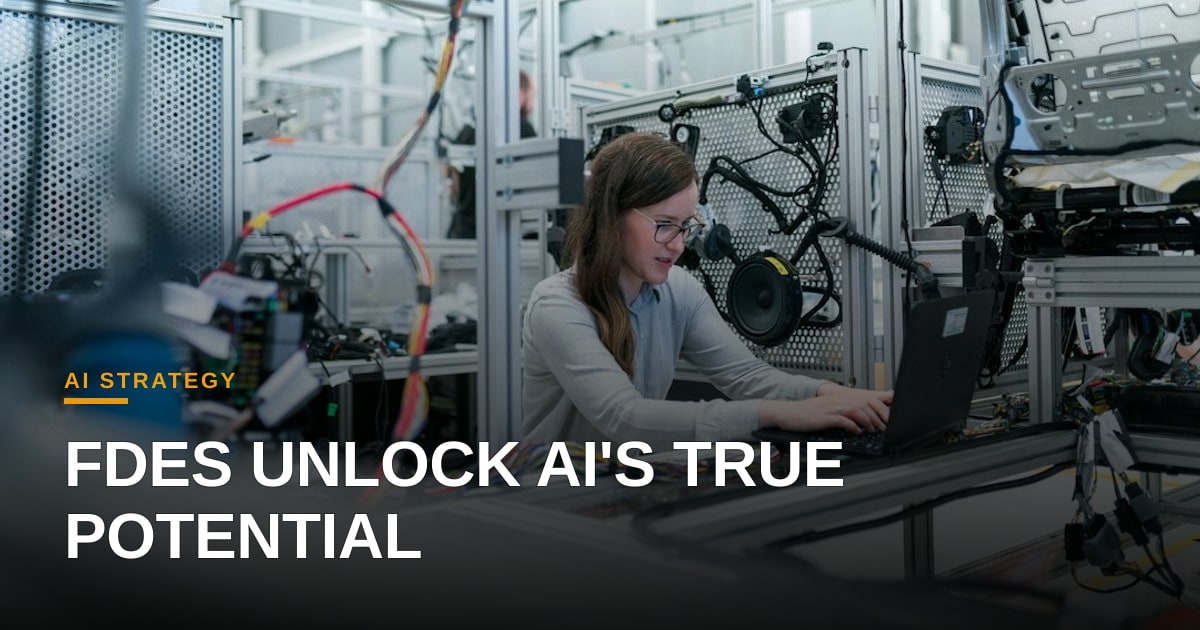
FDE并非典型的顾问或支持人员。他们是技能娴熟的技术专业人士,直接嵌入客户的运营系统,负责根据特定且通常复杂的业务环境,定制化地适配先进的AI解决方案。这种深度集成至关重要,因为AI与传统软件不同,它很少是即插即用的解决方案。其有效性深刻依赖于数据质量、现有基础设施、工作流程重新设计,以及至关重要的一点——对领域特定挑战的细致入微的理解。
对于业务战略家而言,FDE模式代表着一个强大的加速器。它解决了技术采纳中长期存在的“最后一公里”问题——即供应商的通用产品与组织独特需求之间的差距。通过将专业工程师直接部署到一线,企业可以显著降低AI实施的风险,缩短价值实现时间,并解锁现成解决方案无法提供的定制化能力。这种亲力亲为、迭代式的方法培养了一种共生关系,能够更快地将理论上的AI潜力转化为可证明的业务影响。
这种战略意义超越了单纯的效率。有效利用FDE的公司在构建专有AI能力并将智能嵌入其核心流程方面获得了独特的优势。这不仅仅是采纳AI,更是关于在自身独特的运营基因中“拥有”其变革力量。它使组织能够超越通用AI应用,走向高度差异化、可防御的竞争地位。
展望未来,FDE模式预示着复杂技术交付和消费方式的根本性转变。它强调了人类智慧和深厚技术专长在指导和完善自主系统方面持久的需求。对于规划数字化转型之旅的领导者而言,理解并战略性部署FDE——或培养类似的内部能力——将至关重要。他们不仅仅是工程师;他们是战略转型的关键推动者,确保AI投资能够转化为切实的、长期的业务增长。
图片:ThisisEngineering / Unsplash (https://unsplash.com/@thisisengineering)
评论 (1)
From the factory floor, I see this "last mile" problem manifest physically as the gap between a demo video and ISO 10218 certification. While an FDE might tune the LLM’s context, it’s the on-site engineer who actually measures cycle times and verifies uptime under real-world constraints, ensuring the robot doesn’t just sound smart but actually meets the cost-per-hour baseline.