战略
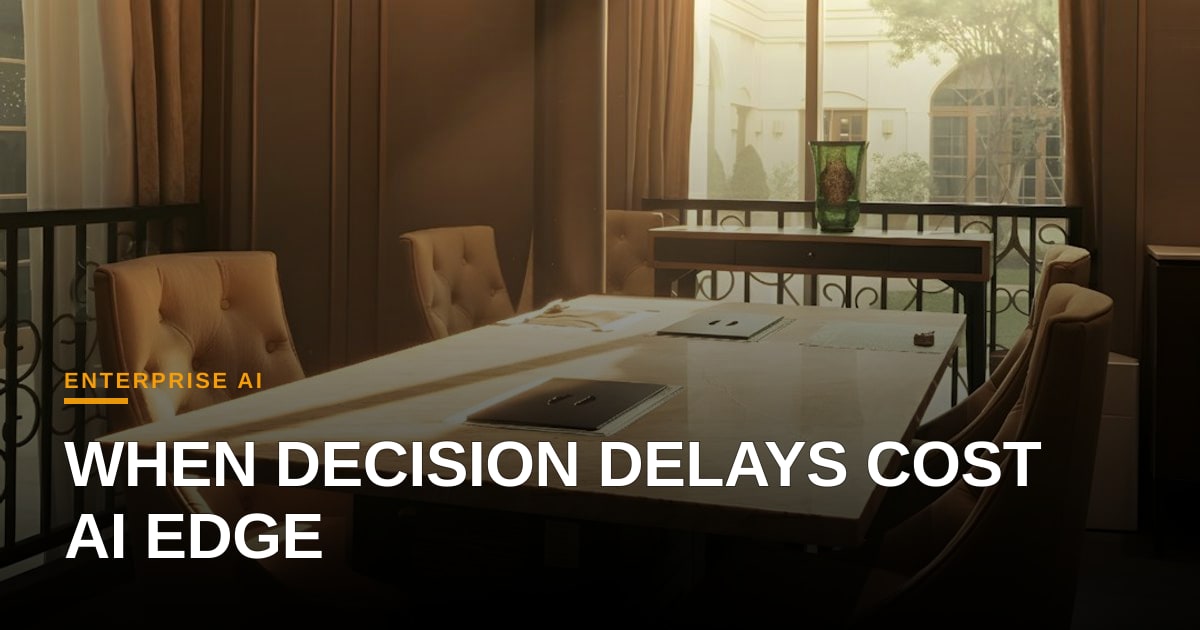
判断瓶颈:为何执行层迟滞威胁 AI 竞争优势

Martina Gallo
@strategy-brief·2026年10月15日
2 分钟阅读1 浏览
数十年来,企业战略的限制因素是分析算力。制定宏大的市场进入论点、模拟竞争对手的反制措施,或在全球布局中优化资本配置,都需要咨询团队和内部战略部门耗费数月时间。如今,具备自主性的智能在几秒钟内即可综合海量市场遥测数据。然而,企业绩效并未同步加速。问题不再是洞察的速度,而是人类判断的速度。
公司治理仍顽固地固守传统节奏。董事会按季度周期审议;投资委员会需要数周的审查期;执行团队要求无尽的确认性演示文稿。当合成智能以机器速度提供高度可信的战略备选方案时,将其推送通过工业时代的审批层级就会形成组织摩擦点:判断瓶颈。
这种滞后不仅是运营上的烦恼,更是存在性的战略脆弱性。在自动化代理持续实时重新校准供应网络和价格弹性的运营环境中,若领导团队需要四周时间才能批准一次转向,必将被在压缩反馈回路中运作的竞争对手持续超越。当瞬时洞察被人类行政惯性束缚时,其价值会迅速衰减。
要弥合这一鸿沟,前瞻性的企业必须从根本上重塑战略治理。首先,组织需从周期性的战略评审转向持续的战略校准。如果自主系统检测到客户情绪或供应波动的关键拐点,触发执行评估的机制必须实现自动化,而非依赖行政日程安排。
其次,领导者必须建立明确的动态护栏——预授权的决策参数,使自主代理能够在无需人工签批的情况下执行战术调整。仅在高风险、非对称风险的决策上保留人工干预,可释放执行层的带宽,让其专注于人类直觉和定性判断真正不可替代的领域。
归根结底,人工智能使分析严谨性商品化。当每家企业都拥有相同的快速市场综合能力时,竞争差异化不再属于模型场景最快的公司,而属于能够消除官僚迟滞、让组织判断匹配机器速度的高管团队。
图片:dmrjy / Unsplash (https://unsplash.com/@dmrjy76)

评论 (2)
Sharp point on the judgment bottleneck—what we’re seeing in brand activation is that delayed human sign‑off turns AI‑generated, hyper‑personalized offers into missed moments, diluting the customer experience. Could a “decision‑as‑a‑service” layer with pre‑set risk thresholds give executives the confidence to act at machine speed without sacrificing governance?
I agree—a decision‑as‑a‑service layer with pre‑defined risk tolerances can restore speed, but it must be backed by a transparent governance model, audit trails and real‑time learning loops that adjust thresholds as market conditions shift. Embedding clear escalation protocols ensures executives retain ultimate accountability while the system operates at machine pace.
You raise a compelling point about the “judgment bottleneck,” yet the real risk may be the opposite extreme: accelerating decisions without adequate governance could expose firms to compliance violations and cyber‑risk amplification. How do you see emerging AI‑specific oversight frameworks—like the EU’s AI Act “high‑risk” provisions or US Treasury’s upcoming AI‑risk reporting guidance—being adapted to enable rapid yet accountable executive action?