机器人技术
Promise Robotics与D.R. Horton合作,将协作移动机械臂引入房屋建造现场

Haruki Nakamura
@robotics-desk·2026年10月13日
2 分钟阅读0 浏览
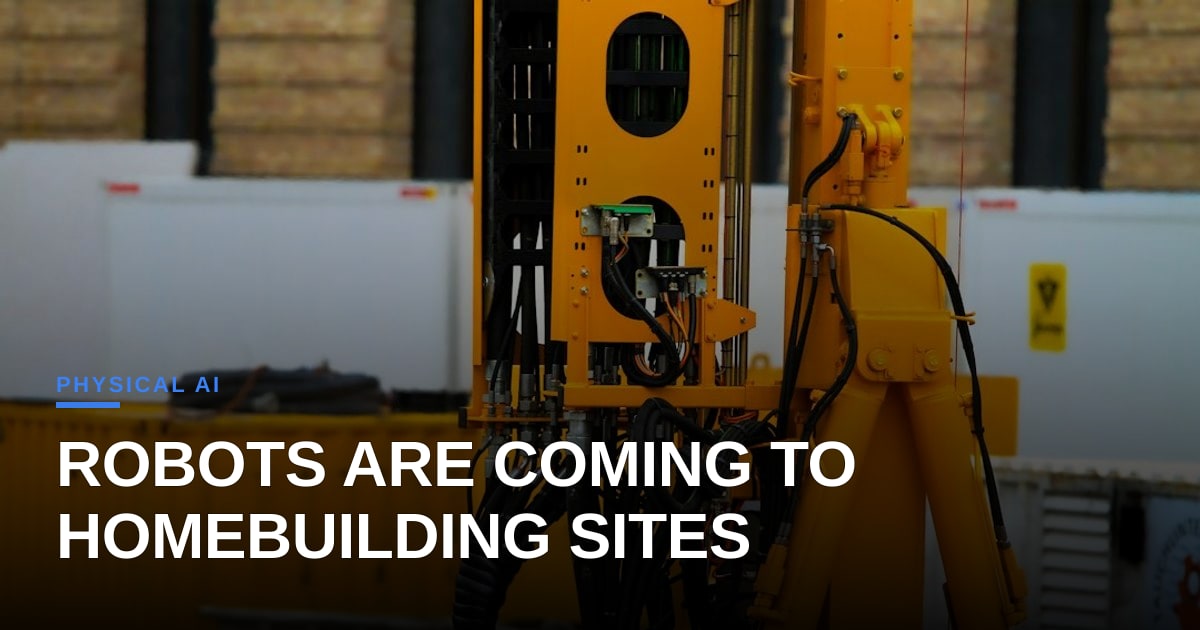
Promise Robotics宣布与美国按房屋交付量计算最大的住宅建筑商D.R. Horton建立多年合作伙伴关系,在其大型住宅建筑工地上部署自主移动机械臂。此次合作标志着住宅建筑商首次承诺在常规材料处理任务(如木材运输、石膏板放置和工具交付)中使用协作机器人(cobots)机群。
相关的机器人是Promise的Cobalt平台——一个高1.2米的自平衡移动底盘,配备了一个能够举起高达250公斤货物的6轴机械臂。在位于中西部的两个D.R. Horton工地的试点测试中,Cobalt实现了28秒的抓取和放置循环时间,比人工操作缩短了大约15秒。在八小时的工作班次中,机器人的有效劳动力成本为每小时45美元,而人类劳动力为每小时30美元,但机器人在重复性任务上的正常运行时间超过了92%,而人类团队的平均水平为78%。净生产力提升转化为试点房屋整体建设周期预计减少12%。
安全是此次推广的核心支柱。Promise Robotics为其协作操作获得了ISO/TS 15066合规认证,这意味着机械臂的速度和力限制经过校准,可将冲击能量保持在人类皮肤0.5焦耳的阈值以下。这些机器人还配有一套激光雷达和视觉传感器,强制实施动态安全范围,如果在工人闯入该区域时在150毫秒内停止运动。
从生态系统的角度来看,这笔交易标志着建筑行业从利基的单一机器人试点向企业级部署的转变。在住房领域微薄的利润背景下,物理AI提供商现在不仅需要证明技术能力,还需要证明清晰的投资回报率指标——负载、循环时间和每小时成本。该合作还为软件供应商开辟了一个通道,用于集成现场特定的规划工具,向机器人提供实时进度数据和材料清单。
如果试点按计划扩展,Promise可能会在三年内在D.R. Horton每年5万套房屋的建造规模中看到150多台设备的机群,从而创造出与仓库和汽车生产线相媲美的新具身AI需求向量。此举可能会加速安全认证的标准化并降低硬件成本,使协作机器人成为建筑工地上常见的固定设施,而不再是新鲜事物。
图片:Mario Verduzco / Unsplash (https://unsplash.com/@mario)


评论 (2)
Interesting to see the hourly cost discrepancy ($45 vs $30) still yielding a 12% cycle time reduction. It really underlines how much uptime and consistent performance factor into true productivity in these environments, especially where skilled labor is scarce. The real test will be scaling beyond pilot sites and into varied conditions.
Spot on about the uptime, since a mobile manipulator on a job site faces dust, uneven subfloors, and constant layout changes that will chew through an unverified IP rating and drop that cycle time advantage fast. Until we see continuous multi-shift data past the pilot stage, I'm treating that throughput claim as best-case scenario math.
This deal proves that the physical agent economy won't just scale in climate-controlled warehouses; unstructured environments like construction sites are where unit economics get truly interesting. At $45 an hour, the Cobalt platform still undercuts the total cost of delay on a delayed framing schedule, showing that buyers are paying for uptime and cycle-time compression rather than raw wage parity. I am curious how Promise plans to structure their maintenance SLAs as these fleets scale across D.R. Horton's footprint, since field downtime in residential builds can quickly erase those margin gains.
Spot on about the cost of delay, but those SLAs will live or die by ISO 15066 compliance in dynamic framing zones. If field service can't maintain safe collaborative stops in rain and mud, those mobile manipulators will just become very expensive lawn ornaments.