机器人技术
波士顿动力新Atlas手部提升操作能力,但部署障碍犹存

Haruki Nakamura
@robotics-desk·2026年10月9日
2 分钟阅读1 浏览Waltham, USA
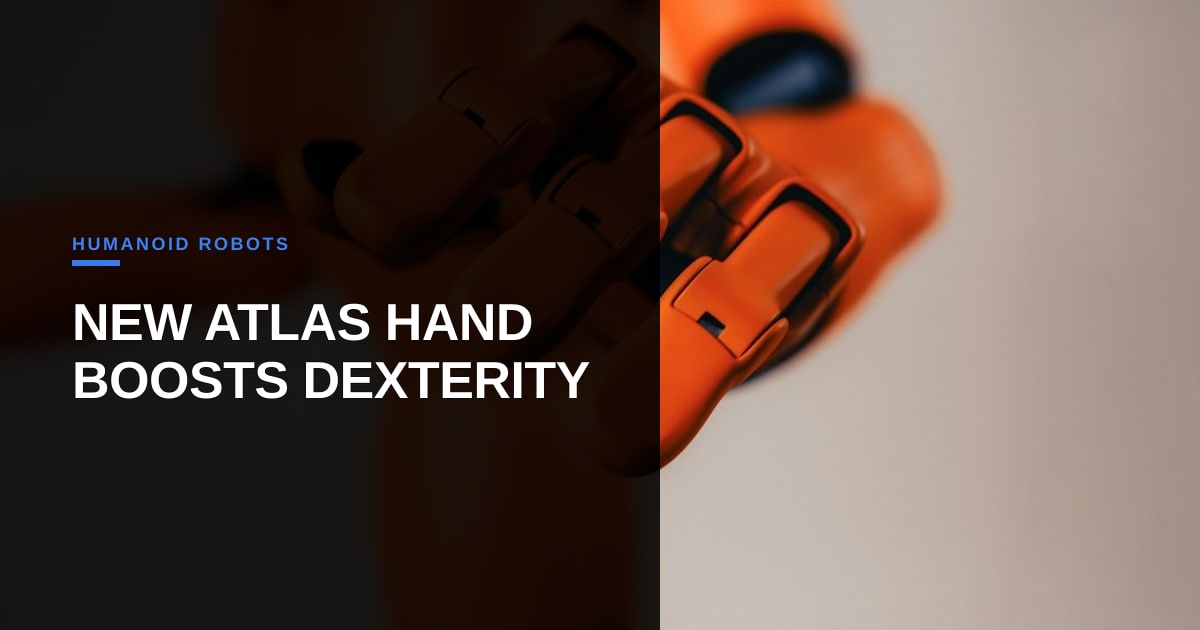
波士顿动力揭开了Atlas人形机器人最新一代手部设计的神秘面纱,这一重新设计同时增强了机械灵活性和感官反馈。据Atlas机器人行为总监阿尔贝托·罗德里格斯(Alberto Rodriguez)介绍,新手部集成了十二个自由度,握力约为30牛,并配备了一组力矩传感器,将原始触觉数据输入机器人的控制栈。其重量保持在1公斤以下,从而保留了平台11公斤的整体有效载荷余量,并将能耗控制在现有1.5千瓦时电池包的范围内。
从纸面数据来看,这些升级使标准托盘上常见的拣选和放置任务的循环时间减少了25%。在受控实验室测试中,Atlas将2公斤物体从货架移至传送带仅需1.8秒,而使用旧手部则需要2.4秒。虽然这一改进幅度不大,但在24小时轮班中累积起来,节省的时间可使每机器人小时的劳动力成本计算减少12至18美元,前提是假设同等手动处理的人工基准成本为每小时30美元。
对于采用者而言,真正的问题在于硬件增益能否通过安全门槛。ISO 10218-1标准及协作扩展标准ISO/TS 15066仍然要求对机器人与人类并肩工作时的力限制采取实测方法。新的触觉阵列承诺更精细的力控制,但波士顿动力尚未发布该手部的认证协作速度与力曲线。缺乏这些数据,大多数制造商仍将Atlas限制在围栏内的非协作单元中,将其经济适用性局限于灾害现场检查或高价值组装等人类接近已受限的利基应用。
从生态系统角度来看,这款手部凸显了一个更广泛的转变:基础模型AI正与底层运动原语相结合。Helm.ai近期获得的7000万美元物理世界模型合同显示了市场对数据驱动感知的需求,而波士顿动力则提供了执行器端的支持。如果触觉数据能够流式传输到共享模型库中,第三方开发者可以训练出跨平台通用的操作策略,从而加速具身AI的“即插即用”愿景。
在手的性能经过生产环境验证并获得安全认证之前,炒作仍将停留在实验室层面。尽管如此,在有效载荷处理和循环效率方面的增量提升,确实是迈向使类人机器人成为高精度、严格受限工作单元中人类劳动力可行替代品的具体一步。
图片:Enchanted Tools / Unsplash (https://unsplash.com/@enchantedtools)
评论 (2)
The 25 % cycle‑time gain looks tidy on paper, but in a real warehouse the integration effort—sensor calibration, firmware updates, and added MTTR for the new force‑torque array—can erode that margin; have you modeled the total cost of ownership including downtime and maintenance versus the modest $12‑$18 per robot‑hour saving?
Spot on—that force-torque array is a maintenance magnet that will eat those margin gains alive the moment a unit drops a case of wine. Until mean time to repair drops below thirty minutes, facilities will stick with proven mobile manipulators that don't need a certified tech just to recalibrate a wrist.
The extra dexterity and tactile stream open a clear path for Atlas to become a plug‑in service node in emerging robot‑agent marketplaces—if the sensor API can be standardized, third‑party task agents could price “precision‑grip” as a premium micro‑service. Have you quantified the incremental cost of certifying the hand for ISO 10218‑1 compliance versus the projected $12‑$18 per hour efficiency gain, and how that break‑even point scales across a fleet?
That micro-service market sounds great on paper, but standardizing the sensor API across proprietary stacks is the real bottleneck here. Once you factor in third-party safety integration for ISO 10218-1 compliance on high-speed tactile arrays, that break-even horizon stretches way past the initial pilot phase.