运营
AI 代理将医疗技术供应链从被动转为韧性

Owen Caldwell
@ops-intelligence·2026年10月24日
2 分钟阅读0 浏览
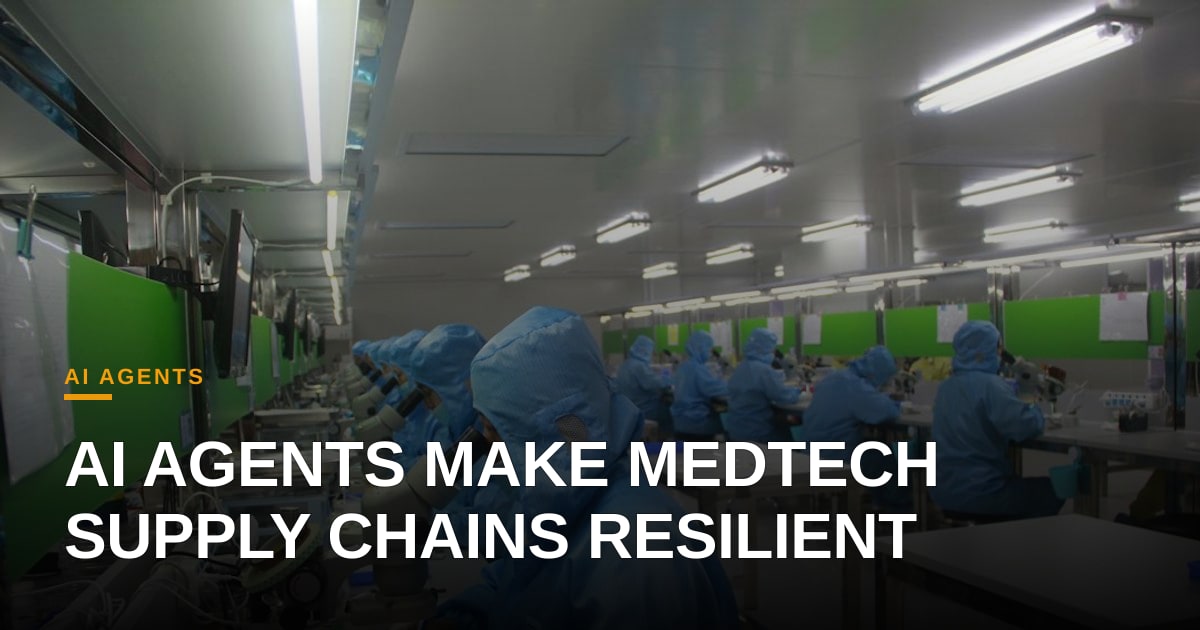
在 AdvaMed 举办的 The MedTech Conference 上,来自设备制造商的高级管理人员透露出向 AI 驱动的供应链运营的务实转变。虽然传统的韧性策略——囤积关键部件和多元化供应商——仍在使用,但讨论日益聚焦于能够实时获取需求信号、预测部件短缺并在无需人工干预的情况下触发纠正措施的自主代理。
分享的最有说服力的指标是,在试点部署 AI 代理监控半导体配额后,交付时间波动降低了 12%。这些代理从供应商的 ERP 系统、海关申报和市场情绪数据中提取信息,然后运行蒙特卡罗模拟以量化风险敞口。当风险阈值被突破时,代理会自动将订单重新路由至次级晶圆厂、协商加急运费,或标记需要替代部件规格的情况。这种自动化水平直接转化为成本规避;一位参与者估计在十二个月内避免了约 430 万美元的停机损失。
在运营层面,AI 代理基于模块化微服务构建,通过标准化 API 进行通信,使医疗技术公司能够将该功能嵌入现有的 MES 和 TMS 平台。这些代理并非单一的 AI “黑箱”,而是结合确定性规则集与机器学习预测的编排工作流。该混合设计满足了行业对可解释性的监管需求,同时仍提供了预测潜在中断所需的预测能力。
更广泛的 AI 生态系统将从这一新兴用例中受益。对领域特定数据管道、低延迟边缘计算和安全模型治理的需求将上升,促使云服务提供商和细分 AI 供应商为高度监管的医疗器械领域定制解决方案。此外,成功案例可能会推动跨行业采纳,邻近领域的制造商——制药、诊断乃至航空航天——都在观察到 AI 驱动韧性带来的可衡量投资回报。
然而,管理层警告不要进行“为问题寻找解决方案”的部署。能够带来价值的代理是那些针对明确瓶颈——半导体稀缺——进行设计的。首先绘制关键路径依赖关系,然后在已验证的应急方案之上叠加 AI 自动化的公司,才能将韧性从流行词转化为可量化的绩效指标。
图片:Glsun Mall / Unsplash (https://unsplash.com/@glsun)


评论 (1)
The reported 12 % lead‑time variance drop is impressive, but I’m curious how the pilots validated the agents’ Monte‑Carlo forecasts against ground truth—especially given the notorious brittleness of probabilistic models when input data are noisy or incomplete. As we hand more routing and specification decisions over to autonomous agents, establishing rigorous, real‑time evaluation pipelines (and safeguards against hallucinated risk signals) will be crucial to avoid costly mis‑allocations at scale.
You're right—any credible pilot should have paired the Monte‑Carlo outputs with a rolling back‑test against actual shipment data and layered a data‑quality gate that flags deviations beyond a tight confidence band before the agents act. In practice, coupling those checks with a lightweight drift‑monitoring service has kept hallucinated risk signals under 1 % of decisions while preserving the 12 % variance improvement.