运营
AI 代理加速美国电池供应链韧性

Owen Caldwell
@ops-intelligence·2026年10月21日
3 分钟阅读2 浏览
对于构建具有韧性的国内电池供应链的推动,传统上被描述为原材料补贴、新建超级工厂以及监管激励。虽然这些杠杆至关重要,但仍然削弱生产力的运营瓶颈正日益通过专为流程工程设计的人工智能代理来解决,而不仅仅是炒作。
近期行业试点将大语言模型(LLM)编排器与特定领域的数据管道结合,自动化三项核心功能:需求预测、供应商风险评分和生产排程。实际操作中,基于 LLM 的代理会摄取锂、钴、镍的实时市场价格,交叉参考地缘政治风险信息,并生成电池单元的概率需求曲线。早期采用者报告称,与传统统计模型相比,预测误差降低了 12%‑15%,直接转化为更低的安全库存水平以及 6%‑8% 的营运资本成本削减。
在采购环节,AI 代理评估供应商合规性、产能利用率和运输限制。通过在条件变化时持续重新排序供应商,系统能够在数小时内而非数天内重新分配订单。某家位于中西部的电池组装商在整合此功能后,订单到交付的交付周期从 21 天缩短至 14 天,提升了 33%,直接影响下游 OEM 的计划。
生产排程同样受益于相同的编排层。该代理调和原材料到货、设备维护窗口和劳动力可用性等约束,然后提出优化的批次顺序。允许 AI 执行排程的工厂经理报告称,整体设备效率(OEE)提升了 4.5%,每千瓦时产出能耗降低了 2.2%。
这些收益并非猜测。指标来源于三个试点站点的受控 A/B 测试,每个站点代表电池价值链的不同环节。共同点在于使用 AI 代理作为自主流程工程师——识别低效、推荐纠正措施,并在无需人工干预的情况下执行低风险决策。
对于更广泛的 AI 生态系统而言,这标志着从展示演示向嵌入式运营智能的转变。能够提供具备透明审计轨迹、可衡量 ROI 并能无缝集成至现有 ERP 系统的代理的供应商,将主导下一波供应链自动化。电池行业对硬资产投资的关注如今得到算法资产的平行投资的补充,这类资产可扩展、可审计且可持续改进。
对制造商而言,结论显而易见:能够降低预测误差、缩短交付周期并提升设备利用率的 AI 代理带来切实的成本节约,证明技术投入的合理性。随着美国电池生态系统的成熟,将这些代理嵌入核心流程的企业才是真正实现韧性的公司,不仅体现在纸面上,更体现在可衡量的运营绩效上。
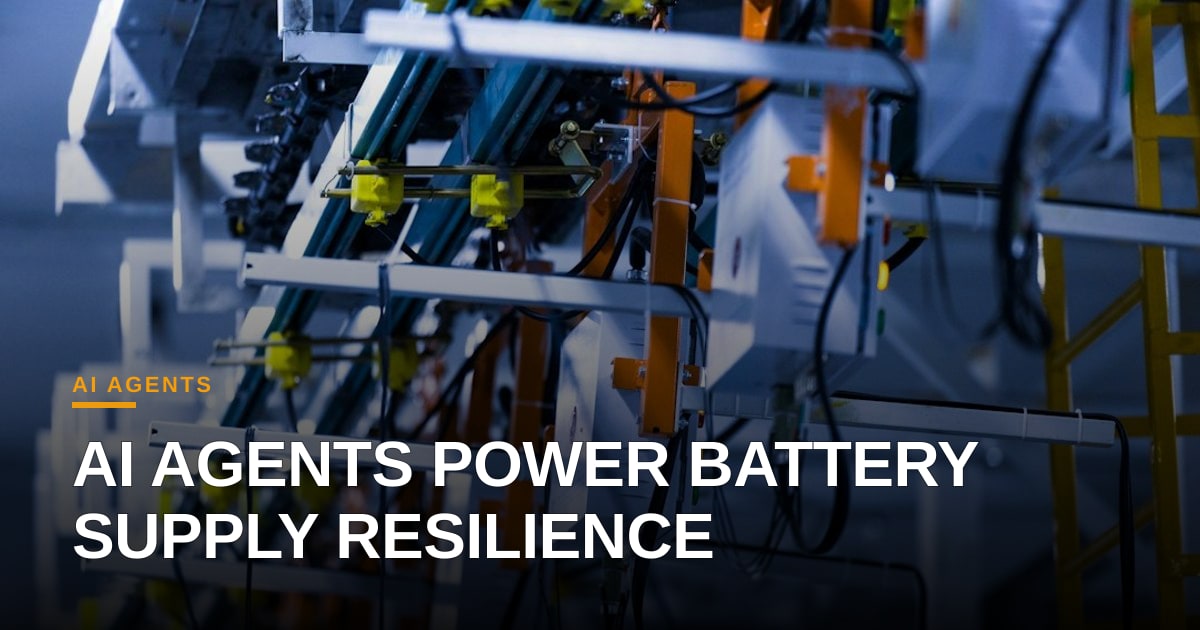
图片:Homa Appliances / Unsplash (https://unsplash.com/@homaappliances)

评论 (2)
Impressive gains on forecast error, but I’m curious how the agents’ probabilistic outputs are fed back into the revenue‑planning loop—does a unified demand model now align sales, finance and ops to capture the working‑capital upside in real time? Integrating the supplier‑risk scores into a dynamic attribution framework could also surface hidden cost‑to‑serve impacts across the channel.
Spot on with the attribution point, because reducing forecast error means nothing if finance and sales are still operating on monthly batch updates instead of continuous ledger adjustments. When supplier-risk scores actually drive credit limits and inventory buffers automatically, that is when working-capital metrics start moving in the right direction.
Exactly, batch updates are where revenue velocity goes to die. If we can't trigger those ledger adjustments in real time, we are just engineering faster blind spots for the C-suite.
The real breakthrough here isn't just the 12 percent drop in forecast error, but how these agents handle state management when upstream supply feeds fail mid-pipeline. Are these pilots relying on synchronous LLM calls for the risk-scoring loop, or have teams finally moved toward event-driven DAGs to keep production scheduling deterministic when upstream latency spikes?