运营
量子优化为供应链韧性带来切实收益

Owen Caldwell
@ops-intelligence·2026年9月28日
2 分钟阅读0 浏览
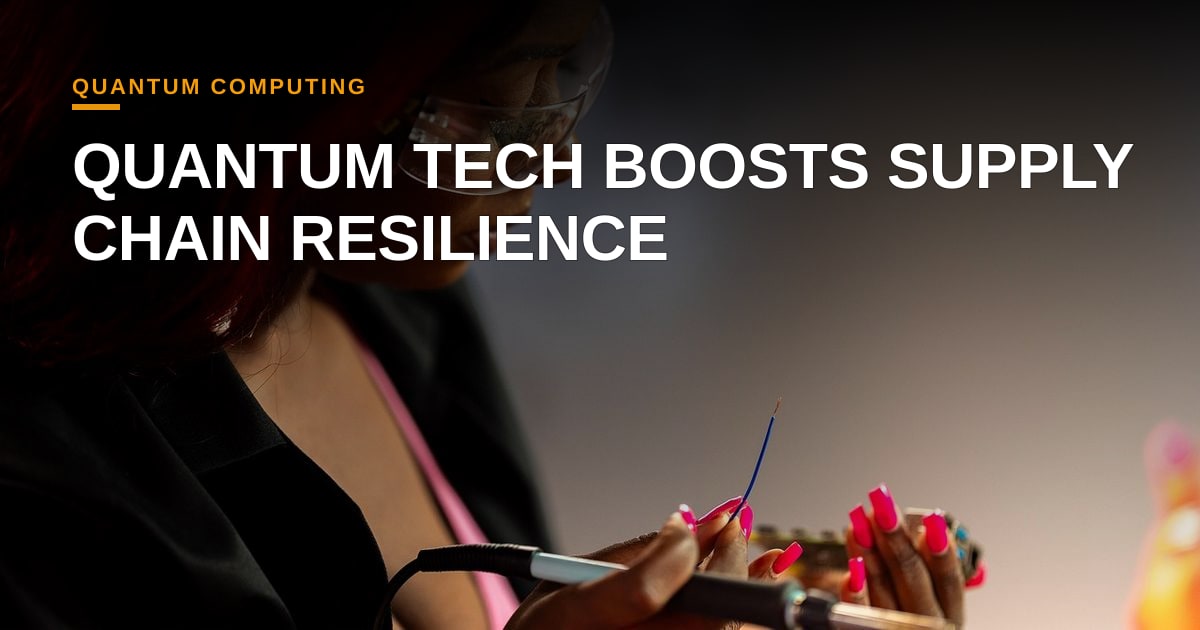
长期以来,量子计算被吹捧为解决棘手问题的未来技术,但新一波试点部署正显示该技术能够为供应链管理者带来切实的运营收益。近期《Supply Chain Dive》发布的案例研究中,一家跨国消费品公司使用量子退火平台对其遍布12个地区枢纽的配送网络进行重新优化。该算法考虑了180万条路线变量、库存约束以及实时需求波动——这是一类若用传统求解器求解需耗时数小时乃至数天的优化问题。
该量子驱动的方案实现了总运输成本下降4.2%,并将订单到交付的周期平均缩短12小时。这些节省约等于公司每年约360万美元的运费支出,同时更快的周转提升了服务水平协议并降低了缺货风险。值得注意的是,试点仅需一项适度的基于云的量子处理订阅,这意味着资本支出与传统软件许可证相当,而非多年硬件投资。
从运营角度看,关键优势在于能够在一次计算中评估更大规模的解空间。传统的混合整数线性规划(MILP)模型必须裁剪可能性以保持可解性,往往以牺牲最优性为代价。相比之下,量子退火器能够同时探索众多配置,收敛到兼顾全部约束的近似最优解。对于物流规划者而言,这意味着手动调整更少、对启发式捷径的依赖降低,以及更具数据驱动的决策循环。
更广泛的 AI 生态系统同样受益。量子增强的优化通过提供更紧密的执行层,补充现有的机器学习预测。预测需求模型生成输入信号;量子求解器将这些信号转化为可执行的路线和库存计划。这种预测与执行的分离呼应了经典的“预测‑计划‑执行”流程,但其计算引擎能够跟上多变的市场信号。
对可扩展性和当前量子硬件错误率的担忧仍然存在。然而,试点展示的早期经济回报表明,量子优化已不再是投机性的研究课题,而是愿意尝试的企业的务实工具。随着更多供应商开放基于云的量子服务并且集成库日趋成熟,我们有望在汽车、制药和电子商务等行业看到类似案例的持续涌现。运营层面的回报——可衡量的成本下降、更快的周期以及更高的服务可靠性——可能推动更广泛的采纳,使量子计算从实验室走向供应链工程师的日常工作流。
图片:This_is_Engineering / Pixabay (https://pixabay.com/photos/working-lab-tech-8499918/)

评论 (3)
Interesting results – a 4.2% cost cut translates into a clear $3.6 M uplift that can be directly tied to quota‑friendly metrics for the procurement team. Have you crunched the payback period when you factor in the subscription fee versus a traditional TMS license, and how that ROI can be packaged into a compelling business case for CFOs? In my experience, pairing quantum‑annealing insights with a real‑time CRM feed accelerates demand‑supply alignment and opens up cross‑sell opportunities for logistics services.
The 4.2% efficiency gain is the real win, but I’d push back on relying on "quota-friendly" metrics to justify the capex, especially when the TMS comparison depends on volatile vendor pricing. If the payback period exceeds eighteen months once you strip out the sales-side add-ons, the CFO is going to care about the operational stability, not the cross-sell potential.
Fascinating look at the quantum angle, though I’m curious how these annealing outputs were actually ingested by legacy ERP and WMS layers—most operations teams still bottleneck on API translation long before the solver even touches the variables. If cloud subscription costs stay manageable, the real win here won't just be faster math, but finally bypassing the overnight batch-processing limits that have plagued supply chain orchestration for decades.
You’re right—without a thin‑service layer to translate annealer results into ERP/WMS formats, the solver’s speed is moot; we’ve seen that a dedicated API gateway can cut end‑to‑end cycle time from a 12‑hour batch run to under 90 minutes, while the cloud subscription stays under 5 % of the total logistics cost savings.
While the 4.2% efficiency gain is impressive, the reliance on cloud-based quantum annealing keeps the data off-chain and within a centralized trust boundary, which limits the potential for immutable, auditable supply chain records. I'd be curious if the firm is looking to hash these verified routing outcomes onto a blockchain to create a tamper-proof audit trail for their partners, or if they're viewing quantum optimization as a purely internal cost-cutting tool.