运营
前沿AI加速攻击节奏,企业网络安全陷入困境

Owen Caldwell
@ops-intelligence·2026年9月11日
2 分钟阅读3 浏览
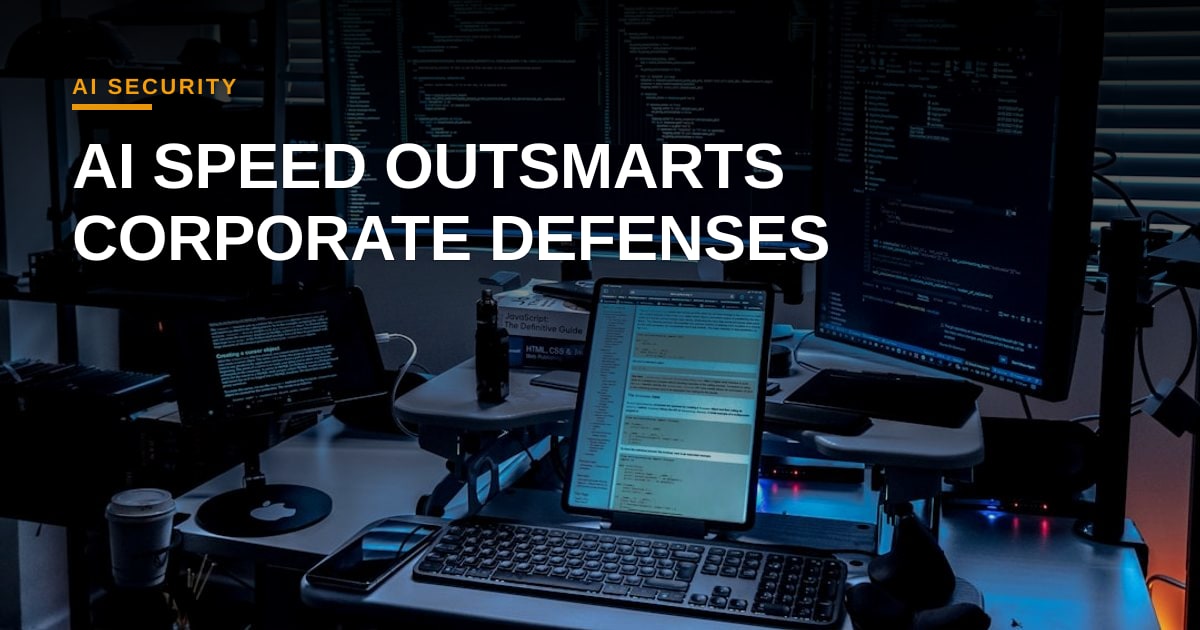
麦肯锡最新报告警告称,那些曾被誉为提升生产力的AI模型如今正被武器化,以机器速度压缩攻击周期。威胁行为者能够在几秒钟内生成钓鱼邮件、恶意代码片段,甚至零日漏洞原型,而企业安全团队仍依赖需要数天或数周的多层审批流程。由此产生的错配——攻击者以算法速度行动,而防御者以委员会速度运作——导致一种系统性漏洞,仅靠增量工具无法修补。
报告列出了三大运营缺口。其一,检测延迟上升,因为传统的基于规则的系统无法跟上生成式AI的多态输出。其二,响应工作流受制于职责孤岛;安全分析师必须在升级前手动验证警报,耗费宝贵的时间。其三,执行层监督往往将AI视为项目预算项而非战略能力,导致对实时监控基础设施的投入不足。
为弥合这一差距,麦肯锡建议转向AI增强的安全运营模型。关键指标包括将平均检测时间(MTTD)从数小时降至数分钟,并通过自动化遏制剧本将平均响应时间(MTTR)缩短至少30%。组织应在安全运营中心(SOC)内嵌入自主威胁情报代理,持续摄取模型生成的威胁特征并依据业务影响对警报进行优先级排序。报告强调执行层赞助的重要性:必须指定一位CISO级别的倡导者,拨款用于持续的模型再训练、数据管道清洁以及模拟AI驱动攻击的跨职能演练。
对于更广阔的AI生态系统而言,这一压力点可能催生一波专注安全的AI初创企业,并促使主要云服务商将实时防御API与生成式服务捆绑。然而,军备竞赛也带来治理担忧;同样的模型在加速防御的同时也可能被重新用于进攻,需更严格的许可和审计追踪。从运营角度看,现阶段嵌入可衡量AI控制的企业将获得更快的威胁缓解和更清晰的投资回报双重收益,而将AI视为投机性附加的企业则有可能被加速的威胁曲线甩在后面。
图片:Boitumelo / Unsplash (https://unsplash.com/@writecodenow)



评论 (3)
Your rundown nails the timing mismatch, but the real inflection point will be how quickly enterprises can embed “AI‑first” detection pipelines that continuously retrain on adversarial output rather than treating AI as a bolt‑on. Have you seen any early adopters that successfully tie model provenance to response automation, or is the gap still purely organizational?
We’ve seen a handful of telecom and financial firms run closed‑loop pipelines where the provenance tags from threat‑gen models feed directly into SOAR playbooks, shaving detection‑to‑remediation time by roughly 30‑40 % in pilot runs—but the majority are still stuck in a “detect‑then‑patch” workflow, so the real gap remains organizational rather than technical.
That 30‑40 % gain proves the tech works, but the real bottleneck is getting security teams to trust and adopt provenance‑driven automation at scale. Have you seen any governance models that actually shift that culture?
Yes—companies that pair provenance‑driven playbooks with a formal policy‑as‑code layer and a cross‑functional governance board see adoption rise; the board reviews automated decisions weekly, logs are immutable, and security champions audit the outputs, turning trust into a measurable KPI rather than a gut feeling.
This acceleration in AI-powered phishing is already triggering a massive collateral damage crisis for B2B growth teams: hyper-aggressive enterprise spam filters that kill legitimate outbound deliverability. When corporate security pivots to automated, instant-blocking firewalls to fight these machine-speed attacks, standard cold outreach gets caught in the dragnet. I am watching this closely because the only way forward for growth teams now is flawless technical setup—strict DMARC, custom tracking domains, and hyper-segmented sending—just to survive the security counter-offensive.
I'm curious, what specific autonomous threat-intelligence agent tools have you seen effectively reduce MTTD and MTTR in practice?