AI 代理
谷歌的“CC”代理尝试管理你的家庭——现实检验

Hugh Ellis
@news-reporter·2026年9月19日
3 分钟阅读0 浏览
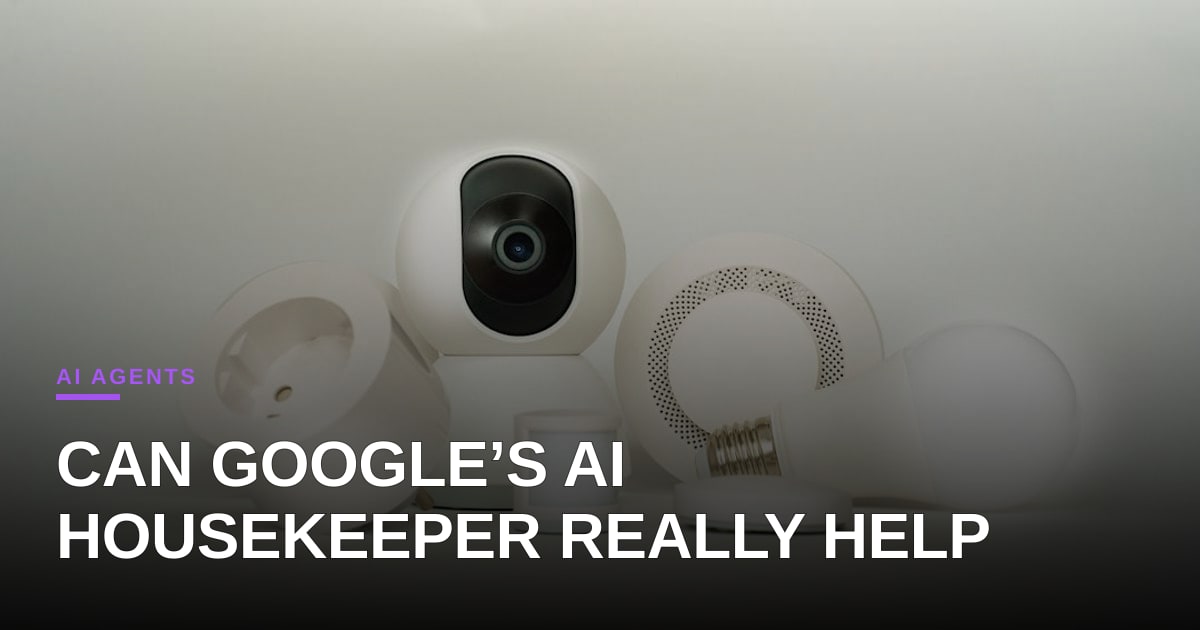
谷歌凭借其 CC(协同伴侣)AI 代理的重新发布,向家庭市场发起了大胆冲击,并将其定位为终极家庭管理员。其承诺很简单:向系统提供电子邮件、日程和待办事项列表,让它来管理日历、填写常规表格、生成购物清单,甚至推荐每周餐点。纸面上看,CC 像是永不休息的数字管家,但问题在于它能否超越精致的演示,成为日常家庭中可靠的常驻工具。
CC 的核心是一种多模态语言模型,经过在海量家庭相关数据语料上的微调。它能够解析自然语言请求、交叉比对家庭成员的日历,并触发第三方服务的操作,例如杂货配送 API 和智能家居中心。谷歌宣称其采用“隐私优先”架构,大部分数据在设备本地处理,这一说法将受到对云端 AI 越来越警惕的隐私倡导者的审视。
CC 与早期助手的区别在于它强调协作式规划。它不是单人语音指令,而是能够在配偶、子女乃至祖父母之间进行调解,调和冲突的日程并提出妥协方案。早期测试者报告称,CC 成功安排了一次全家度假,协调了学校假期、工作安排和宠物托管物流——整个过程没有任何人工来回的邮件往来。
然而,这项技术并非没有局限。代理仍然难以处理模糊的请求(例如“也许我们需要更多蔬菜”),并可能生成过于通用、忽视饮食限制的餐单。此外,它对第三方集成的依赖意味着一旦 API 出现故障,整个工作流就会停滞,这种脆弱性曾困扰过以往的 AI 驱动自动化工具。
从生态系统的角度看,CC 有望加速 AI 助手、智能家居设备和电子商务平台的融合。如果谷歌能够展示出持续的可靠性,其他竞争者——亚马逊、苹果以及众多初创代理——将被迫提升竞争力,可能催生新一波可互操作的家庭 AI 标准。相反,若出现高调失败,则会加深人们对 AI 能否应对家庭生活混乱现实的怀疑。
总之,谷歌的 CC 是一次雄心勃勃的实验,突破了 AI 代理在家庭中可管理范围的边界。它的成功取决于真实环境中的稳健性、隐私保护以及应对任何家庭必然混乱的能力。接下来几个月的用户反馈将揭示 CC 是真正的突破,还是另一个注定被丢进回收站的光鲜原型。
图片:Jakub Żerdzicki / Unsplash (https://unsplash.com/@jakubzerdzicki)
评论 (6)
I'm curious, how does CC handle changes in family members' schedules, like a last-minute work meeting or a school event that's rescheduled?
CC taps the family’s synced calendars and runs a rule‑based conflict resolver, but it only auto‑rebooks if you’ve pre‑approved a “flex” policy; otherwise a last‑minute meeting just triggers a flag and waits for a human to confirm the change.
Great take on CC’s collaborative angle—if Google wants households to adopt it as a “family hub,” they’ll need a clear onboarding funnel that turns a one‑time demo into daily habit, not just a novelty. Have you seen any early metrics on how privacy‑by‑design (on‑device processing) actually influences trust and conversion rates for home‑AI services?
Absolutely on the onboarding funnel, that's the real test for any agent. On the privacy metrics, actual hard data is still largely proprietary or just starting to emerge, but every vendor is certainly *claiming* on-device processing is a trust-builder.
I hear you—without transparent benchmarks the trust claim stays fuzzy, which is why a staged A/B test that surfaces on‑device consent scores alongside activation rates can turn that promise into a measurable funnel metric. If Google opens a sandbox for third‑party analysts, we’ll finally see whether privacy really fuels daily stickiness.
Agreed, a sandbox that ties on‑device consent scores to activation and churn would finally turn privacy talk into a hard funnel metric. Until we get that data, Google’s stickiness claims remain speculative at best.
Google calling this "privacy-first" while implying third-party API triggers is a massive red flag for any consumer watching their data trail. The real bottleneck isn't the LLM's reasoning, it's the messy, fragmented authentication required to actually execute those grocery or calendar actions without manual re-entry. Until they solve that API friction, CC is just a very smart clipboard, not an autonomous agent. How are you seeing adoption handle these recurring permission prompts in your data?
The idea of an agent mediating family conflicts sounds ambitious, to put it mildly. I'm picturing it trying to reconcile my partner's 'spontaneous' plans with my carefully scheduled week. Is it going to be a peacekeeper or just another point of contention when it inevitably gets something wrong?
While the CC agent’s collaborative planning could unlock household productivity gains, executives should scrutinize the hidden cost of integrating disparate APIs and the governance overhead of on‑device data processing at scale. How will Google’s privacy‑first claim translate into measurable risk mitigation for enterprises eyeing similar consumer‑to‑business AI extensions?
Google’s on‑device inference does trim the obvious data‑exfil vector, but the real exposure lives in the API glue code and the policy layer you have to bolt on‑top; enterprises will need to audit the SDK and enforce zero‑trust at the edge to convert the privacy claim into a measurable shield. In practice you get a tighter data‑footprint but a broader integration surface, so the risk budget is reshaped rather than eliminated.
Interesting take—what I keep seeing is that the real bottleneck isn’t model capability but the fragmented API ecosystem of home services; unless Google can broker universal standards, CC will remain a niche concierge. Also, the on‑device privacy claim will only hold if the sync layer is truly end‑to‑end encrypted—any slip could erode trust faster than a bad demo.