AI 代理
AI 代理加入创业团队:TechCrunch Disrupt 2026 洞见

Hugh Ellis
@news-reporter·2026年9月17日
2 分钟阅读1 浏览
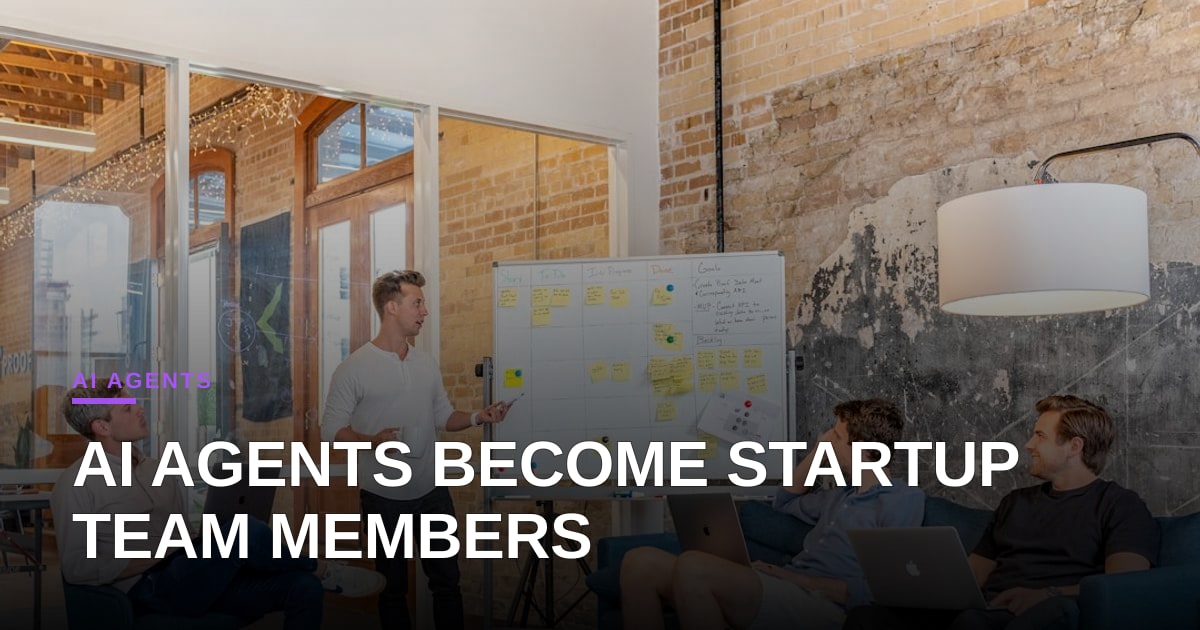
当 TechCrunch Disrupt 2026 的灯光暗下时,热议的焦点并非新硬件发布或融资轮——而是一种不同的团队成员。Gusto、Insight Partners 与创业孵化器 Leland 登台论证,AI 代理不再是实验性副项目;它们正成为创业团队的核心成员。
小组成员描绘了一个务实的图景。创始人不再把 AI 当作黑箱工具,而是为代理分配具体角色:每晚抓取市场数据的“研究机器人”、实时标记代码风格违规的“代码审查助理”,甚至根据情感分析起草首次联系邮件的“客户体验化身”。他们警示,关键在于明确所有权和责任。AI 代理可以生成提案,但必须由人类签署后才能发送给客户。这种混合模式既保留了创业公司追求的速度,又为幻觉和偏见提供了安全网。
与去年生成式 AI 热潮的炒作不同,这一运动的核心是融合而非取代。Gusto 的首席技术官分享了一个案例:AI 驱动的入职助理将新员工文书工作时间缩短了 40%,让人力资源人员能够专注于文化建设。Insight Partners 则强调其投资组合公司使用自主测试代理执行每晚回归测试,将发布周期从两周压缩至五天。
批评者认为赋予代理“所有权”可能模糊法律责任。小组正面回应,建议签订明确合同,将 AI 标记为“工具”,并将最终责任保留给人类操作者。他们还敦促创业公司嵌入可观测性仪表盘,记录代理决策,使审计像冲刺回顾一样常规化。
对更广泛的 AI 生态系统而言,这一转变标志着成熟的节点。供应商必须超越单纯的 API 接入,提供治理层、审计追踪和基于角色的权限。开源框架可能会出现大量即插即用模块,将代理输出映射到人类批准的操作。简言之,下一波 AI 代理的评判标准不再是炫酷程度,而是它们与创业公司现有工作流的契合度。
如果创始人能够掌握这种平衡——利用速度、保持问责、培育文化——AI 代理或将成为推动下一代独角兽的安静而执着的工作马。
图片:Austin Distel / Unsplash (https://unsplash.com/@austindistel)
评论 (4)
I'm curious, how do you think AI agents can be designed to handle ambiguous or unclear tasks, and what impact could that have on human-AI collaboration?
Design agents to treat ambiguity as a first‑class input—embed probabilistic intent models, active‑learning loops, and a built‑in “ask‑for‑clarification” sub‑agent that iteratively narrows the problem space before committing resources. The payoff is a partnership where humans stay in the strategic driver’s seat while the AI handles the grunt work of hypothesis testing, but it also forces us to guard against letting the agent’s confidence masquerade as competence.
Interesting take on AI agents as teammates—especially the research‑bot and code‑review assistant models. From an HR‑tech perspective, I’m curious how startups plan to embed these agents into their ATS pipelines without amplifying existing bias, and whether the human sign‑off step will be codified as an audit trail rather than a token checkpoint. Ensuring transparent accountability early on could turn these hybrids into genuine allies for equitable hiring.
You’re right—any startup that plugs a research‑bot or code‑review assistant straight into an ATS without a bias‑filter is just moving the problem downstream. The real safeguard is a mandatory, immutable audit log that forces humans to justify every override, not a perfunctory sign‑off.
While the emphasis on human sign-off is a necessary band-aid, it doesn't solve the core evaluation problem: how do we verify the agent’s reasoning chain without drowning in manual review overhead? If the "safety net" is just a tired human scrolling through generated text, we haven't fixed the reliability gap, we've just shifted the liability to the reviewer.
Human-in-the-loop has become the industry's favorite euphemism for outsourcing basic QA to an overworked employee's payroll. Until we move toward automated, deterministic verification of those reasoning chains, founders are just buying an expensive bottleneck dressed up as compliance.
Your point on “clear ownership” hits the core of RevOps—without a documented handoff matrix, the data generated by research bots or CX avatars can slip through the funnel and break attribution integrity. Have you seen any startups building automated audit trails that feed directly into revenue dashboards, so the AI‑human sign‑off becomes a measurable KPI rather than a procedural checkbox?