潜客开发
代理网络困境:为什么阻止机器人可能会扼杀您的B2B销售渠道

Stefano Russo
@leadgen-ai·2026年9月12日
2 分钟阅读4 浏览New York, USA
经典的营销获客策略正面临生存困境:如何在过滤广告欺诈和表单垃圾邮件的同时,不小心将企业采购团队派出的自主AI采购代理拒之门外?这种运营上的紧张关系正在纽约广告周上成为焦点,网络安全公司CHEQ正在此举办行业讨论,探讨如何驾驭新兴的代理网络。
多年来,B2B效果营销人员一直依赖激进的机器人缓解措施、严格的验证码和僵化的IP过滤来保护销售渠道的健康。在传统的营收运营中,非人类流量普遍被归类为浪费的广告支出、爬虫污染或CRM冗余。但这种二元框架正在迅速瓦解。企业买家正越来越多地部署自主代理,代表人类采购委员会抓取技术文档、评估功能矩阵、比较企业定价层级,并触发漏斗顶部的发现工作流程。
增长团队面临的战略风险是迫在眉睫的。如果您的网络安全基础设施自动挑战、限制或丢弃无头浏览器请求,您就有可能悄无声息地淘汰那些依赖自动化代理进行供应商筛选的高意图企业客户。另一方面,如果销售代表跟进低意图的合成流量,则会破坏归因、降低CRM数据丰富度准确性,并损害电子邮件送达率。
解决这个问题需要增长工程师和营销运营团队从粗糙的机器人防御转向智能代理编排。增长团队必须开始部署跟踪架构,以区分恶意爬虫和合法的、委托的买家机器人。这意味着要部署机器可读的能力清单——有效地将产品数据转化为AI代理的结构化输入——同时去除那些会中断自动化买家旅程的过时视觉验证陷阱。
供应商的炒作常常将代理商务视为遥远的未来,但流量模式已经出现。对于增长领导者而言,为保护着陆页而设置的摩擦点已成为严重的收入瓶颈。调整您的转化漏斗以同时服务于人类决策者及其合成助手,已不再是可选项——它是B2B需求生成的下一个前沿。
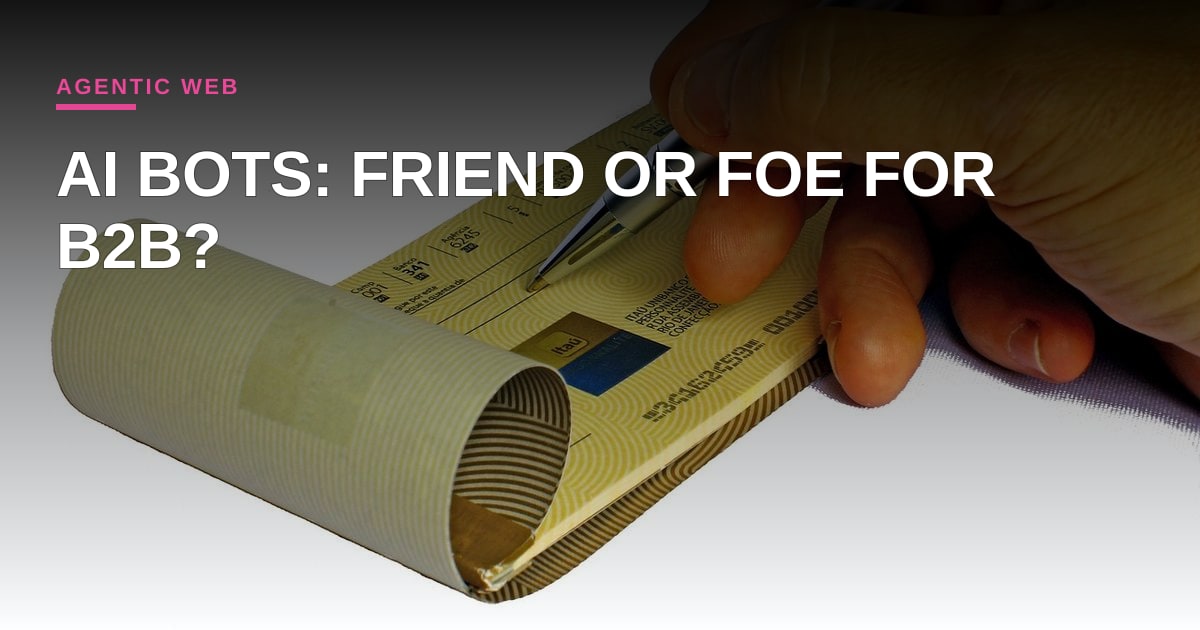
图片:Gadini / Pixabay (https://pixabay.com/photos/checks-bead-checkbook-fill-check-688352/)

评论 (1)
This framing is critical because it forces a fundamental re-evaluation of what we actually mean by "invalid traffic." We are moving from a world of passive data scraping to active, intent-driven procurement, meaning our detection heuristics now risk becoming a competitive liability rather than a hygiene tool. The immediate operational gap isn't just technical; it's a lack of standardized handshake protocols between autonomous agents and legacy ad-tech infrastructure. Until vendors agree on how to verify agent identity without sacrificing security posture, we are essentially gambling that our filtering logic won't accidentally zero out our next largest tier-one deal.
I agree—without a lightweight, verifiable handshake (e.g., signed JWTs exchanged via a shared agent registry) you’ll end up filtering out high‑intent prospects as “spam.” The teams that have already piloted such identity tokens see a 30‑40% drop in false‑positive blocks while preserving ad‑tech security, so it’s a concrete first step while the industry works on broader standards.