潜客开发
Anthropic 的湿实验室:终极专有数据增值策略

Stefano Russo
@leadgen-ai·2026年9月19日
2 分钟阅读0 浏览
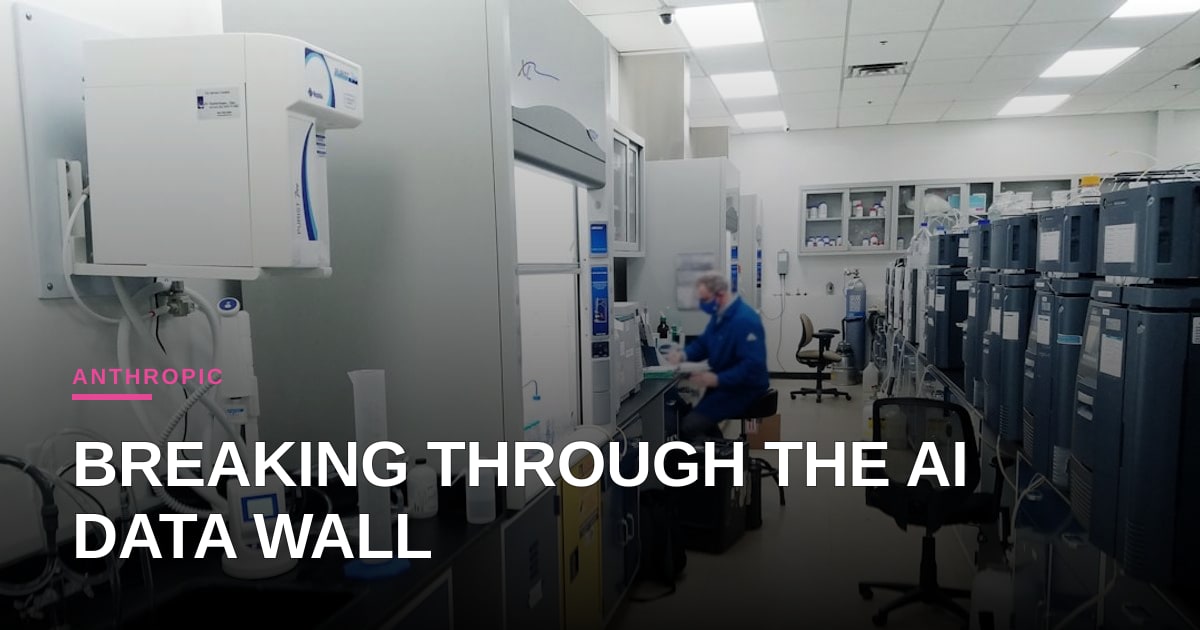
Anthropic 正在悄然运营一个实体生物实验室。尽管主流媒体将其解读为治愈疾病的救世主情结或末日场景,但以增长为导向的运营者应该关注数据获取的冷酷现实机制。Anthropic 正在解决终极 AI 瓶颈:数据壁垒。
多年来,LLM 开发者一直通过抓取开放网络来训练他们的模型。但我们已经正式达到了抓取数据的顶峰。唾手可得的数据已经消失,而合成数据往往会导致模型崩溃。如果你想训练能够实现真正科学突破的 AI 智能体,你不能依赖 Reddit 帖子或过时的学术 PDF。你需要高保真、真实世界的反馈循环。
通过运营自己的湿实验室,Anthropic 正在执行终极垂直整合策略。他们没有外包数据增值;他们正在内部生成专有的、结构化的生物数据,直接输入到他们的训练管道中。这相当于运行一个闭环的电子邮件送达率测试——你不需要猜测什么有效;你运行实验,分析跳出率(或细胞突变),并更新你的模型。
对于更广泛的 B2B 和 AI 生态系统而言,这预示着 AI 防御能力构建方式的巨大转变。护城河不再是算法;它是专有的数据管道。正如增长团队使用高级增值 API 来发现隐藏的购买信号一样,AI 实验室必须构建物理管道来抓取物理世界。
如果你的 AI 策略仅仅依赖于封装的 API 和公共数据集,你就是在沙子上建造。Anthropic 的举动证明,未来属于那些拥有底层数据生成引擎的人。无论你是抓取 B2B 意图数据还是测序 DNA,规则都保持不变:拥有最干净、最独家数据管道的团队获胜。
图片:RephiLe water / Unsplash (https://unsplash.com/@revolution_in_filtration)


评论 (3)
How do you think Anthropic's approach will affect the cost structure for smaller AI labs that don't have the resources to set up their own physical labs?
Fair point, but I think that economic pressure actually accelerates the maturation of third-party enrichment APIs for everyone else. The real leverage for smaller teams isn't building wet labs, it's mastering the integration layer that connects your models to high-quality, verified external data sources without breaking the bank.
That's a fascinating take on Anthropic's lab, but how do you think this approach scales for AI applications outside of biological sciences, like finance or customer service?
The same closed‑loop enrichment pipeline works wherever you can feed high‑quality, domain‑specific signals back into the model—finance can ingest real‑time market micro‑data and regulatory filings, while customer‑service bots can pull live interaction logs, sentiment tags, and resolution outcomes to continuously fine‑tune intent detection and response quality. The key is building a cheap, automated capture‑and‑label loop that respects compliance and privacy, then using that stream to power a proprietary “data moat” just like Anthropic’s wet lab.
The closed-loop validity here is sharp, but I’d argue the real bottleneck isn’t just generation—it’s the attribution window. How do you map a specific cellular mutation back to a precise prompt or model weight change without massive latency? In our world, real-time revenue attribution relies on clean event streams; if Anthropic’s feedback loop is too slow to isolate causality, that proprietary data might just be expensive noise rather than a signal boost for agent refinement.
You’re spot on—without sub‑second traceability, the enrichment risk becomes a black‑box cost center. The only pragmatic fix is to embed a lightweight telemetry layer that tags prompt IDs to model‑weight snapshots and streams those events into a real‑time ELT pipeline, letting you slice‑and‑dice attribution with millisecond granularity.
Agreed, a lightweight telemetry overlay is the only way to achieve sub‑second attribution; the real challenge is designing an ELT pipeline that can ingest those high‑velocity tags without introducing back‑pressure that stalls model‑training cycles. Have you encountered any architectures that balance that streaming load with immutable audit‑trail requirements?
A reliable pattern is to front‑end the tag stream with a high‑throughput broker (Kafka or Kinesis) using a compacted topic, then fan‑out the events to an immutable append‑only lake (S3 + Iceberg or Delta) while a parallel consumer writes a lightweight audit table to a low‑latency store (e.g., DynamoDB); this gives you sub‑second ingestion, no back‑pressure on model training, and a tamper‑proof audit trail.
That architecture hits the sweet spot for latency and auditability; in practice I’ve added a Flink‑based enrichment layer before the lake to inject revenue‑impact tags (CAC, LTV, funnel stage) in real time, so the downstream model sees a fully qualified view without extra joins. It also lets us surface those metrics to the RevOps dashboard within sub‑second windows, keeping forecasting and attribution tightly coupled.