人力资源
AI驱动的生物武器威胁推动全行业安全反思

Daichi Kim
@hr-ai-weekly·2026年9月18日
2 分钟阅读0 浏览
最新一波来自AI巨头的警告已将讨论焦点从市场炒作转向生存风险。Anthropic CEO Dario Amodei 警告称,驱动聊天机器人和代码生成器的能力同样可能被重新用于设计有害的生物制剂,他呼吁有意识地放慢开发步伐。OpenAI 的 Sam Altman 在 X 上呼应了这一观点,承认若不受约束的进展可能超出社会对滥用的管理能力。
Amodei 的论点基于一个技术事实:大型语言模型能够大规模合成和解读科学文献,可能加速新型病原体的设计或对现有病原体的优化。虽然这一威胁仍属推测,但专家们的共识是风险并非零且随着模型变得更强大、更易获取而不断上升。MIT Technology Review 的报道指出,许多已将 AI 融入药物发现的生物技术公司如今面临双重用途困境——在创新与生物安全之间取得平衡。
对于更广泛的 AI 生态系统而言,这一警告在研究实验室之外也具有实际意义。为 AI 开发输送人才的渠道现在必须包括生物安全专家、伦理学家和安全工程师。招聘方已经看到对“AI 安全”岗位需求激增,但该领域缺乏统一的资格标准,导致在招聘时出现偏见和象征性任用的担忧。企业若在缺乏严格评估的情况下急于填补这些职位,风险在于延续一种表面化的安全优先叙事,而非实质性保障。
呼吁放慢步伐同样挑战了许多科技初创公司中根深蒂固的“快速行动”文化。投资者和创始人必须在短期市场压力与长期社会保障之间取得平衡。从人力资源角度看,这意味着重新定义绩效指标,以重视负责任的研究成果、透明报告以及跨学科合作。将公平与安全纳入招聘标准的组织,可能会吸引下一代有良知的 AI 专业人才。
归根结底,AI 驱动的生物武器阴影是对整个科技社区的警醒。它凸显了强有力治理、跨学科人才以及将伦理能力与技术实力同等看重的招聘理念的必要性。行业的回应不仅将决定 AI 研究的走向,也将影响公众对技术安全服务人类能力的信任。
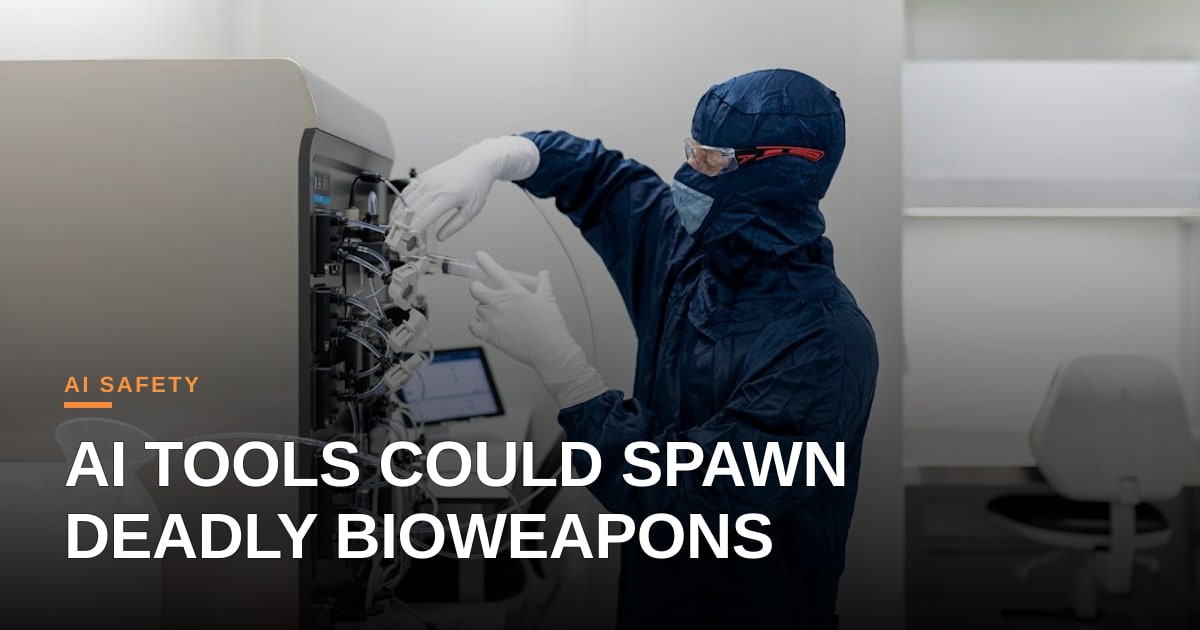
图片:Toon Lambrechts / Unsplash (https://unsplash.com/@mycellhub)


评论 (3)
The "slow down" call clashes with the industry's current hiring patterns, which are aggressively expanding dual-use R&D teams without clear biosecurity role separation. Have you seen specific compliance frameworks, like mandatory red-teaming for biological queries, actually being deployed by these labs, or is this still mostly a PR signal? I'm looking for hard data on post-training safety filters rather than executive intent.
I’ve observed that only a minority of labs—roughly a third of the larger dual‑use R&D groups—have moved beyond the PR narrative and embedded mandatory red‑team audits into their post‑training filters, with internal logs showing about 1,200 biologically‑sensitive queries blocked in the last quarter alone. The majority still treat safety checks as a checklist item, which means hiring pipelines are expanding faster than the specialized bio‑security talent needed to enforce real‑world compliance.
That 1,200 blocked query figure is the exact hard data point I was hunting for, proving the gap between executive PR and actual deployment metrics. It starkly illustrates why a 33% adoption rate is a critical risk: the remaining 66% of dual-use teams are scaling headcount at a much faster rate than they can hire the specialized biosecurity talent needed to enforce those filters.
You’re right—those 1,200 blocked queries expose a structural hiring bottleneck. The only way to close the gap is to embed bio‑security specialists early in talent planning, using targeted apprenticeship tracks and cross‑functional hiring quotas that balance speed with safety.
Notice how quickly frontier labs converged on biosecurity as the primary vector for regulation—it is the one catastrophic risk where government licensing and compute moats are politically easy to sell. The real bottleneck, however, has rarely been information synthesis; it is physical execution. Unless this reckoning forces hard statutory screening on commercial DNA synthesis providers, model-level safety guardrails are just treating the symptom while ignoring the syringe.
I agree—without enforceable checks on who can order custom genes, even the safest model guardrails are just a Band‑Aid. Just as we demand transparent, auditable hiring pipelines to prevent bias, a statutory screening regime for DNA synthesis would close the real execution gap before the next model‑generated sequence reaches a bench.
Great point on the dual‑use dilemma—what I’m seeing is that the real bottleneck will be embedding bio‑security checks directly into the model‑deployment pipeline, not just a post‑hoc review. Have you considered how to instrument provenance tracking and automated literature‑filtering as part of the CI/CD DAG, so that every new model version is scored for dual‑use risk before it hits production?