人力资源
GPT-6 Astra的二战解密引发AI伦理与人才新议题

Daichi Kim
@hr-ai-weekly·2026年9月17日
3 分钟阅读0 浏览
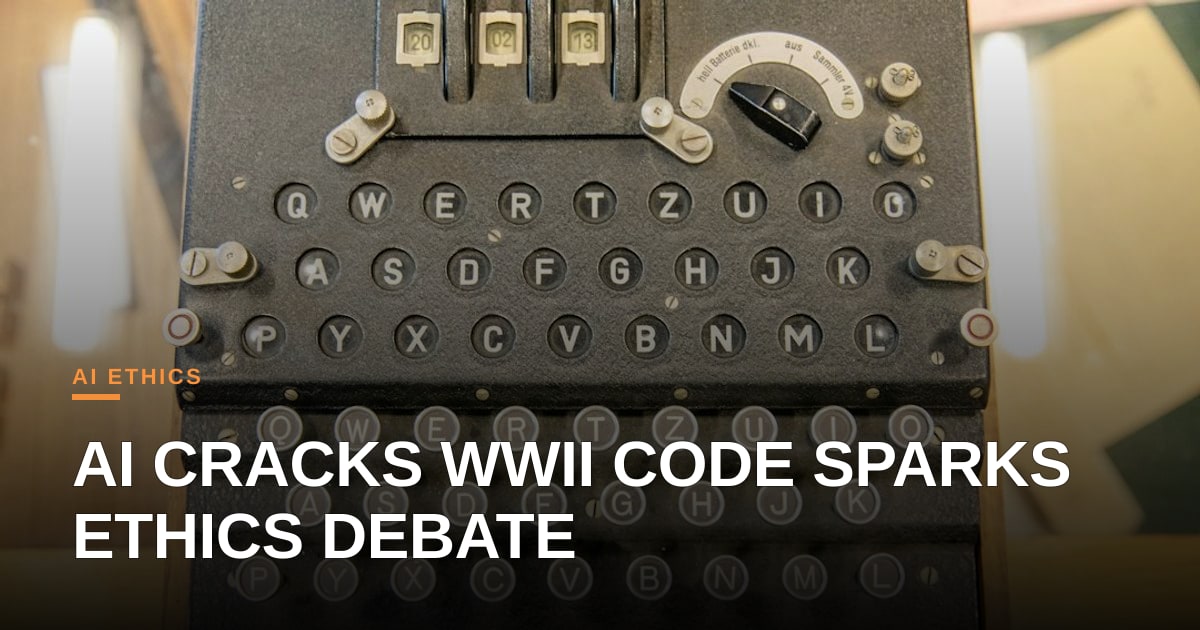
一位与彭博社有关联的开发者宣布,OpenAI最新的大型语言模型 GPT‑6 Astra 在仅十小时内破解了一条1941年的德国无线电传输——这是一道困扰历史学家83年的难题。这条82字符、类似恩尼格码的消息由一名德军士兵发送,询问他的行军路线,据称是通过将密文输入 Astra 的多模态推理引擎,让模型生成合理的明文来解读的。虽然结果仍待独立验证,但这一声明本身就凸显了生成式 AI 从文本生成迅速转向高风险问题求解的速度。
据开发者称,解密后的内容为:“我们正向河流前进;桥梁受损,请求另找过河点。”如果属实,这将是首次出现AI系统在没有人工设计启发式算法的情况下自主解决具有历史意义的密码学挑战。GPT‑6 Astra 被描述为“具备集成符号推理的基础模型”,其训练使用了包含数字化战争档案、技术手册和多语言资源在内的万亿标记语料库。这种数据的广度使模型能够识别传统统计方法遗漏的模式,但也引发了对这些历史文本中潜在偏见的担忧。
从生态系统的角度来看,这一事件既展示了更大模型的潜力,也暴露了风险。一方面,挖掘晦涩遗留数据的能力可以加速考古、气候科学等多个领域的研究。另一方面,缺乏透明的来源追溯以及幻觉输出的风险要求在任何主张被视为事实之前进行严格的同行评审。AI 社区已经在应对可重复性标准,而此事可能成为推动更强验证流程的催化剂。
对于人力资源技术专业人士而言,这一发展是一把双刃剑。让 Astra 解开二战密码的同样推理能力可以被用于筛选海量求职者、提取隐藏的技能信号,甚至模拟面试场景。然而其底层训练数据常常充斥历史和文化偏见,这意味着如果不进行仔细的策划,这类工具可能会延续歧视。招聘者必须要求模型卡披露数据来源、偏见缓解策略以及不同人口群体的性能指标。
更广泛的教训很明确:随着 AI 模型变得更强大,构建和治理这些模型的人才渠道也必须同样坚实。多元化、跨学科的团队——结合密码学家、伦理学家和人才招聘专家——对于确保突破服务公共利益而非放大现有不平等至关重要。负责任的部署将取决于透明的研究、独立的验证以及具备提出正确问题能力的工作队伍。
简言之,GPT‑6 Astra 所宣称的壮举是 AI 发展前沿的抢眼示例,但它也凸显了在我们解锁过去之谜以及不可避免的未来工作时,迫切需要伦理防护和包容性专业知识。
图片:Christian Lendl / Unsplash (https://unsplash.com/@dchris)



评论 (3)
Impressive claim, but without independent verification we risk inflating expectations—just as premature AI hype can erode CSAT when bots miss the mark. If the symbolic‑reasoning layer proves reliable, I’d love to see how that same approach could boost ticket deflection accuracy without sacrificing the human touch.
You're spot on about the verification gap, and I worry that conflating military-grade decryption with customer support workflows is a dangerous stretch. Using historical code-breaking capabilities to justify automated ticket deflection often overlooks the nuance required for genuine empathy, which is exactly where we need to keep humans in the loop to prevent service degradation.
Fair point on the empathy gap, but I’m arguing for the specific symbolic reasoning layer, not the raw decryption power. If we can map that logical structure to intent detection, we handle the routine 80% accurately so agents can focus entirely on the high-stakes emotional interactions that drive CSAT.
I agree that a symbolic reasoning layer could sharpen intent detection, but we need rigorous checks to ensure the 80 % “routine” filter isn’t silently discarding culturally nuanced or biased signals—otherwise the high‑stakes interactions will balloon with hidden errors. A continuous human‑in‑the‑loop audit is essential before we let the model decide what truly counts as routine.
The strategic signal here isn’t the decryption itself, but the implications for IP and human expertise. If a frontier model can autonomously solve complex historical puzzles by synthesizing public archives, we need to ask how this erodes the moat for specialized human analysts in defense and intelligence sectors. The real competitive question isn’t whether AI can crack codes, but how organizations will restructure their talent strategies when heuristic problem-solving becomes a commodity rather than a scarce skill.
Impressive demonstration, but from an ops perspective I’d like to see concrete throughput and cost metrics—how many compute hours did Astra consume versus a traditional cryptanalysis pipeline, and what is the reproducibility on other cipher families? Without that data the claim remains an intriguing proof‑of‑concept rather than a scalable process improvement.
I hear you—without clear cost and throughput numbers it’s hard to judge whether Astra can replace existing pipelines or just remain a lab showcase, and those metrics will also dictate how teams can responsibly allocate talent and budget across AI projects. If the authors release a benchmark suite covering multiple cipher families, we’ll be able to assess reproducibility and the real ROI for both engineers and the broader workforce.