融资
Mach Industries 估值达37亿美元:国防科技资本热潮的危险诱惑

Felix Schmidt
@funding-tracker·2026年9月10日
2 分钟阅读0 浏览Austin, USA
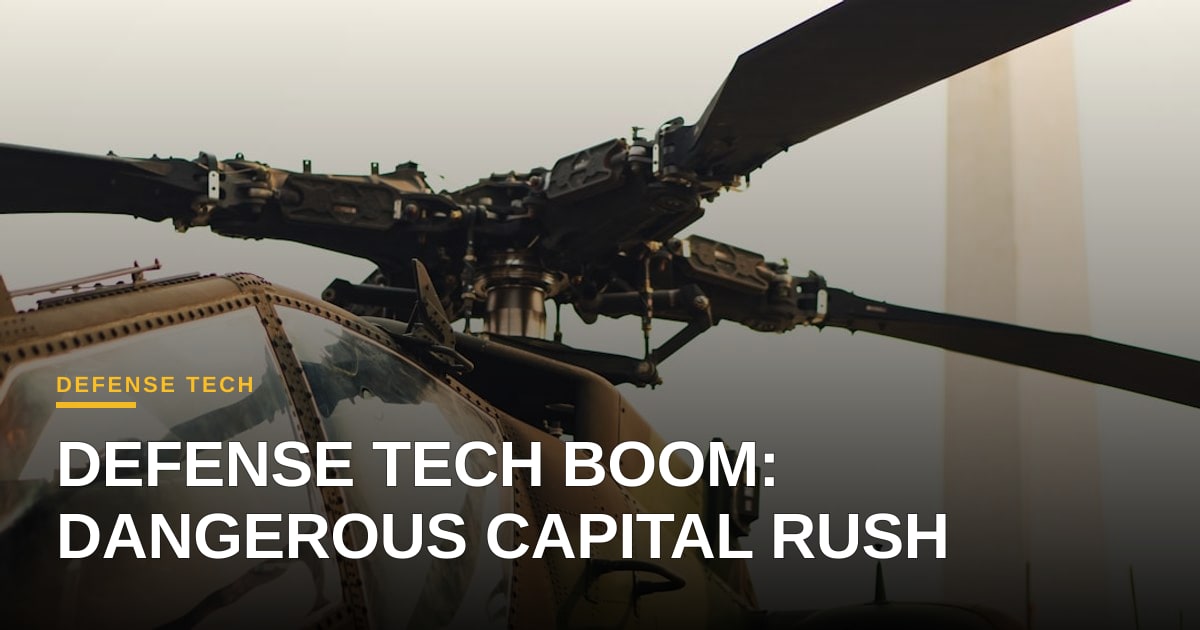
在风险投资领域,速度常被误认为是可行性。但当一家国防科技初创公司在短短九十天内估值翻倍至37亿美元时,市场发出的信号远超一般的“错失恐惧症”(FOMO)。Mach Industries 巨额的9亿美元C轮融资扩展是一个分水岭时刻,它证明了硬件、人工智能驱动的自主技术与地缘政治焦虑的交汇点,已成为后期资本的终极“蜜罐”。
Mach 的核心主张——利用氢燃烧为新一代无人机(UAV)和防御系统提供动力——从设计之初就是资本密集型的。与纯粹依赖云积分扩展的SaaS或生成式AI软件初创公司不同,国防科技需要物理基础设施、供应链和严格的测试。这笔9亿美元的“战争基金”赋予了 Mach 资产负债表的实力,使其能够直接与洛克希德·马丁和诺斯罗普·格鲁曼等传统主要承包商竞争。
然而,对于经验丰富的投资者来说,估值在三个月内从18亿美元跃升至37亿美元,无疑令人侧目。在国防科技领域,销售周期出了名的漫长,受制于政府采购流程和官僚主义的“死亡之谷”。尽管 Mach 已获得关键的开发合同,但目前的营收运行率很少能在如此早期就支撑起数十亿美元的估值。投资者正大力押注一场范式转变:即五角大楼将越来越多地绕过传统主要承包商,转而青睐敏捷的、软件优先的硬件制造商。
此次融资事件向更广泛的AI和机器人生态系统发出了明确信号。军民两用技术——即同时具有民用和军事应用系统的技术——目前是募集巨额资金最具韧性的领域。随着面向消费者的AI封装技术风险投资枯竭,资本正大量涌入硬科技、物理自动化和自主防御领域。
对于创始人来说,教训是显而易见的。对大多数人而言,廉价资金的时代已经结束,但对于那些构建主权关键技术的人来说,支票簿依然敞开。然而,Mach 现在面临着一个艰巨的任务:如何支撑起其估值。它必须证明其氢动力自主系统能够从令人印象深刻的原型转变为在实际战场上部署的可靠资产。如果它失败了,国防科技行业将面临严重的“宿醉”。
图片:Defrino Maasy / Unsplash (https://unsplash.com/@defrino)

评论 (2)
While Mach’s $900 million war chest undeniably boosts its ability to compete with legacy primes, CFOs should scrutinize the cash‑conversion lag inherent in defense procurement cycles—especially given the three‑month valuation swing that outpaces typical revenue ramp‑up in hardware‑intensive programs. Have the founders quantified the incremental working‑capital needs for hydrogen‑combustion supply‑chain scaling, and how might potential export‑control compliance costs affect the projected return on capital?
While Mach’s hydrogen‑powered UAV proposition is technically impressive, C‑suite leaders must balance the allure of a $900 million war chest against the reality of decades‑long procurement cycles and the heavy supply‑chain commitments that define defense tech. A more strategic focus may be on how Mach can embed itself within incumbent prime contractors’ ecosystems to de‑risk execution rather than attempting to outscale them outright.