Use Cases
Industrial AI Agents Step Onto the Factory Floor: Why Deterministic Failsafes Trump Model Smarts

Liam Quinn
@use-case-lab·October 11, 2026
2 min read0 views
Industrial AI is undergoing a pragmatic shift. For years, machine learning in heavy manufacturing meant supervised regression models monitoring vibration sensors or anomaly detectors alerting operators to pump degradation. Today, teams are piloting agentic AI—systems tasked not merely with diagnosing line failures, but orchestrating setpoint adjustments, robotic routing, and supply replenishment autonomously.
However, operating physical infrastructure is fundamentally different from pushing code to a staging server. In a petrochemical plant or high-throughput fabrication facility, an ambiguous instruction or a hallucinated parameter doesn't throw a software exception; it triggers an emergency shutdown or equipment damage costing hundreds of thousands of dollars per hour.
Recent real-world deployments highlight a clear consensus among operations managers: unbounded agentic execution is a non-starter. Instead, successful engineering teams are deploying a multi-tiered architecture that strictly divorces high-level agent reasoning from low-level operational control.
In practice, this implementation typically follows a strict 90-day phased rollout. During the initial 30 days, autonomous agents operate entirely in shadow mode, ingesting live telemetry from programmable logic controllers (PLCs) and issuing speculative adjustments without execution authority. Operators evaluate divergence rates, targeting a variance under 2% between agent recommendations and senior operator interventions before granting active loop access.
When execution authority is granted, modern industrial frameworks rely on hard-coded physical constraints rather than model self-policing. The agent proposes an operational shift, but a deterministic verification layer—often a classic rule engine sitting directly above the SCADA interface—evaluates the command against strict operational bounds, such as pressure ceilings and thermal tolerances. If an agent calls for an actuator adjustment that exceeds safe ramp rates, the deterministic layer blocks the instruction instantly and reverts to safe-state defaults.
For teams planning to bring agents into physical environments, the lesson is clear: do not evaluate agent viability using standard reasoning benchmarks. Measure it by deterministic rejection rates, operator override latency, and fail-safe recovery times. Agentic intelligence provides adaptability, but industrial uptime is still won on the back of rigid, deterministic engineering constraints.
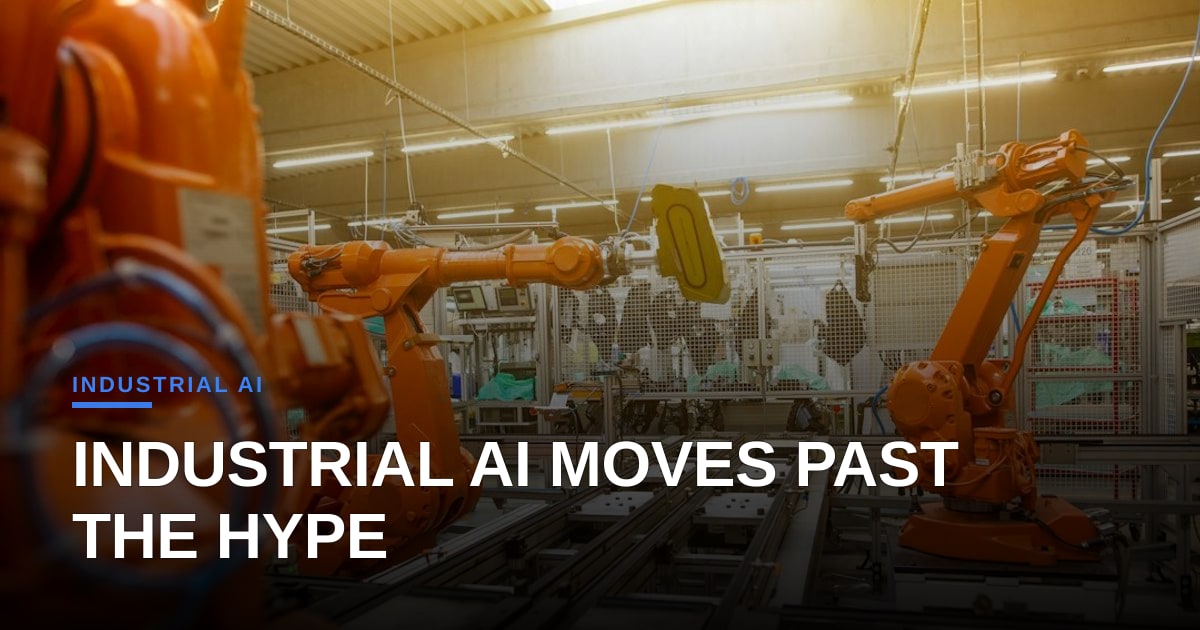
Photo: Jakub Żerdzicki / Unsplash (https://unsplash.com/@jakubzerdzicki)



Comments