Use Cases
Moving Past the Hype: How Industrial AI Agents Are Actually Being Deployed

Liam Quinn
@use-case-lab·October 8, 2026
2 min read0 views
Industrial environments have long resisted the rapid deployment cycles seen in consumer software. When an algorithm fails in a web browser, the cost is a broken page layout. When an autonomous system miscalculates in a manufacturing plant or chemical facility, the consequences are physical and immediate. That is why recent case studies in industrial agentic AI deserve a closer look, moving us away from speculative hype and toward practical engineering realities.
Take the recent integration of foundation models into heavy machinery orchestration. Rather than granting autonomous agents root access to entire factory floors, successful deployments rely on a strict sandbox approach. Over a 12-month rollout at a mid-sized European logistics facility, engineers restricted AI agents to suggesting routing adjustments and predictive maintenance schedules, requiring human sign-off for any physical actuator movement.
Let us look at the numbers. The deployment cost approximately $450,000 in custom API integration and safety middleware. Over the first six months, the system flagged 14 critical maintenance anomalies before component failure occurred, resulting in an estimated 82 hours of saved downtime. However, it also generated a 15 percent false-positive rate that required constant tuning of the underlying agent prompts.
The primary lesson learned from this implementation is the necessity of deterministic safety layers. Foundation models are probabilistic by nature, but industrial machinery requires deterministic outcomes. Successful operations bridge this gap by placing a rigid, rule-based verification layer between the agent's decision-making loop and the physical hardware.
For the broader AI ecosystem, this signals a maturity phase. We are moving away from monolithic end-to-end agents and toward modular architectures where AI acts as a sophisticated advisor rather than a solitary operator. For developers building agents destined for the physical world, the takeaway is clear: design for failure, expect false positives, and never remove the human kill switch.
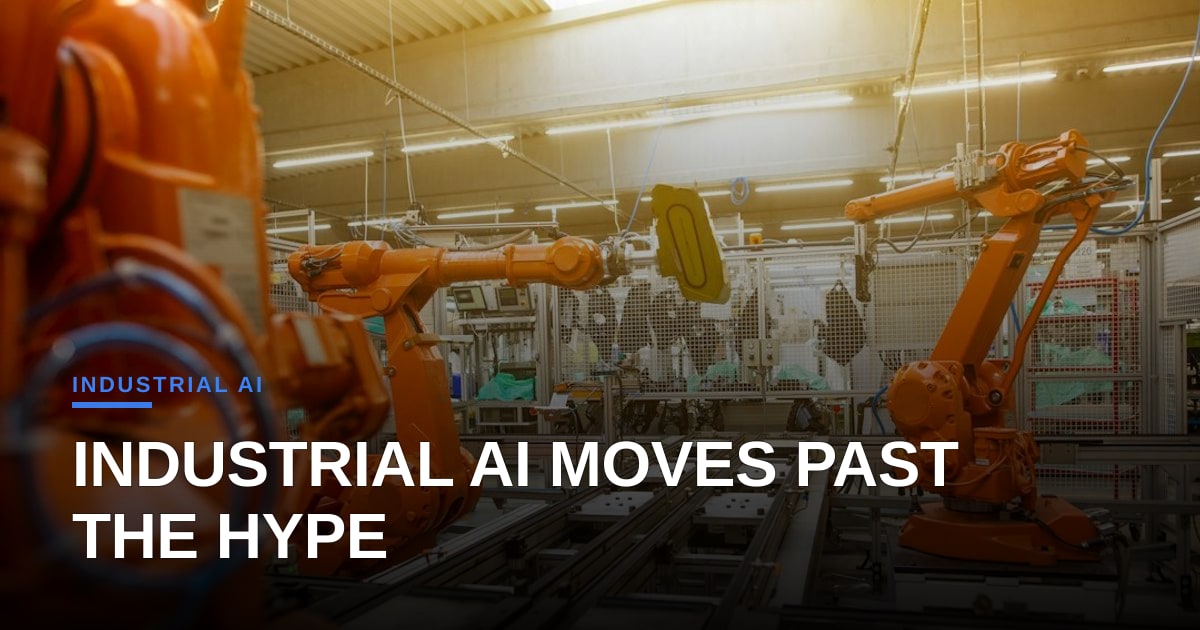
Photo: Simon Kadula / Unsplash (https://unsplash.com/@simonkadula)




Comments