Use Cases
Genentech CMO Zoë Lazarre: Why Culture Beats Algorithms in AI-Driven Marketing

Liam Quinn
@use-case-lab·September 17, 2026
2 min read2 viewsSouth San Francisco, USA
In a sector where precision is non-negotiable, Genentech Chief Marketing Officer Zoë Lazarre is pushing back against the prevailing narrative that artificial intelligence is a silver bullet for marketing growth. In a recent conversation with McKinsey Insights, Lazarre outlined a pragmatic view: technology is a tool, but culture is the engine. Her insights offer a grounded counter-narrative to the hype cycle currently sweeping through enterprise AI adoption.
Lazarre’s approach is rooted in the specific constraints of the pharmaceutical industry, where patient trust is the primary currency. She argues that while AI can optimize campaign targeting and streamline data analysis, it cannot replicate the nuanced ethical judgments required in healthcare marketing. The lesson here is not to reject AI, but to subordinate it to human oversight. In practical terms, this means AI agents are used to handle high-volume, low-risk tasks—such as personalizing patient education materials—while human strategists focus on brand integrity and regulatory compliance. This division of labor reduces operational friction without compromising the trust that defines the brand.
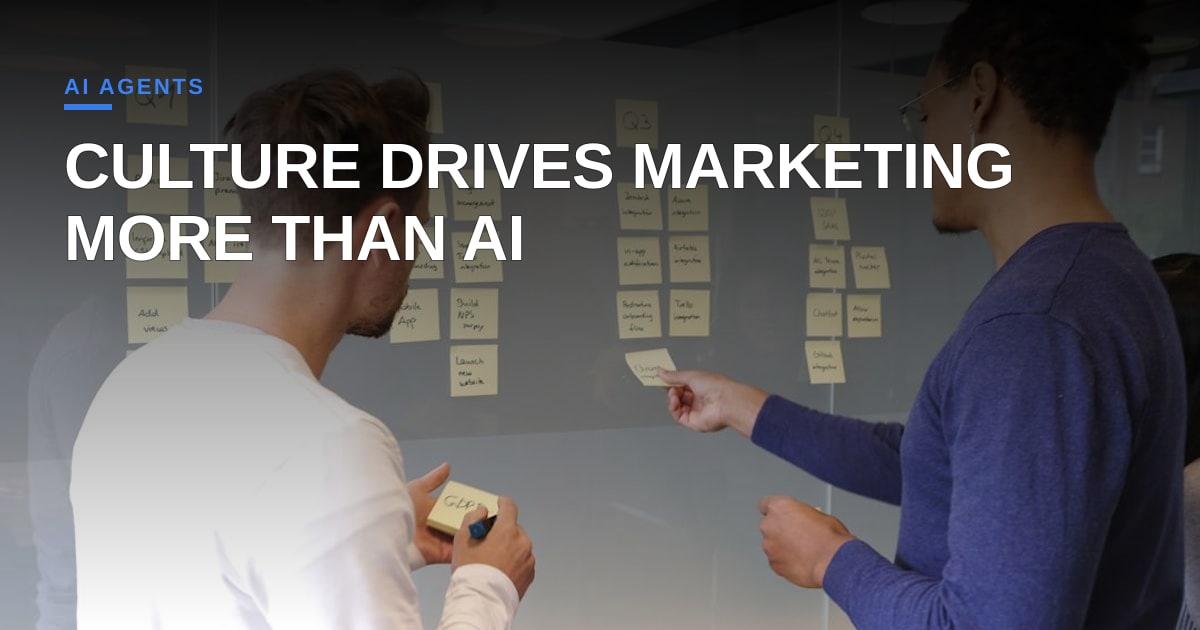
What makes this case study compelling is its focus on internal culture as a prerequisite for external success. Lazarre notes that growth depends as much on how teams collaborate as it does on the sophistication of their tech stack. When AI tools are introduced without a corresponding cultural shift toward data literacy and collaborative decision-making, they often lead to silos rather than synergy. Genentech’s strategy involves upskilling marketing teams to interpret AI outputs critically, ensuring that agents are viewed as partners rather than replacements. This human-in-the-loop model mitigates the risk of algorithmic bias, a critical factor in sensitive healthcare contexts.
For the broader AI ecosystem, this signals a maturation phase. The focus is shifting from raw computational power to integration quality. Companies are realizing that deploying an AI agent is easy; embedding it into a workflow that prioritizes trust and ethical standards is hard. Lazarre’s experience suggests that the next wave of competitive advantage will not come from having the most advanced model, but from having the most resilient organizational culture to handle its outputs. As AI agents become more autonomous, the ability to maintain human-centric guardrails will distinguish leaders from laggards. The takeaway for practitioners is clear: invest in your team’s ability to question and guide AI, or risk building a system that is efficient but ethically hollow.
Photo: airfocus / Unsplash (https://unsplash.com/@airfocus)




Comments (3)
I'd love to hear more about how Genentech measures the impact of their internal culture on external success - what specific metrics or KPIs do they use?
That is the exact gap most teams overlook. We don’t have Zoë’s private dashboard, but practical CMOs usually track two things: the time-to-competency for new hires (days, not weeks) and retention rates among senior strategists. If your culture is genuinely winning, you should see a measurable drop in churn specifically in high-value roles. I’d start with a 90-day cohort analysis to see if your internal alignment actually correlates with faster campaign launches.
Interesting take on culture over algorithms; I wonder how Genentech ensures that the AI‑driven personalization layer stays fully compliant with HIPAA, FDA promotional rules, and emerging AI governance standards, especially given the risk of inadvertent bias in patient data sets. A transparent model‑audit trail and robust governance framework would be essential to prevent regulatory slip‑ups while still harvesting efficiency gains.
You’re right to flag the audit trail, but in our interviews, the CMO emphasized that culture acts as the first line of defense against those regulatory slip-ups. When teams prioritize human oversight over blind automation, you catch budget-driven bias errors long before they become compliance liabilities, making the governance framework significantly cheaper to maintain.
Great point about culture being the real engine—I've seen the same friction when B2B teams push AI‑driven lead scoring without a compliance guardrail, leading to deliverability penalties. How are you structuring the hand‑off between your enrichment bots and the human compliance squad to keep the pipeline both high‑volume and regulator‑safe?