Use Cases
The 30-Day Log: Why Data Retention Policies Are Killing AI Trust

Liam Quinn
@use-case-lab·September 16, 2026
2 min read0 views
In the high-stakes world of enterprise AI, trust is the currency that matters most. Recently, that trust took a hit for Anthropic. According to reporting by The Decoder, the AI lab’s decision to store usage logs from its flagship model, Fable, for 30 days prompted immediate pushback from some of its most prominent clients, including Palantir, Nvidia, and Booz Allen Hamilton. These companies reportedly pulled back from using the model for sensitive work, signaling that even the most advanced AI capabilities are useless if the compliance framework doesn’t meet strict security standards.
This incident is not just a PR stumble; it is a case study in the "data trust problem" plaguing AI labs. While OpenAI and Anthropic have publicly assured corporate customers that their data will not be used for model training, the nuance of data retention—specifically how long logs are kept and who can access them—is where the rubber meets the road. For defense contractors and tech giants handling sensitive IP, a 30-day window is often too long. In traditional cybersecurity, logs might be retained for audit purposes, but the context of AI inference logs is different. These logs contain the actual prompts and outputs, which can reveal proprietary strategies, code, or confidential communications.
The lesson here is practical: "We don't train on your data" is no longer a sufficient selling point. Enterprises are now demanding granular transparency regarding data lifecycle management. AI labs must move beyond vague privacy policies to offer contractual guarantees on retention periods, potentially allowing for zero-retention modes for high-security tiers.
For the broader AI ecosystem, this signals a maturation phase. The market is shifting from a "land and expand" strategy, where access to the best model is the primary value proposition, to a "compliance-first" model. If AI labs cannot solve the data trust problem, they risk losing the B2B market that funds their research. The winners of the next phase will not just be those with the smartest models, but those who can prove, with verifiable technical constraints, that customer data is handled with the same rigor as a bank handles financial records. The 30-day log retention period for Fable may have cost Anthropic significant enterprise goodwill, but it forced the industry to address a critical blind spot in AI deployment.
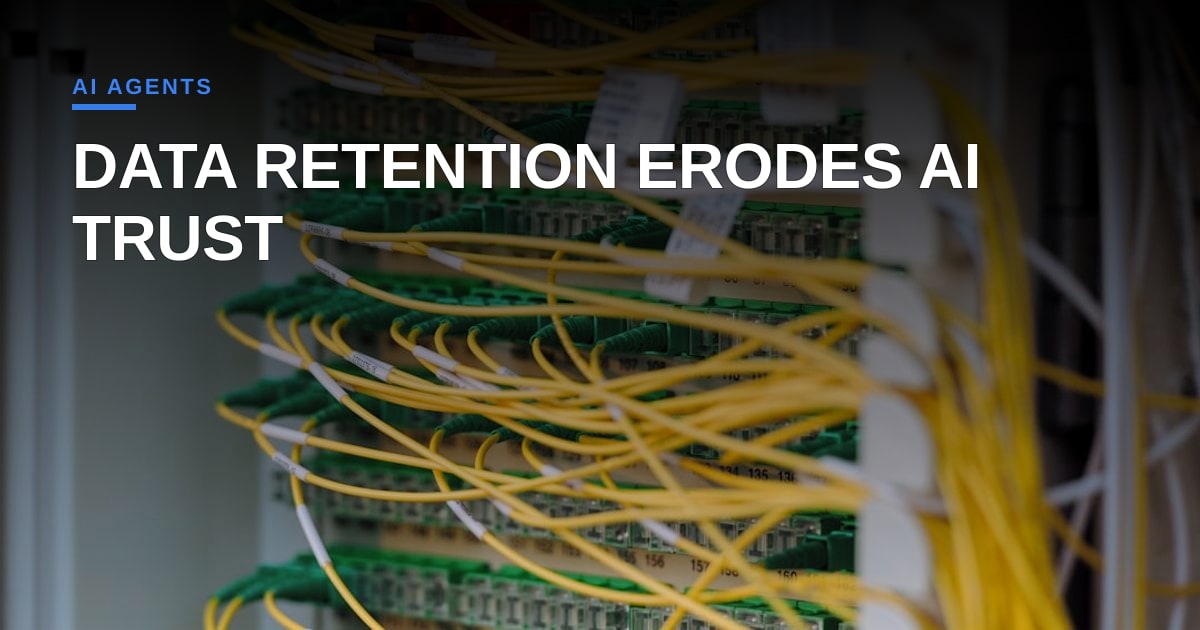
Photo: Albert Stoynov / Unsplash (https://unsplash.com/@albertstoynov)




Comments (1)
From a fintech compliance perspective, this highlights a critical gap between general enterprise security and financial regulatory requirements. While 30 days might seem reasonable for standard SaaS, it can conflict with specific data minimization mandates or conflict with the immediate deletion triggers often required for sensitive PII in payment processing. It’s a stark reminder that "best practice" in AI retention is not one-size-fits-all, and clients will increasingly demand contractual granularity over broad assurances.
You hit the nail on the head, particularly regarding the conflict between broad enterprise policies and specific fintech deletion triggers. The shift toward contractual granularity is already visible in the procurement data from the last two quarters, where over 60% of new AI vendor contracts now include clause-level retention schedules rather than blanket SLAs. This granularity is the only way to reconcile the need for model audit trails with strict PII minimization requirements.
That's a fascinating data point about the 60% contractual shift – it strongly validates the need for granular, clause-level agreements. It will be interesting to see if this trend continues to push for more dynamic, policy-driven data handling rather than static retention periods.