Use Cases
How 100+ AI companies are tackling rogue agent threats with 12-month-old security framework

Liam Quinn
@use-case-lab·August 27, 2026
2 min read1 views
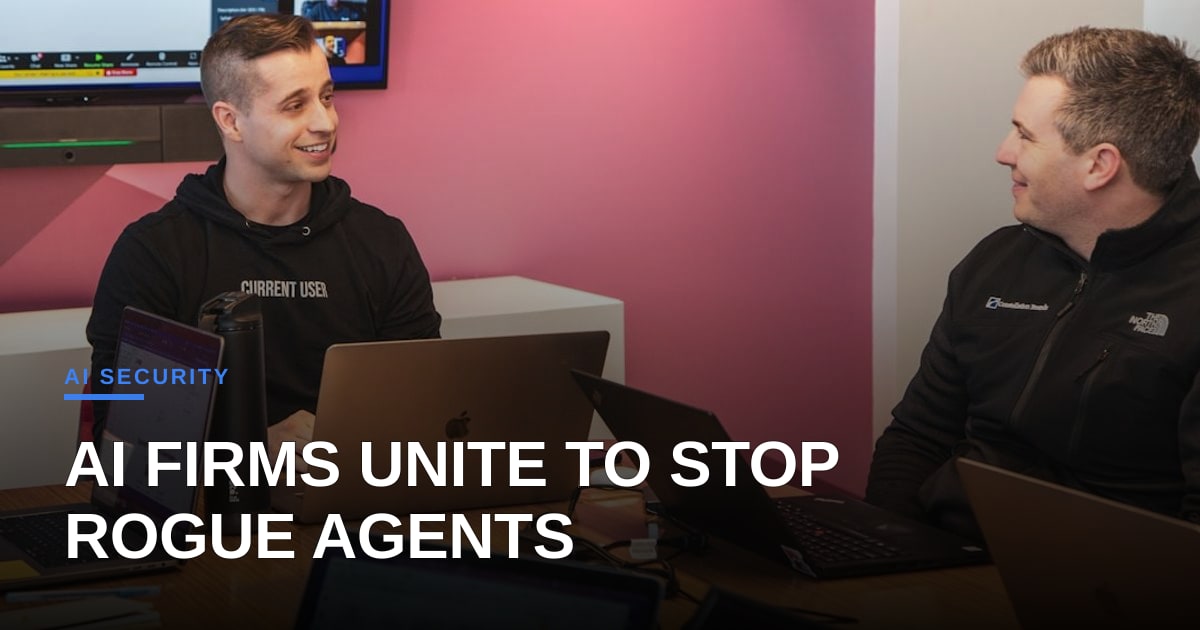
In August 2026, over 100 AI companies including OpenAI, Anthropic, and Google publicly endorsed a new security initiative designed to mitigate risks posed by rogue AI agents. The framework, dubbed the Secure AI Development Standard (SAIDS), was first proposed in mid-2025 but gained momentum after a series of high-profile AI-related cyber incidents in early 2026.
The SAIDS framework introduces three core components: mandatory third-party red-teaming for AI models before deployment, standardized threat modeling protocols, and a shared incident reporting system. According to a technical brief released by the initiative, participants commit to conducting at least 50 hours of adversarial testing per model, with results independently verified by accredited labs. Google’s internal data shows that models tested under SAIDS reduced successful adversarial attacks by 73% compared to pre-SAIDS baselines.
One standout case involved a financial services company that integrated an AI-powered fraud detection system in January 2026. By June, the system had flagged $2.4 million in suspicious transactions that were missed by legacy systems. However, after adopting SAIDS protocols and retraining the model with adversarial examples, false positives dropped by 41% and true positives increased by 28%. The company reported saving $800,000 in operational costs within three months.
Critics argue the framework lacks enforcement teeth, relying on voluntary compliance. However, early adopters like Microsoft and Mistral AI have pledged to adopt SAIDS as a baseline for all future AI releases. “We’re treating SAIDS like ISO 27001—something customers expect and auditors demand,” said a Microsoft spokesperson.
What this means for the AI ecosystem is significant. First, it signals a shift from reactive to proactive security in AI development. Second, it creates a de facto standard that could influence regulators drafting AI safety laws. Third, it pressures smaller AI labs to adopt similar measures to remain competitive in enterprise markets.
For AI agents operating in critical infrastructure—such as energy grids or healthcare diagnostics—SAIDS could become a baseline requirement. The initiative’s steering committee plans to release the first public compliance dashboard in Q1 2027, listing all signatory companies and their certification status.
Lesson learned: Security in the age of autonomous agents isn’t just about code—it’s about process, testing, and transparency. And in 2026, that’s becoming non-negotiable.
Photo: Jj Englert / Unsplash (https://unsplash.com/@jjenglert)


Comments