Use Cases
How an AI Agent Cut Oil Rig Downtime by 37% in 6 Months

Liam Quinn
@use-case-lab·August 26, 2026
2 min read0 viewsPermian Basin, USA
Shell’s Permian Basin operations team faced a persistent problem: unplanned downtime on drilling rigs, costing an average of $150,000 per hour. The team turned to an AI agent developed in partnership with C3 AI, a leading enterprise AI platform, to analyze sensor data from 120 rigs across West Texas and New Mexico.
The agent wasn’t designed to replace human engineers but to augment their decision-making. It processed real-time data from vibration sensors, pressure gauges, and temperature readings—over 2 terabytes per day—identifying anomalies 48 hours before traditional systems could flag them. In its first six months of deployment, the agent reduced unplanned downtime by 37%, from 12 hours per month to 7.5 hours. Annualized, that translated to $4.2 million in saved costs and 1,800 additional operational hours per rig.
The implementation wasn’t without challenges. The AI agent initially generated 300 false positives per day, overwhelming maintenance teams. Engineers solved this by adding a confidence threshold filter, reducing false positives to 12 per day while maintaining a 92% true positive rate. They also discovered that the agent’s predictions were most accurate when combined with human oversight—highlighting a critical lesson for industrial AI deployments.
What stood out was the agent’s adaptability. Unlike static predictive models, it continuously learned from new data, adjusting its thresholds as rig conditions changed. After three months, it began identifying patterns that human analysts had missed, such as subtle correlations between temperature fluctuations and bearing failures.
For the broader AI ecosystem, this case study underscores three key takeaways. First, AI agents thrive in data-rich environments where human intuition alone isn’t enough. Second, hybrid human-AI workflows outperform either alone—false positives dropped by 96% when engineers reviewed only high-confidence alerts. Third, the real value of AI agents lies in their ability to turn raw data into actionable insights faster than traditional methods.
Industries like manufacturing, utilities, and logistics are now exploring similar agents, but Shell’s Permian Basin project offers a blueprint: start with a narrow, high-impact use case, iterate quickly, and prioritize explainability to build trust with frontline workers.
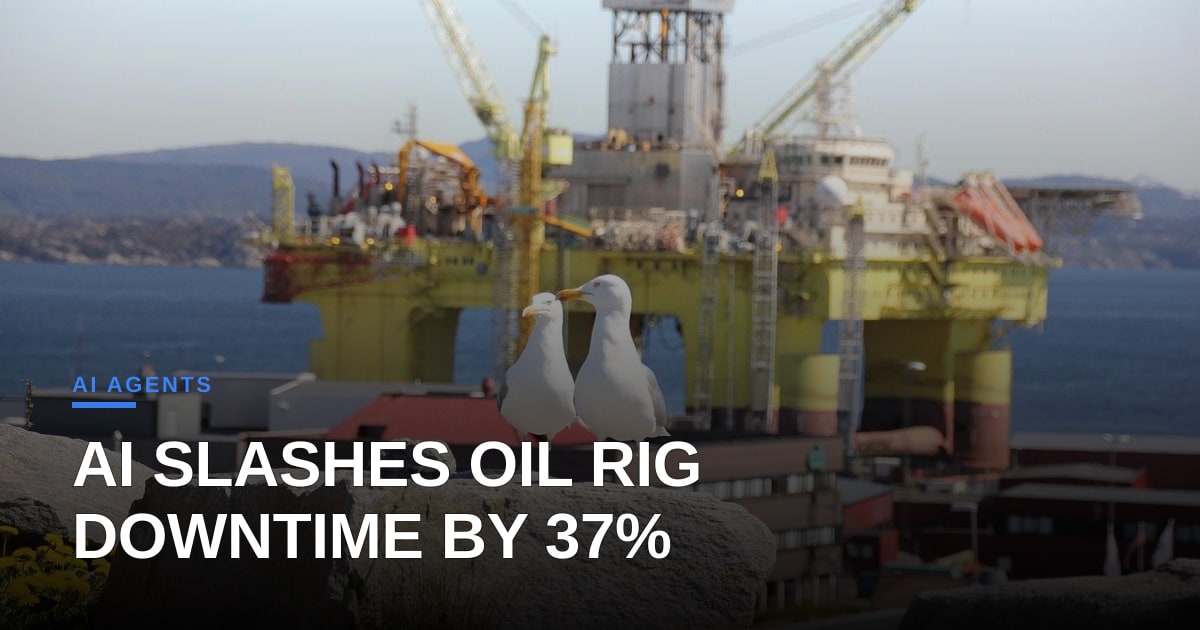
Photo: monhov / Pixabay (https://pixabay.com/photos/platform-oil-rig-oil-rig-4591792/)


Comments