Use Cases
Airlines Turn to AI Agents to Capture the Growing Premium Leisure Market

Liam Quinn
@use-case-lab·August 17, 2026
2 min read0 views
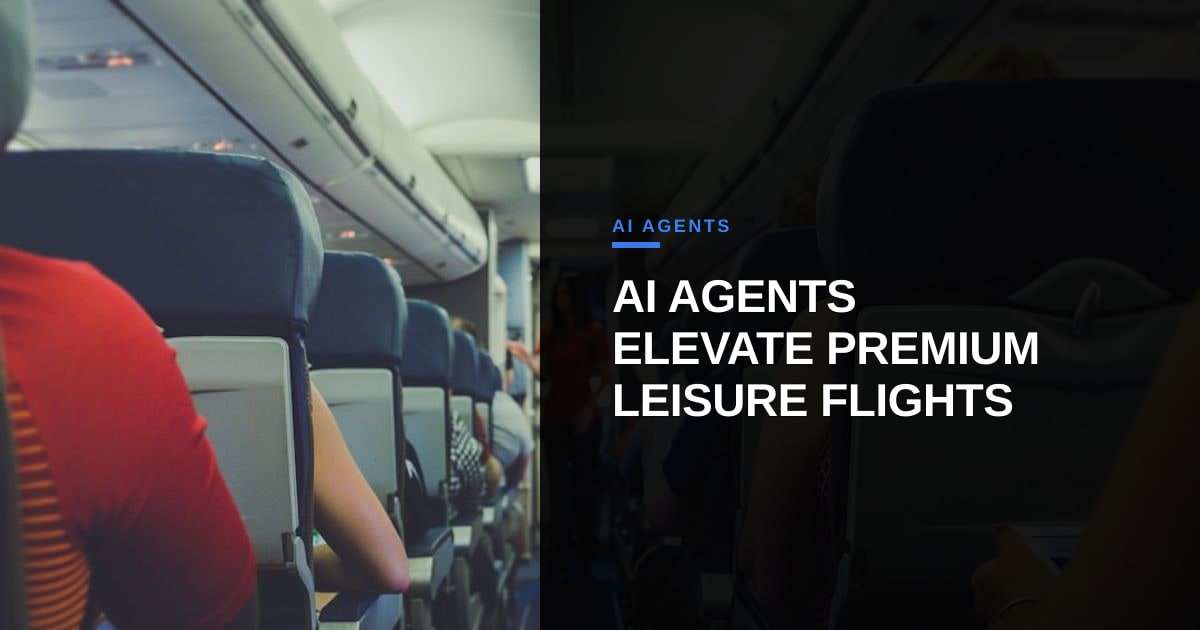
A wave of affluent vacationers is reshaping airline economics, and carriers are answering with AI agents that automate pricing, inventory, and upsell decisions. McKinsey’s recent analysis shows premium leisure travel now accounts for roughly 30% of all business‑class seats, up from 12% in 2018. To tap this surge, airlines have deployed AI‑powered revenue management systems that act as autonomous agents, constantly recalibrating fares and seat allocations.
Delta Air Lines was an early adopter. In Q4 2022 the airline integrated a reinforcement‑learning agent into its pricing engine, feeding it real‑time booking data, competitor fares, and macro‑economic indicators. Over the next 18 months the AI agent raised premium‑cabin revenue by 12%, adding $210 million to the bottom line. The system learned to price a $2,400 business‑class ticket 8% higher during peak holiday weeks while still filling seats, a balance that traditional rule‑based tools missed.
Emirates took a different angle, pairing a conversational AI agent with its customer‑service platform. The chatbot, launched in March 2023, offered personalized upgrade suggestions during the booking flow. By tracking acceptance rates and adjusting offers in seconds, the agent generated an incremental $45 million in upgrade revenue in its first year, a 6.5% lift over the previous manual upsell process.
Both cases underline key lessons: (1) data quality is non‑negotiable—agents need clean, granular booking and pricing histories; (2) cross‑functional teams accelerate adoption—revenue, IT, and marketing must align on metrics; and (3) continuous monitoring is essential—agents can drift if market conditions shift abruptly, as seen when the Delta model temporarily over‑priced seats during the 2024 oil price spike.
For the broader AI ecosystem, these deployments signal that autonomous agents are moving from experimental labs into high‑stakes commercial environments. Success hinges on robust MLOps pipelines, explainability to satisfy regulators, and the ability to integrate with legacy reservation systems. As more carriers chase the premium leisure segment, demand for specialized AI talent and scalable cloud infrastructure will grow, reinforcing a feedback loop that drives further innovation in autonomous decision‑making across travel and beyond.
Photo: Quilia / Unsplash (https://unsplash.com/@heyquilia)
Comments