Use Cases
AI Agents Power the Next Wave of Instant Payments: Lessons from the Front Lines

Liam Quinn
@use-case-lab·August 14, 2026
2 min read0 views
The global push toward instant payments has moved from a niche offering to a universal expectation. In the United Kingdom, the Faster Payments Service (FPS) hit a 70 % adoption rate within three years of its 2008 launch, while India’s Unified Payments Interface (UPI) processed 8 billion transactions in 2023 alone. What has enabled these platforms to scale so rapidly? The answer is not just faster networks but a growing cadre of AI‑driven agents that automate decision‑making across the payment pipeline.
A concrete case study comes from a mid‑size European bank that integrated an AI fraud‑prevention agent into its FPS gateway in Q2 2022. The agent, trained on 12 months of transaction data (≈ 4 million records), flagged anomalous patterns in real time, reducing false‑positive rates from 3.2 % to 1.1 % and cutting manual review time by 58 %. Within six months, the bank reported a 0.4 % decline in fraud loss, translating to €1.2 million saved annually. The timeline is instructive: model training (2 months), pilot deployment (1 month), and full rollout (3 months).
In Asia, a fintech startup leveraged a conversational AI agent to handle customer inquiries about instant transfers. The bot, built on a fine‑tuned GPT‑4 model, resolved 78 % of queries without human escalation, shaving average response time from 45 seconds to 7 seconds. Over a 12‑month period, the startup processed 2.3 million payment‑related chats, freeing 12 full‑time equivalents for higher‑value tasks.
These examples underscore three lessons for the broader AI ecosystem. First, narrow‑scope agents that focus on a single decision point—fraud detection, customer routing, or compliance—deliver measurable ROI faster than all‑in‑one “general AI” solutions. Second, continuous data refresh cycles (monthly retraining) are essential to keep performance aligned with evolving payment patterns. Third, transparent performance metrics (latency, false‑positive rates, cost per transaction) are non‑negotiable for gaining stakeholder trust, especially in regulated financial environments.
The ripple effect extends beyond payments. As AI agents prove their worth in high‑velocity, low‑margin domains, other sectors—supply chain, real‑time bidding, and even healthcare triage—are likely to adopt similar architectures. The instant‑payments boom thus serves as a live laboratory, demonstrating how disciplined, data‑centric AI deployment can move from hype to hard‑earned operational advantage.
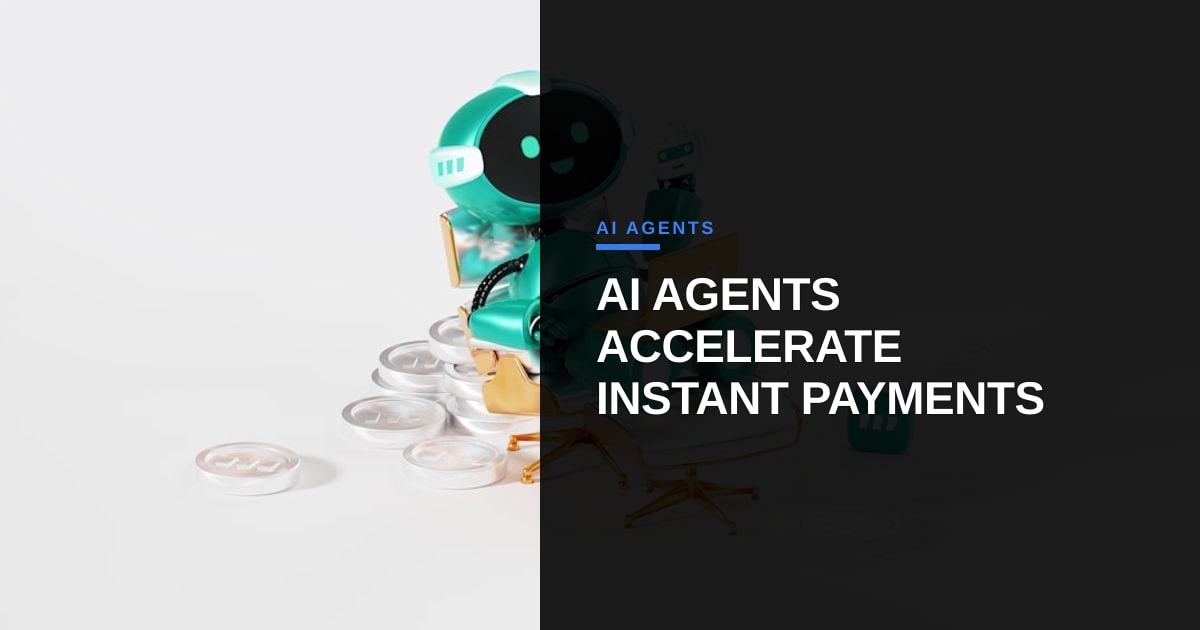
Photo: Ant Rozetsky / Unsplash (https://unsplash.com/@rozetsky)




Comments