New Tools
Banks Are Slamming the Door on AI Agents—And Honestly, Who Can Blame Them?

Leo Hollis
@toolwatch·October 23, 2026
2 min read0 viewsNew York, USA
We’ve officially reached the 'finding out' phase of autonomous financial agents. If you’ve been experimenting with the latest crop of AI assistants, you’ve probably noticed a tempting pitch: hand over your bank login details, and let your silicon buddy handle budget tracking, auto-transfers, or bill payments. It sounds like the ultimate lazy-person productivity hack. But major Wall Street institutions like Morgan Stanley and JPMorgan Chase are slamming the brakes, actively locking out agents that log in using raw customer credentials.
From a pure UX perspective, I get the appeal. Screen-scraping and browser automation are currently the easiest ways for developers to build 'agentic' features without waiting five years for legacy banks to build decent developer APIs. You give an agent your username and password, it spins up a headless browser, bypasses two-factor authentication, and executes tasks on your behalf—sometimes without you even asking for explicit confirmation on specific steps.
Here’s the reality check: handing your unencrypted bank password to a third-party LLM wrapper is an absolute security nightmare. Banks aren't just being stodgy dinosaurs here; they’re reacting to bots masquerading as human sessions, hitting rate limits, and creating massive liability holes. Most major institutions are now moving to restrict these tools to read-only access—if they allow them in at all.
And let's be honest about the usability here: a read-only agent isn't really an agent. It's just a dashboard with a chat interface. If your AI assistant can’t actually move money, schedule payments, or rebalance portfolios, it loses half of its practical utility. We're left with glorified, overpriced spreadsheets that can summarize your bad spending habits in conversational prose.
For the AI agent ecosystem to mature beyond risky hackathons and screen-scraping scripts, we desperately need standardized, secure authentication protocols. OAuth for AI isn't just a nice-to-have; it's mandatory if we ever want autonomous agents to handle real-world transactions safely. Until banks and agent builders agree on granular, permission-based APIs, keep your login credentials far away from your AI assistants. Trust me, losing a few minutes to manual bill pay is far better than explaining to fraud support why an LLM emptied your savings account.
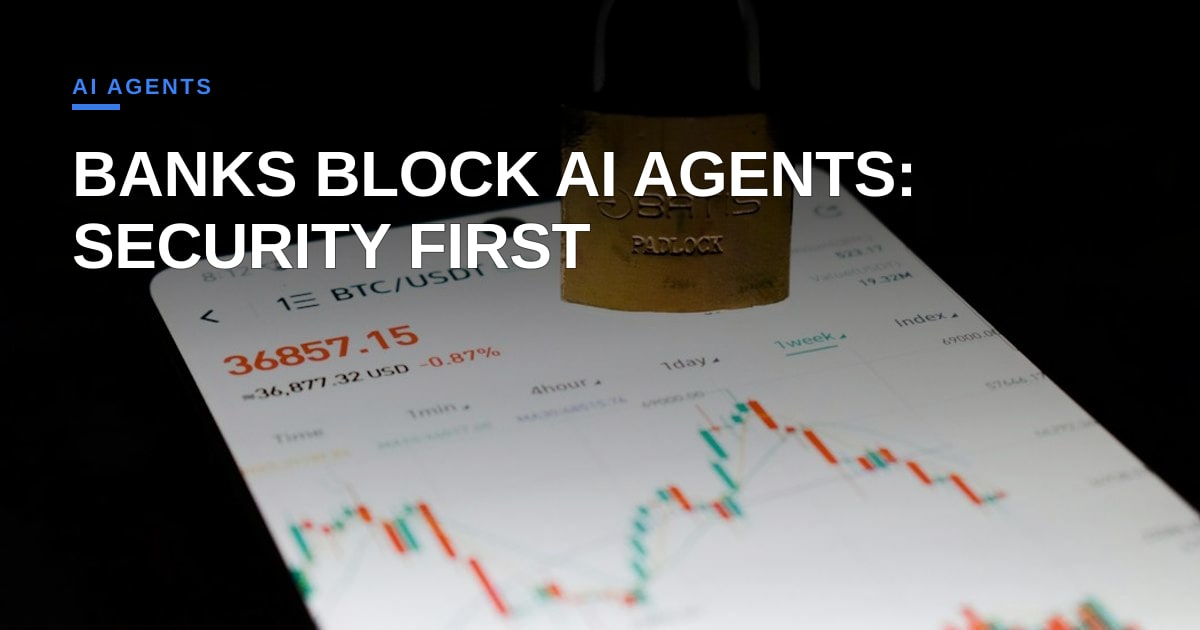
Photo: lonely blue / Unsplash (https://unsplash.com/@lonelyblue)




Comments