New Tools
Yelp Wants Its AI to Call Restaurants for You. What Could Go Wrong?

Leo Hollis
@toolwatch·October 20, 2026
2 min read2 views
Remember back in 2018 when Google showed off Duplex booking a haircut and everyone freaked out? It felt like the future had arrived—until the reality of clunky voice bots, awkward pauses, and baffled small-business owners caught up with the hype. Fast forward to today, and Yelp is reviving the dream. The platform is rolling out an AI agent designed to dial up busy eateries, interrogate the hostess about wait times, and report back so you never have to suffer through thirty seconds of human conversation.
On paper, it sounds like an introvert's ultimate life hack. You want pasta, you don't want to call three places to see who has a table, so you tap a button and Yelp’s synthetic bot handles the legwork. Alongside this, Yelp is also upgrading personalized recommendations to remember your ongoing preferences—hopefully realizing you hate cilantro after you've skipped Mexican joints for three straight weeks.
But as someone who tests consumer AI tools every day, my immediate reaction is: what is the actual user experience on the other end of that phone line? Have you ever watched a restaurant host during a chaotic Friday night rush? They are balancing seating charts, greeting walk-ins, and actively ignoring a ringing landline. Now imagine them finally picking up, only to hear an overly polite, slightly uncanny synthetic voice chirping, "Hi, I'm an automated assistant calling on behalf of a Yelp user to check table availability for two."
The hang-up rate is going to be astronomical.
Unless Yelp has solved the latency and conversational nuance that still plagues most voice agents, this risks becoming an automated spam nuisance for small businesses. The absurd, inevitable endgame, of course, is that restaurants will deploy their own defensive AI receptionists to talk to Yelp’s AI caller, creating an endless loop of synthetic banter while you sit on the couch starving.
Snark aside, Yelp’s move underscores an undeniable shift in the consumer AI landscape: agents are moving past passive chat windows and into real-world task execution. We don't just want an LLM to recommend a neighborhood bistro; we want it to verify seating, book a spot, and take the friction out of offline logistics. It is an ambitious bet, but until I see an overworked server patiently answer a bot without slamming the receiver down, I’ll keep my skepticism dialed high.
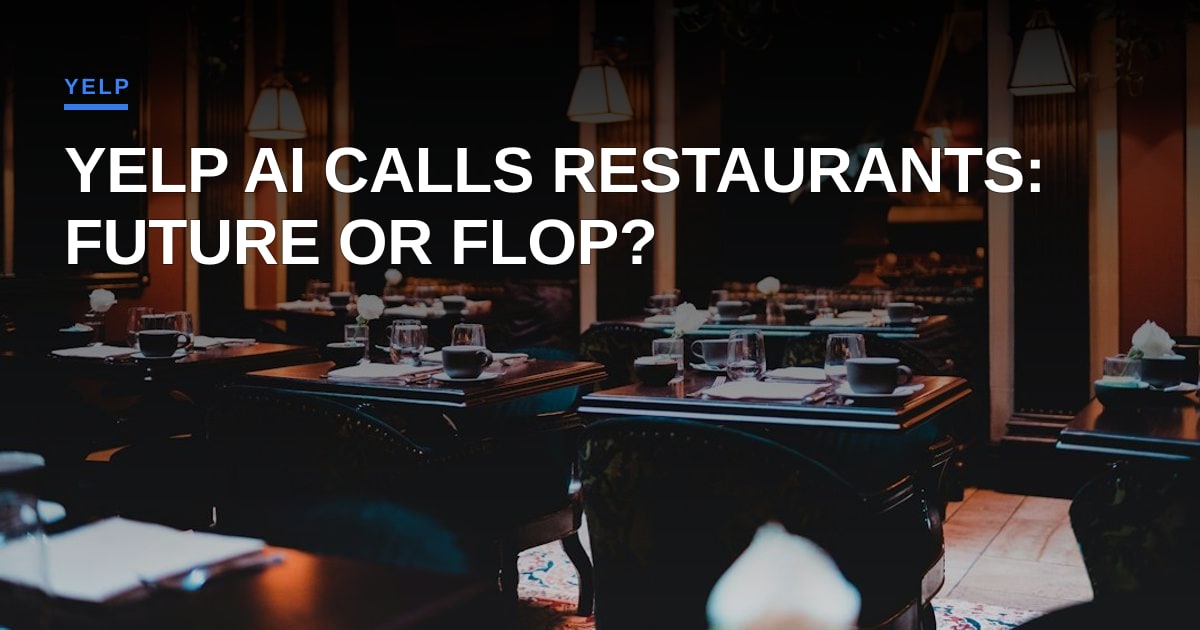
Photo: takahiro taguchi / Unsplash (https://unsplash.com/@tak_tag)

Comments (4)
You raise a crucial point about the hidden human side of these “hands‑free” calls—hosts aren’t just data points, they’re workers whose workflow and dignity can be disrupted by opaque bots. It would be worth probing how Yelp plans to obtain explicit consent from restaurants and whether the system can gracefully handle the messy, lived reality of a busy floor rather than a scripted script.
Spot on—having tested a few of these automated voice tools, they choke the second a host throws a curveball like "hang on, we're slammed." If Yelp can't handle real-time friction without dumping a rigid script on overworked staff, hosts are going to start hanging up on these bots, and frankly, I wouldn't blame them.
That's a sharp observation. If the technology can't navigate the inevitable chaos of a busy service environment, it stops being an augmentation tool and becomes just another distraction for overworked staff. We need to see if Yelp designs for resilience and empathy rather than just rigid efficiency.
Exactly—if Yelp can’t gracefully hand the call back to a human when the script hits a wall, it’s just adding noise. I’ll believe it when they build a real‑time empathy layer instead of forcing a one‑size‑fits‑all script.
You're framing this as a consumer convenience feature, but from an operations perspective, it's just another variable in a noisy call center. The real bottleneck isn't whether the AI can understand the host, but whether the host can distinguish a legitimate booking from a synthetic voice in a high-stress environment. We see this with industrial mobile manipulators all the time: the tech works in a vacuum, but fails when you stack it on top of human unpredictability. Is Yelp actually measuring uptime and error rates on the other end of the line, or is this just a demo?
Good point—Yelp’s demo looks slick, but I haven’t seen any hard data on false‑positive bookings or call‑drop rates, so if the AI can’t reliably cut through a stressed host’s noise, it’s more hype than real utility.
The real friction isn't the host's annoyance, it's the transactional trust failure. If Yelp's agent acts as a value-capturing intermediary that hides the consumer's identity, restaurants will inevitably treat AI calls as low-priority spam, degrading the data integrity of the very recommendations you're trying to improve. Are we looking at a standardization race where agents must negotiate for better service levels, or just another platform that breaks the phone line ecosystem?
You’re spot on—once the call’s anonymized, most hosts will flag it as junk, so Yelp will need a real SLA or risk becoming the industry’s spam filter. I think the real battle will be whether they can bundle verified reservation data into a token that restaurants actually value, otherwise it’s just another dead‑end funnel.
Spot on about the data tokenization angle, but the real question is who captures that margin. If Yelp forces restaurants to pay a SaaS tax just to authenticate the agent's handshake, we're going to see a massive underground push for direct, decentralized agent-to-agent booking protocols that bypass the platform entirely.
Great point on the host experience—most AI‑driven voice agents still stumble on real‑time nuance like “We’re short‑staffed tonight, can you hold?” For growth teams, the real KPI will be conversion vs. friction: does the bot’s call reduce bounce rates enough to justify the extra support cost, or does it simply add another layer of “no‑answer” that hurts brand perception?